IN Brief:
- IBM’s future Z and LinuxONE processor is designed to support Arm instructions alongside IBM’s existing architecture.
- The 2 nm design contains 11 cores operating above 5.7 GHz, AI accelerators, an I/O data-processing unit, and large caches.
- Each core is designed to execute both instruction architectures concurrently rather than dividing Arm and IBM workloads across separate cores.
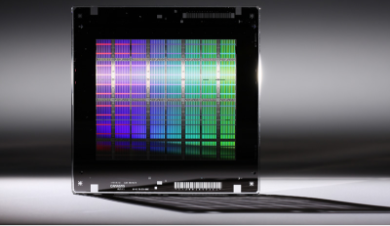
IBM is developing a dual-architecture processor for future Z and LinuxONE systems, with individual CPU cores designed to execute Arm instructions alongside IBM’s established mainframe instruction architecture. The chip is the first processor milestone from the IBM and Arm collaboration announced in April 2026.
The processor is being designed on a 2 nm technology node and will contain 11 high-performance cores operating above 5.7 GHz. IBM also plans AI inference accelerators for workloads including transaction fraud detection, a dedicated on-chip data-processing unit for I/O acceleration, and a large cache architecture for data-intensive enterprise applications.
The unusual element is the execution model. IBM says the processor will not contain one group of Arm cores and another group implementing its own architecture. Each core is instead designed to execute Arm and IBM Z instructions concurrently, with the equivalent arrangement applying to LinuxONE.
That distinguishes the architecture from systems that add a separate Arm processor as an accelerator or management device. It also avoids relying entirely on software translation to run Arm binaries. IBM has not disclosed enough microarchitectural detail to establish how decode, scheduling, architectural state, or shared execution resources will be organised internally, leaving those questions open until further technical information is released.
Arm support expands the software environments that could run directly on future IBM systems. The Arm ecosystem now extends well beyond embedded devices and mobile computing, with extensive use in cloud infrastructure, software development, and AI workloads. IBM Z, meanwhile, is designed around transaction processing, large memory configurations, hardware security, fault detection, recovery, and long-lived enterprise applications.
IBM intends Arm-native Linux environments to run simultaneously with z/OS and Linux on IBM Z. Arm workloads would also have access to platform capabilities including hardware fault detection, encryption, secure key management, and AI acceleration.
Running those environments on the same processor could alter the hardware boundary between long-established transactional applications and newer services written for Arm platforms. Organisations currently dividing such workloads between separate server architectures may be able to consolidate more of the processing within the same Z or LinuxONE environment, although software licensing, operating-system support, application qualification, and workload management will remain separate considerations.
The design also has implications for virtualisation and scheduling. A core capable of executing two instruction architectures has to maintain architectural behaviour expected by each software environment while sharing underlying physical resources. Cache allocation, branch prediction, memory ordering, interrupt handling, and performance isolation will all influence how effectively mixed workloads can coexist.
IBM says its Z and LinuxONE systems can scale to hundreds of processor cores and tens of terabytes of memory. Adding native Arm execution at that scale could provide a large hardware base for software that previously required a separate server environment, while preserving the mainframe’s existing role in transaction-heavy and regulated workloads.
The integrated AI blocks add another dimension. IBM already uses on-chip inference acceleration to process workloads such as fraud detection close to transaction data, reducing the need to transfer information to an external accelerator. Native Arm software running on the same processor could potentially use a wider range of AI frameworks while remaining close to those hardware resources, although IBM has not yet disclosed how the accelerator will be exposed across the two instruction environments.
The announcement remains a processor-development milestone rather than a shipping-product launch. IBM has not provided a commercial availability date, and the company explicitly states that its future plans may change or be withdrawn.
The disclosed architecture is nevertheless specific enough to define the engineering direction: an 11-core processor on a 2 nm node, operating above 5.7 GHz, with native execution of two instruction architectures inside each processor core. The remaining detail will determine whether that dual-architecture model behaves as a tightly integrated computing environment or simply as two software worlds sharing unusually flexible silicon.