IN Brief:
- Infineon will supply latest-generation silicon carbide devices for DG Matrix’s Interport multi-port solid-state transformer platform.
- The collaboration targets a tougher layer of the power stack, where medium-voltage grid connections, conversion efficiency, and footprint are emerging constraints for AI data centres.
- Solid-state transformers remain early, but both companies are positioning SiC as a practical route to denser, faster-to-deploy power infrastructure.
Infineon and DG Matrix are moving silicon carbide into a more strategic part of the power chain, pairing latest-generation SiC devices with DG Matrix’s Interport multi-port solid-state transformer platform for AI data centres and industrial power applications. The deal is notable less for the partnership itself than for where it sits: this is power electronics being pushed upstream toward the grid interface, where deployment speed, efficiency, and footprint are becoming hard commercial constraints.
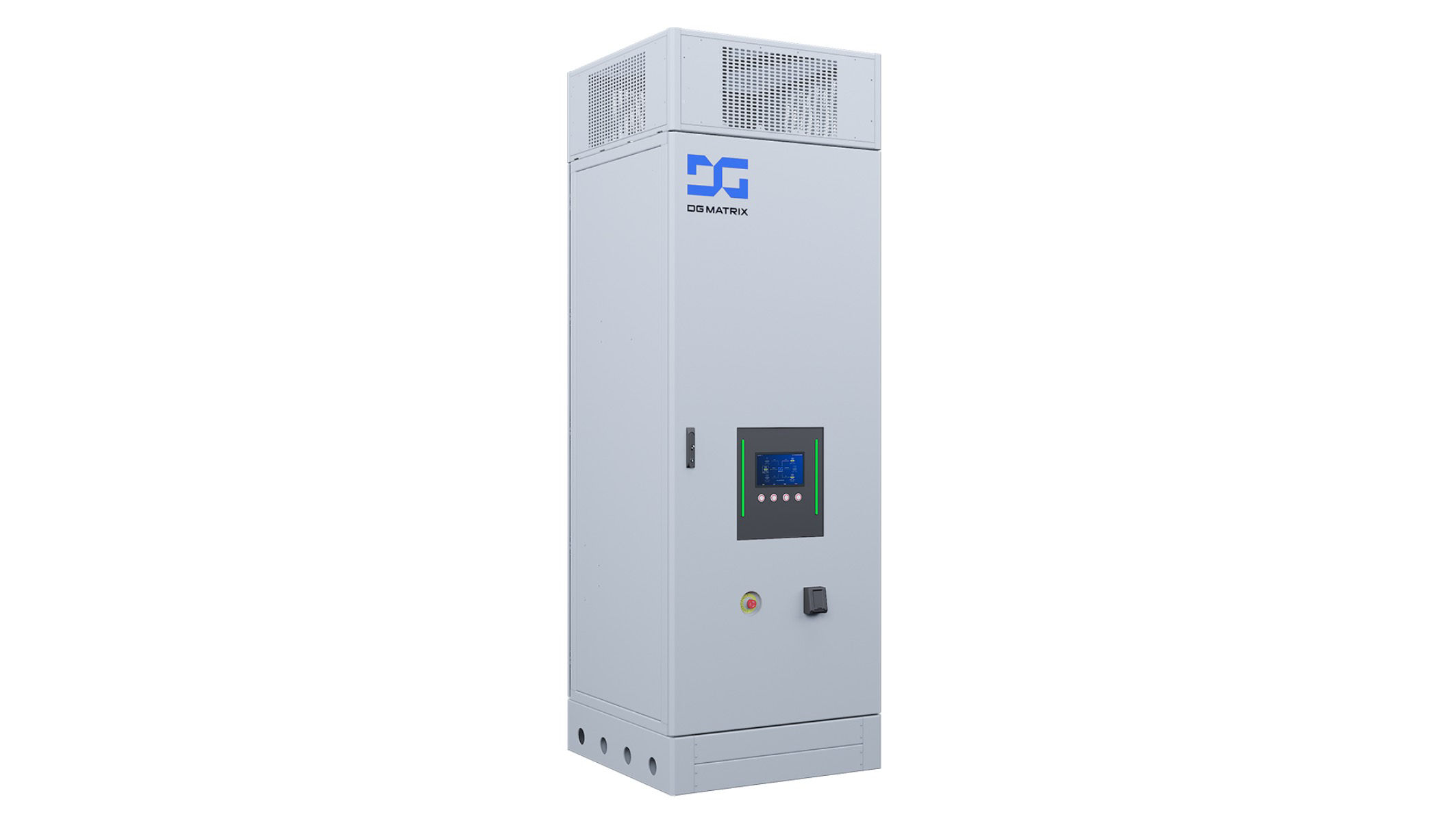
DG Matrix is using Interport as a software-driven, multi-port solid-state transformer architecture that can route and blend multiple energy sources and loads in real time. On the company’s own product pages, the message is built around “speed to power”, resiliency, standardisation, and the ability to reduce dependence on long transformer lead times and site-specific power architectures. That aligns neatly with the AI data-centre buildout, where computing hardware may be available sooner than the electrical infrastructure needed to feed it.
Infineon’s role is to supply the SiC technology that makes that architecture more plausible at scale. Silicon carbide has already established itself in EV drivetrains, charging, renewables, and industrial conversion, but solid-state transformers give it a different job: replacing heavier copper-and-iron hardware with faster-switching semiconductor-based conversion stages that can manage voltage, power quality, and energy flow more actively. Infineon says solid-state transformers can be up to 14 times smaller and 40 times lighter than conventional transformer approaches, while also enabling direct conversion from medium-voltage grid input to the lower voltages demanded by applications such as AI data centres, EV charging, renewable systems, and microgrids.
That is still an emerging market rather than a settled one, yet the commercial direction is clear. Infineon is projecting that the global semiconductor market for solid-state transformers could reach as much as US$1 billion within five years, while DG Matrix is already positioning Interport around AI data-centre, grid, and fleet deployments. For hyperscale operators and industrial users, the attraction is not simply efficiency. It is the possibility of compressing multiple conversion and control stages into a more repeatable platform that can be deployed faster and adapted more easily as loads change.
The partnership also underlines a broader shift in how AI infrastructure is being discussed. The familiar debate around accelerators, networking, and thermal design increasingly runs into a blunter question: how quickly can a site be energised, and how gracefully can it absorb rising power density? That is where solid-state transformer development starts to matter. It moves power semiconductors from being a supporting actor inside racks and chargers to being a defining piece of upstream infrastructure design.
Both companies say the collaboration is expected to continue through higher-voltage platforms and larger production volumes. If that happens, the story will not just be about one supplier agreement. It will be about SiC establishing itself as a key enabling technology in the electrical architecture now forming around AI-scale loads.