IN Brief:
- Kitron's Longum plant adds 7,500m² of electronics manufacturing capacity near Arendal.
- Defence and Aerospace became Kitron's largest market sector during the first half of 2026.
- The expansion adds high-reliability production as Kitron targets €1.05–1.15 billion of 2026 revenue.
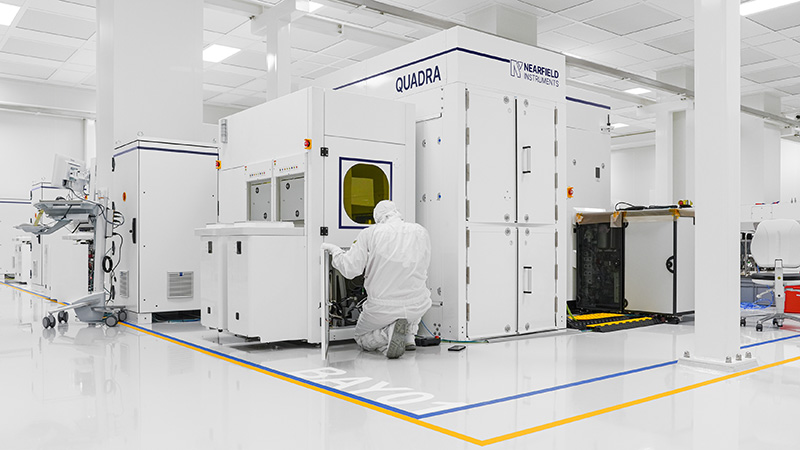
Kitron has opened a 7,500m² electronics manufacturing facility at Longum outside Arendal, adding Norwegian production capacity as defence and aerospace work becomes a larger part of the group’s business. The new plant sits close to Kitron’s existing Kilsund factory, with around 550 people employed across the two sites.
The expansion arrives during a sharp increase in Kitron’s workload. Revenue reached €568 million in the first half of 2026, 69% above the same period a year earlier, while Defence and Aerospace became the company’s largest market sector. Kitron has also raised its full-year outlook to revenue of €1.05 billion to €1.15 billion and operating profit of €97 million to €112 million.
Longum adds physical capacity, but the more demanding part of the expansion is converting that space into controlled production for regulated, high-reliability electronics. Defence programmes typically require tight configuration management, traceability, documented process changes, controlled suppliers, specialist test, and support over product lives that can outlast the commercial availability of individual components.
Those requirements change how an electronics manufacturing services business scales. Additional assembly lines have to be matched by test capability, quality systems, engineering support, material control, and enough skilled staff to maintain repeatability as volumes rise. A production transfer that looks simple on a capacity plan can become slower if a customer must requalify processes, substitute components, or approve changes to tooling and documentation.
Kitron’s service model spans development and design, industrialisation, manufacturing, sourcing, logistics, upgrades, repair, and maintenance. Keeping more of that work close to European defence customers can shorten the feedback loop between engineering change and production implementation, particularly during new-product introduction when test failures, component substitutions, and design-for-manufacture decisions have to be resolved quickly.
Capacity growth also has a test-engineering consequence. Defence and aerospace assemblies often require functional test, environmental screening, programming, calibration, and customer-specific acceptance procedures that can take longer to establish than the assembly process itself. Expanding output without enough fixtures, automated test equipment, trained operators, and failure-analysis capability simply moves the bottleneck from the production line to the end of it.
The Longum opening adds another example of defence electronics capacity being expanded around programme demand. CACI recently opened expanded manufacturing capacity in Rochester for software-defined electronic warfare systems, bringing development, testing, assembly, delivery, and customer acceptance into a larger site. The technologies differ, but both investments reflect the growing factory burden created by electronics-heavy defence equipment.
Kitron’s manufacturing network extends across Norway, Sweden, Denmark, Lithuania, Germany, Poland, the Czech Republic, India, Malaysia, China, and the United States. A distributed footprint gives the group options for sourcing and production, although defence contracts can narrow that flexibility through security requirements, export controls, approved-supplier rules, and customer preferences for regional manufacturing.
Those constraints make supply continuity a design and operations issue rather than a purchasing problem alone. Long-life programmes can be exposed when processors, memories, analogue devices, RF parts, or power components reach end of life, forcing manufacturers to manage lifetime buys, redesigns, or qualified alternatives without losing control of the delivered configuration. More local capacity helps only if the supporting material and engineering processes scale with it.
The company reported €738 million of revenue in 2025, so its revised 2026 guidance points to another substantial step up in activity. Longum gives Kitron room to absorb part of that growth without stretching the existing Kilsund operation indefinitely, while the two-site structure retains a substantial manufacturing base in the Arendal area.
The next test is operational rather than ceremonial. Kitron has to qualify programmes, recruit and retain technical staff, bring new lines and test systems into stable use, and maintain delivery performance while customer demand is rising. In high-reliability electronics, floor area is the easy part of capacity expansion; repeatable output, controlled change, and accepted product are what turn it into production.