
IN Brief:
- MAHLE and Rohde & Schwarz have developed an application for ADAS sensor testing after repair.
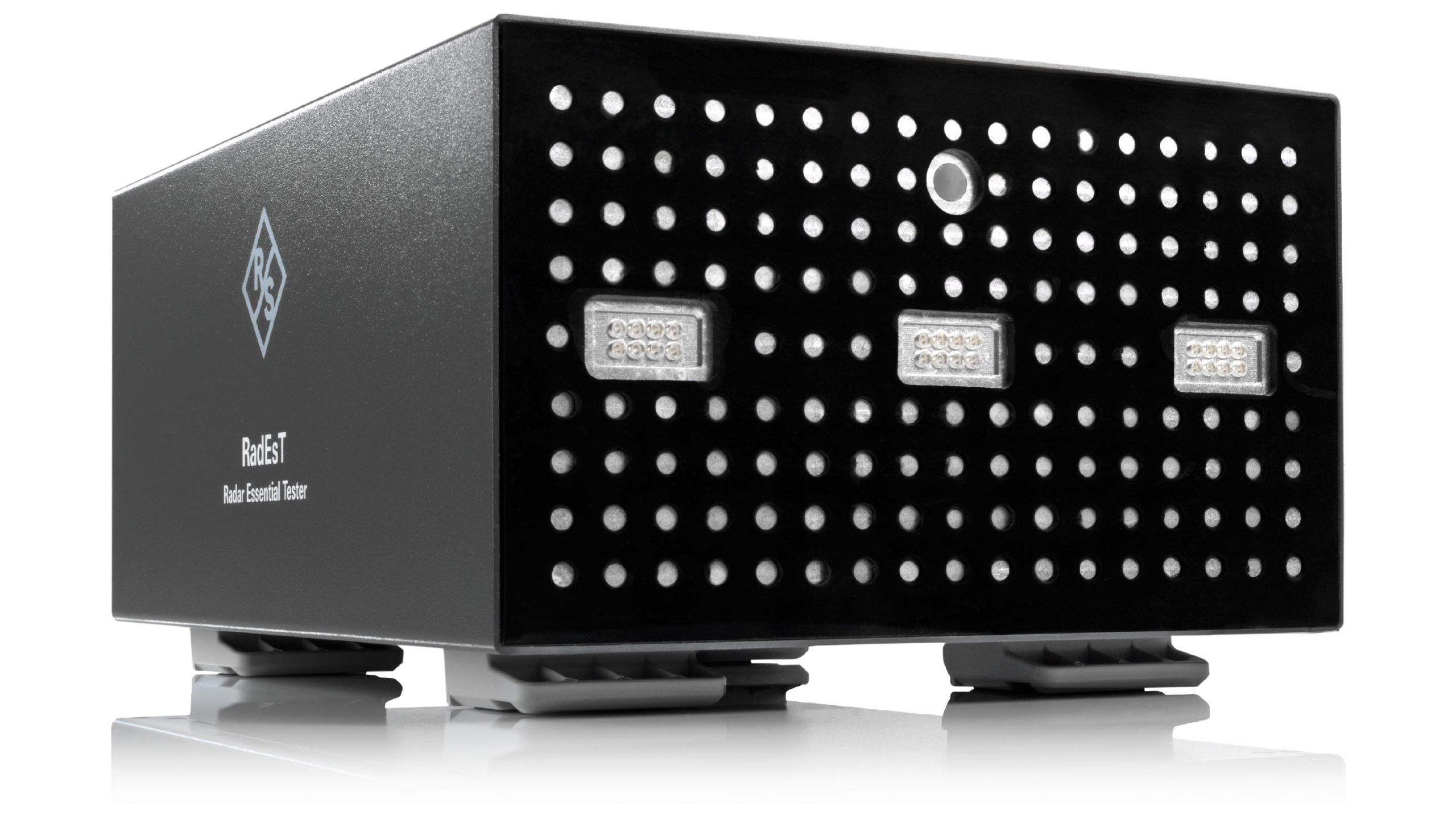
- The system combines MAHLE’s TechPRO Digital ADAS 2.0 Extra with the Rohde & Schwarz RadEsT radar tester.
- Repeatable radar verification supports documented sensor checks for workshops, inspection, and insurance assessment.
MAHLE and Rohde & Schwarz have developed an application for testing sensors used in modern driver assistance systems, combining workshop calibration hardware with radar verification capability.
The application links MAHLE’s TechPRO Digital ADAS 2.0 Extra calibration system with the R&S RadEsT radar tester. It is designed to verify radar-based driver assistance functions after repair work or vehicle damage, particularly where bodywork, bumper assemblies, mounting points, or alignment may have changed.
MAHLE’s TechPRO Digital ADAS 2.0 Extra uses ultrasonic sensors for vehicle positioning from inside the vehicle, along with automatic vehicle identification, laser-based distance measurement, and motorised target adjustment. A display lift system supports alignment work on taller vehicles, where target positioning can otherwise become more difficult to reproduce.
Rohde & Schwarz adds the RF measurement layer through RadEsT. The tester provides functions beyond calibration targets, including frequency and polarisation detection, power measurement, target simulation, and angle simulation for radar sensors.
Used with the MAHLE TechPRO 2 diagnostic tool, the system allows technicians to check alignment and functional behaviour after repair work. Correct and faulty states can also be simulated, enabling quality checks that go beyond a static calibration target or diagnostic pass/fail result.
The joint application generates reproducible measurement data that can support workshop documentation, periodic technical inspection, regulatory processes, and insurance assessment. As driver assistance systems become more deeply integrated into vehicle safety, recorded evidence of sensor function is likely to become increasingly important after repairs.
Automotive electronics are moving from discrete comfort and convenience features towards sensor-based safety functions that shape braking, steering, warning, and driver-support behaviour. Radar, camera, ultrasonic, lidar, compute, software, and vehicle control systems now operate as coupled safety architectures, making post-repair sensor condition part of the vehicle’s functional state.
Radar testing is especially demanding because performance depends on RF behaviour, angle response, target simulation, bumper materials, mounting tolerances, temperature, repair quality, and calibration setup. A vehicle can be mechanically repaired yet still carry a sensing fault that is invisible without measurement equipment capable of exercising the radar channel itself.
The need for faster and more reliable RF validation is also visible in electronically steerable antenna work, where Rohde & Schwarz and Greenerwave have worked on accelerated ESA testing. In both cases, RF systems are becoming too central to performance and safety to be checked through slow, approximate, or undocumented methods.
Post-repair verification is becoming part of the electronics lifecycle. Vehicles may leave the factory with characterised sensing systems, but those systems must remain trustworthy after impact, component replacement, windscreen work, bumper repair, or chassis adjustment. MAHLE and Rohde & Schwarz are addressing the gap between advanced sensor design and the realities of service, repair, and inspection.

