
IN Brief:
- OMC is supplying fully characterised fibre-optic links for high-voltage applications.
- The approach combines tuned transmitters, receivers, and matched cable assemblies to deliver consistent link performance.
- Electrification is increasing demand for isolated sensing, monitoring, and control paths across power infrastructure.
OMC is extending its fibre-optic datalink work in high-voltage applications as demand grows for electrically isolated sensing, monitoring, data transmission, communications, and control links across power infrastructure.
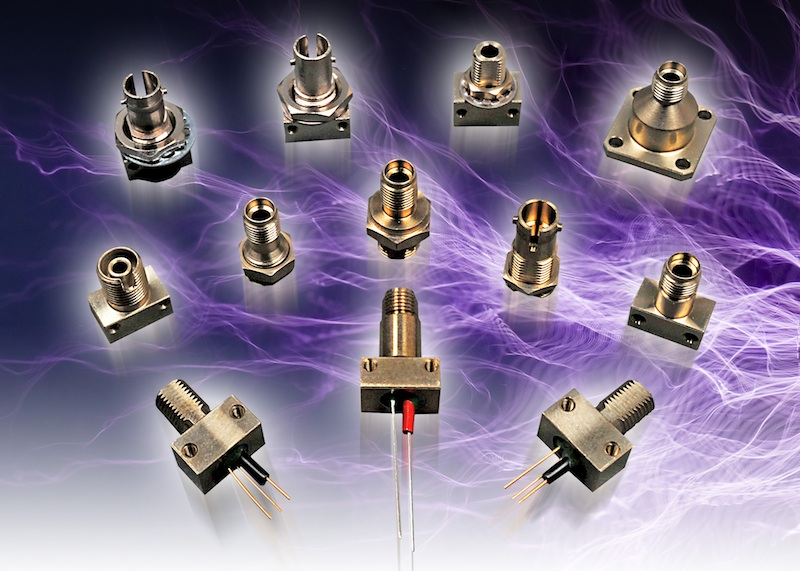
The company has been supplying production quantities of fibre-optic links for customers in high-voltage environments where the challenge is not only isolation, but also repeatable link behaviour. OMC’s approach centres on matching housed optical transmitters and receivers to fibre assemblies within a defined performance window so that complete links behave consistently regardless of how components are paired during installation or service.
In high-voltage systems, tolerances tighten quickly. In many conventional supply chains, transmitters, receivers, and cable assemblies are sourced separately, leaving the equipment maker to prove link compatibility. That often turns into a lengthy validation exercise, particularly in power generation, transmission, distribution, and other electrically harsh environments where signal integrity and safety margins are closely tied.
OMC uses active alignment to tune the electro-optical characteristics of the transmitter and receiver during manufacture, while also controlling fibre attenuation so cable assemblies are matched to the required performance range. The result is a characterised optical link rather than a loose combination of optoelectronic parts that still need to be qualified into a dependable whole.
Electrification is drawing more intelligence into substations, converters, switchgear, transport platforms, energy storage systems, and distributed grid assets. As those systems become more software-aware and more heavily instrumented, the number of low-noise, interference-resistant pathways required inside them continues to rise. Copper remains practical in many locations, but in the presence of high common-mode voltages, strong electromagnetic fields, or difficult isolation requirements, optical links remain attractive.
Equipment makers are also looking for isolation solutions that do not force them to build a custom optical subsystem from first principles. That increases the appeal of suppliers who can provide complete, repeatable links with known performance margins. As design cycles shorten and qualification work becomes more expensive, consistency across production batches becomes almost as important as peak link performance.
Power-electronics platforms are moving to faster switching devices, denser telemetry, and more distributed control. The adoption of SiC and GaN is part of that picture, but so is the rise of predictive maintenance, condition monitoring, and continuous data collection across energy infrastructure. Isolation is tied directly to the quality of those sensing and communications paths as well as to safety.
Fibre is not the universal answer to every interface problem in power systems, but it remains one of the few approaches that addresses galvanic isolation and electromagnetic immunity together. Where design teams can source a characterised link rather than assembling one piecemeal, the case strengthens further. That is particularly relevant in applications where downtime, derating, or repeated validation work can outweigh the cost difference between a standard interconnect and an engineered optical path.
High-voltage systems are becoming less tolerant of improvised isolation strategies. As more data and control functions are pulled into electrified infrastructure, the quality of the link matters more. In that setting, optical isolation is increasingly part of the system architecture rather than a protective afterthought.

