
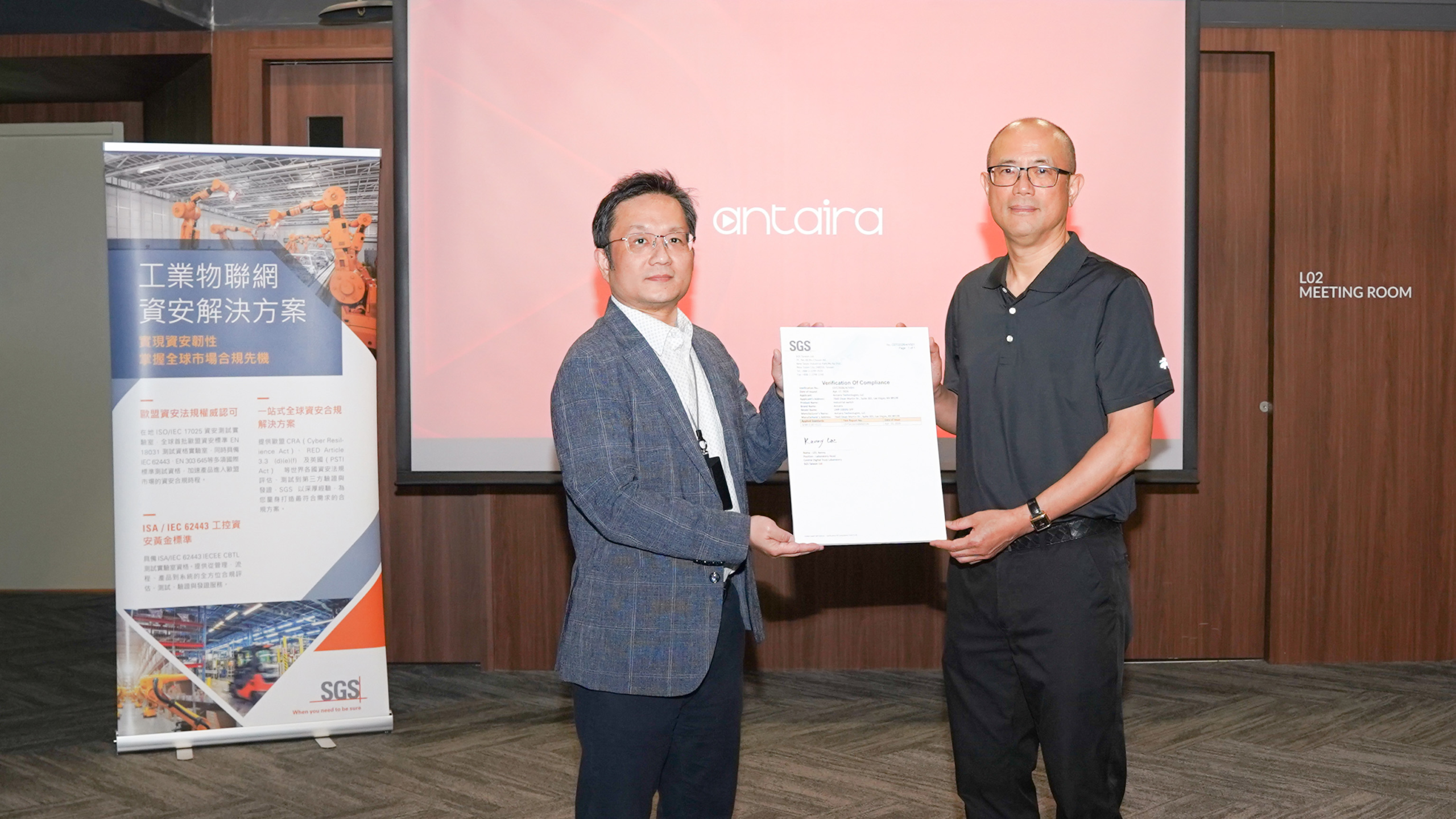
IN Brief:
- Antaira has secured SEMI E187 certification for industrial Ethernet switch solutions.
- The standard focuses on cybersecurity requirements for semiconductor manufacturing equipment.
- Network infrastructure is becoming a more visible part of fab security and uptime strategy.
Antaira Technologies has achieved SEMI E187 certification for industrial network switch solutions used in semiconductor manufacturing, adding a recognised cybersecurity benchmark to a part of the fab equipment stack that is becoming increasingly important to operational resilience. The certification confirms that Antaira’s switching platforms meet the requirements of a standard developed to address cybersecurity in semiconductor manufacturing equipment.
SEMI E187 establishes a baseline for how connected equipment should be secured by design and maintained in operation. The standard covers areas including operating system support, endpoint protection, network security, and security monitoring, reflecting the reality that fab equipment is now inseparable from the network environments in which it runs. As production systems become more connected, cybersecurity is moving deeper into hardware and firmware choices across the plant floor.
Antaira’s certified platform set includes industrial Ethernet switches with validated endpoint protection, secure-by-default configurations, and structured vulnerability management tied to long-term support planning. The certification work was completed with SGS, and the company has indicated that compliance is being phased across switch models. That staged approach is typical of infrastructure platforms that support multiple hardware variants and long deployment lifecycles.
The network layer is easy to overlook beside process tools, factory automation controllers, and manufacturing software, but it forms part of the trust chain that supports equipment communications, monitoring, and access control. In semiconductor manufacturing, where unplanned downtime quickly becomes expensive and process data is highly sensitive, the security posture of the switching layer is part of production reliability rather than a separate IT concern.
Fab operators and equipment suppliers have been moving toward tighter cyber controls for several years, and vendor accountability is now under heavier scrutiny. As fabs add more connected tools and link more operational data into centralised systems, they also expand the number of interfaces that must be protected and maintained over long service lives. Secure default configurations, patch discipline, and predictable support windows have therefore become stronger differentiators for infrastructure hardware.
Standards such as SEMI E187 help remove some of the ambiguity from that process. They provide a clearer reference point for what acceptable equipment security looks like and make it easier to build a more consistent baseline across mixed-vendor production environments. That can simplify procurement, reduce friction between suppliers and operators, and support qualification processes that increasingly include cybersecurity alongside uptime and interoperability.
For industrial network suppliers, resilience is now a product characteristic in its own right. Port count, environmental ruggedness, and switching performance still matter, but they sit alongside secure deployment and managed lifecycle maintenance rather than ahead of them. Semiconductor manufacturing pushes those expectations harder than many sectors because the cost of interruption is so high and the attack surface continues to widen as tools, analytics, and remote support systems become more closely connected.
Antaira’s certification reflects that broader change in industrial networking. In fabs, the network is no longer just a transport layer sitting behind the process. It is part of the production environment, part of the risk profile, and part of the qualification discussion. As equipment becomes more software-defined and manufacturing flows depend on tighter data exchange, the hardware that moves and protects that data will keep drawing closer scrutiny.

