IN Brief:
- Rohde & Schwarz and Pegatron tested phased-array MIMO transmission at 13GHz and 15GHz.
- A dual-stream demonstration reached a projected 1.7Gbps using 100MHz bandwidth and 4096-QAM.
- Separate office testing produced a peak expected data rate of 1.4Gbps over 40 metres.
Rohde & Schwarz and Pegatron have validated dual-stream multiple-input multiple-output (MIMO) transmission using phased-array antennas operating at 13GHz and 15GHz, demonstrating how two polarisation channels can increase projected wireless throughput.
The companies used a Pegatron FR3 phased-array system with a Rohde & Schwarz FSWX signal and spectrum analyser and an SMW200A vector signal generator. Their exhibition demonstration produced a projected data transmission rate of 1.7Gbps using 100MHz channel bandwidth, 4096-QAM modulation, and two transmission streams.
The result represented approximately twice the throughput of a comparable single-stream configuration. The increase came from transmitting separate streams through horizontal and vertical polarisations, allowing more information to be carried within the same nominal channel bandwidth.
The demonstration took place at the 6G Summit in Taipei, Taiwan, as part of ongoing investigation into radio technologies for future wireless networks. The frequencies examined are candidates for applications involving radio access infrastructure and satellite communication systems.
FR3 refers to a frequency region being investigated between established lower-frequency mobile communications bands and conventional millimetre-wave operation. It offers potential access to additional spectrum, although future deployment will depend on spectrum allocation, radio standards, propagation characteristics, and equipment development.
Operation at 13GHz and 15GHz introduces different design constraints from those encountered at lower mobile network frequencies. Radio propagation, antenna directivity, beam control, and the performance of high-frequency components all affect the strength and quality of the received signal.
Phased-array antennas address part of this challenge by controlling the phase relationships between signals transmitted or received by multiple antenna elements. Changing those relationships allows the direction of the combined radio beam to be adjusted electronically.
Pegatron’s hardware integrates antenna elements, beamforming integrated circuits, RF front-end components, and control circuitry. The array supports horizontal and vertical linear polarisation, providing separate channels that can be used in the dual-stream MIMO arrangement.
Maintaining suitable separation between the two signal paths is important. Coupling between polarisations, channel imbalance, and distortion can reduce the quality of the independent streams, limiting the throughput benefit of the arrangement.
The exhibition configuration used 4096-QAM, a high-order modulation scheme that represents information through a large number of different signal states. Increasing the modulation order can carry more information per symbol, provided the radio link has sufficient signal quality to distinguish the states reliably.
Higher-order modulation also increases sensitivity to noise and distortion. Phase noise, amplifier non-linearity, frequency response, and other impairments can affect the received constellation and introduce errors, particularly where the radio front end operates close to its performance limits.
The reported 1.7Gbps figure was a projected transmission rate under the stated demonstration conditions. It should not be presented as independently verified end-to-end throughput from a commercial wireless network.
Pegatron conducted a separate indoor evaluation using the same general phased-array technology in a standard office environment. Under a 5G NR configuration using 100MHz bandwidth, 1024-QAM, and two streams, the system achieved a peak expected data rate of 1.4Gbps across 40 metres.
This provides a different operating reference from the exhibition demonstration. The indoor test involved a practical propagation environment and a lower modulation order, while retaining dual-stream operation.
Radio performance in an office depends on factors including reflected signals, obstructions, antenna orientation, and the surrounding environment. The 40-metre result therefore establishes performance under the reported test conditions rather than a guaranteed operating range for every installation.
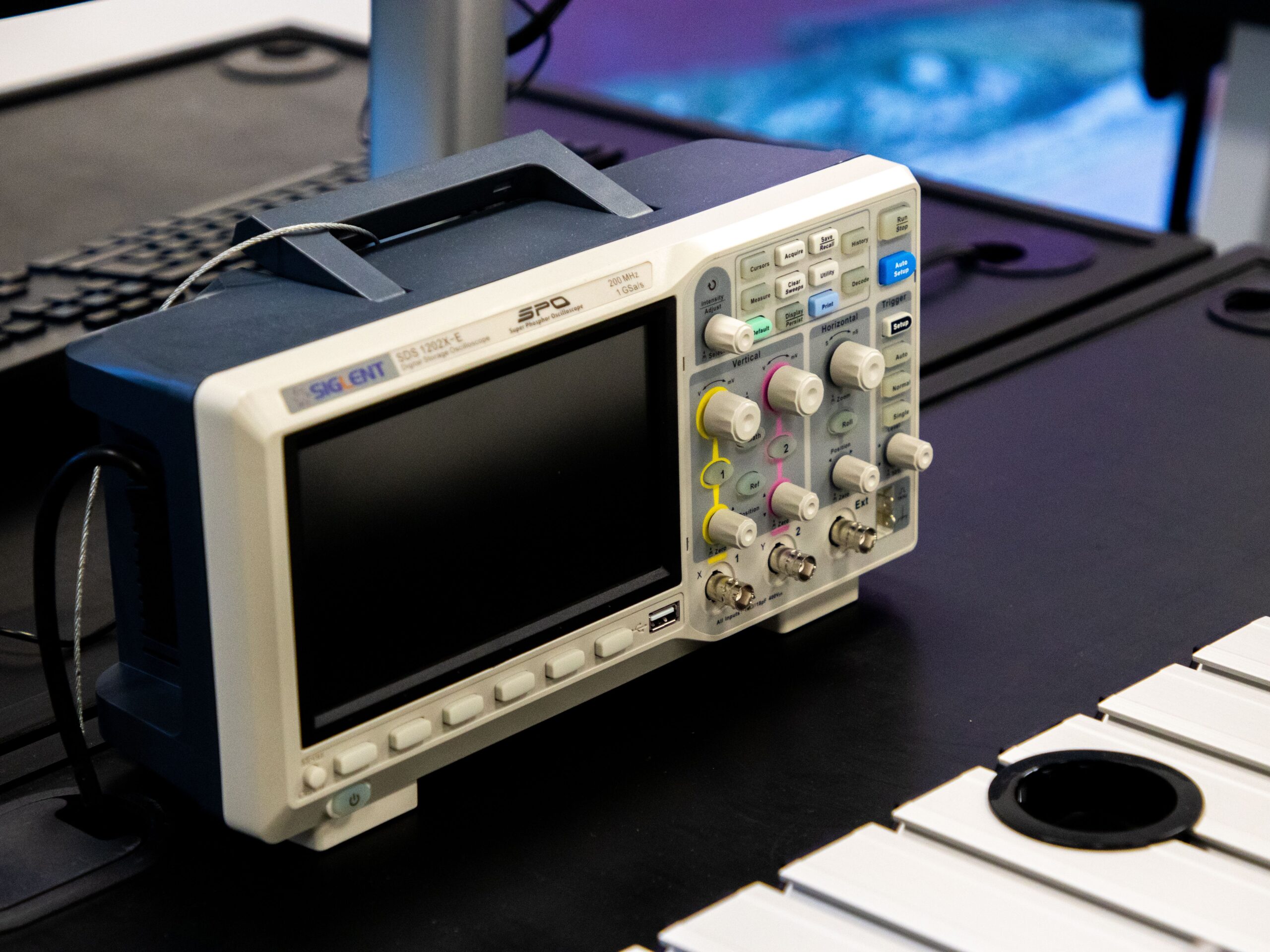
Rohde & Schwarz’s FSWX analyser enabled simultaneous analysis of multiple RF channels. Previous testing had required individual adjustments to horizontal and vertical signal controls using a conventional spectrum analyser, making the measurement process more dependent on sequential channel assessment.
Parallel analysis provides a closer view of how the channels behave together during a MIMO test. The FSWX incorporates multiple input ports, cross-correlation capability, filter banks, and broadband analogue-to-digital conversion to support demanding signal measurements.
The SMW200A supplied vector signal generation for the test arrangement. Together, the instruments allowed the companies to examine the phased-array system under defined modulation and multi-channel operating conditions.
Multi-channel test capability becomes increasingly important as radio development moves towards more antenna elements and complex beamforming. Measurement arrangements must account for interactions between channels alongside the behaviour of individual RF components.
Pegatron is also developing phased-array antenna modules for 7GHz and 8GHz operation. Those projects extend the company’s work into additional frequency ranges being investigated for future MIMO systems.
The 13GHz and 15GHz results demonstrate performance within specified experimental arrangements, with further work required to establish behaviour under wider propagation conditions and future network requirements. They provide test data for developing the antennas, RF circuitry, and measurement techniques needed for more complex wireless systems.