IN Brief:
- sensiBel's SBM140B combines 84dBA SNR with a 146dB SPL acoustic overload point and 136dB dynamic range.
- The optical MEMS architecture uses light to measure diaphragm displacement rather than conventional capacitive detection.
- Samples are with selected customers, with volume production planned for the first quarter of 2027.
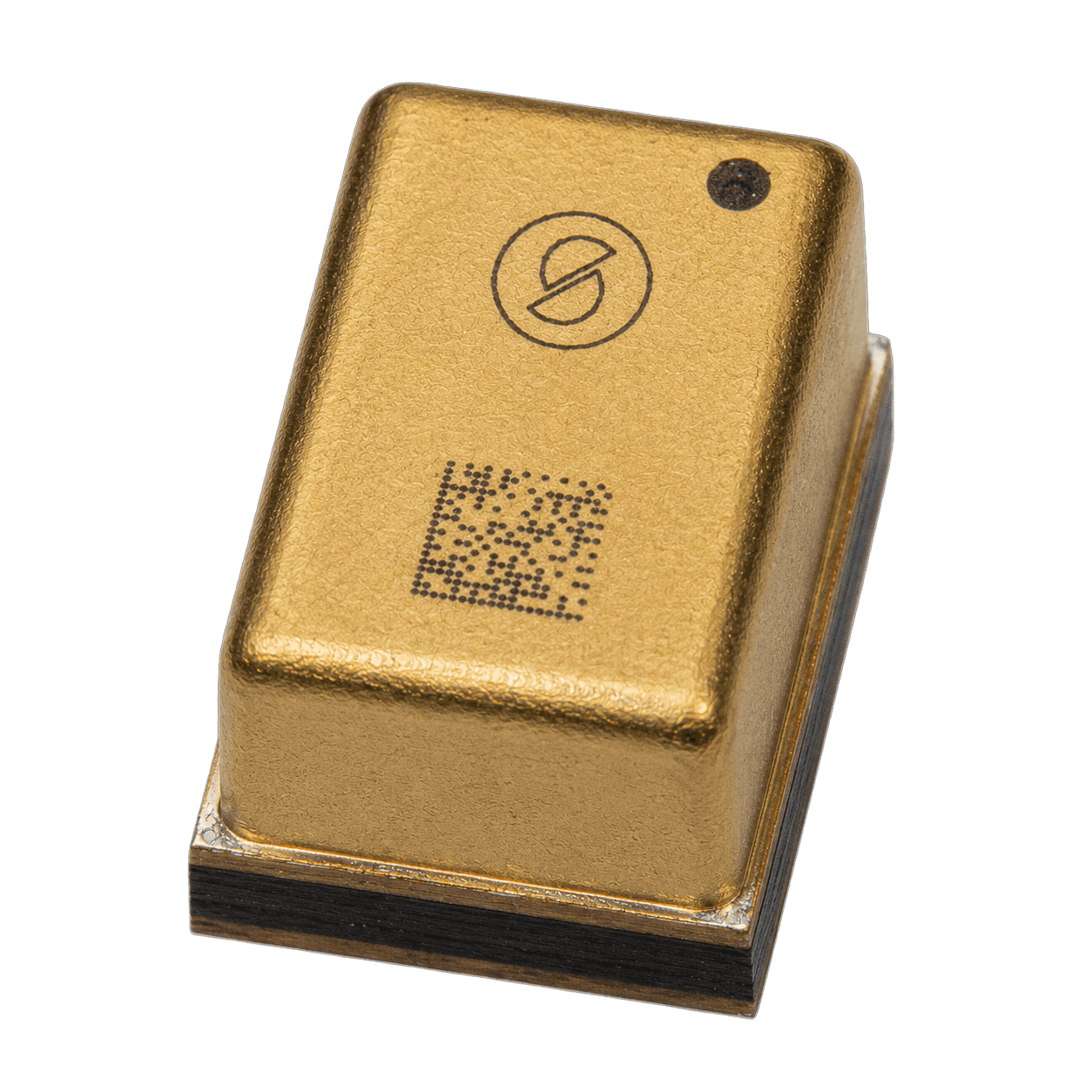
sensiBel has introduced the SBM140B optical MEMS microphone, raising its signal-to-noise performance to 84dBA while retaining a 146dB SPL acoustic overload point and adding 24-bit digital output.
The Norwegian sensor developer calculates a 136dB dynamic range for the device, which also reaches an equivalent input noise level of 10dBA. Samples have already been supplied to selected customers, with production scheduled for the first quarter of 2027.
The new device extends the company’s existing SBM100B family rather than replacing it. That microphone provides 80dBA SNR, the same 146dB acoustic overload point, and 132dB dynamic range, and is already shipping for customer applications.
The four-decibel improvement in SNR is particularly relevant because microphone designers normally face a compromise between capturing very quiet signals and surviving very loud ones. Lower self-noise improves the microphone’s ability to resolve weak acoustic signals, while a high overload point preserves usable output as sound pressure rises.
sensiBel’s approach differs from conventional capacitive MEMS microphones at the sensing stage. Instead of measuring changes in capacitance as the microphone membrane moves, its optical architecture uses a laser and photodetector to measure diaphragm displacement.
That measurement principle allows the mechanical membrane and the readout mechanism to be optimised differently from a capacitive structure. sensiBel says the SBM140B can consequently maintain low-noise performance while handling large changes in acoustic level without switching between operating modes or relying on compression to protect the signal path.
The resulting specification spans applications with very different acoustic conditions. A microphone used in instrumentation or acoustic surveillance may need to detect weak signals at considerable distance, while industrial monitoring can expose the same sensor to machinery, impact noise, and sudden high sound-pressure events.
Microphone arrays add another requirement because small variations between individual sensors can affect beamforming performance. Arrays use phase and amplitude information from several microphones to determine the direction of a sound source or reinforce signals arriving from a particular location, placing emphasis on consistent sensor behaviour as well as headline sensitivity.
sensiBel is positioning the SBM140B for acoustic cameras, beamforming arrays, humanoid robotics, acoustic drone detection, measurement equipment, instrumentation, and immersive-audio systems. Those applications increasingly combine the microphone front end with digital signal processing or machine-learning algorithms, making the quality of the captured signal important before any software attempts to separate, classify, or interpret it.
A higher SNR does not automatically guarantee better system performance. Mechanical integration, enclosure acoustics, vibration, PCB layout, power-supply noise, clocking, digital interfaces, and calibration can all reduce the benefit of a low-noise sensor once it is placed inside a finished product.
The 24-bit digital output is therefore only one part of the signal chain. sensiBel’s microphone platform supports digital interfaces including PDM, TDM, and I2S, allowing designers to connect the device to processors, codecs, and array-processing hardware without first routing a low-level analogue microphone signal across the PCB.
Digital output can simplify system integration, particularly in multi-microphone products, but it moves greater responsibility into clock distribution, synchronisation, data handling, and digital power integrity. Beamforming systems in particular need predictable timing between channels if the processor is to use phase information accurately.
The SBM140B also gives sensiBel a higher-performance device for applications that previously depended on larger professional microphones or specialised measurement sensors. Packing low self-noise and a high overload threshold into a MEMS-scale component can reduce the physical volume of the acoustic front end, although the finished design still has to provide an appropriate acoustic port and mechanical environment.
Manufacturing will be the next test. Optical sensing adds components and assembly considerations that do not exist in the same form within a conventional capacitive MEMS microphone, so repeatable optical alignment, wafer processing, packaging, and final calibration have to be maintained at commercial volumes.
sensiBel has already been preparing that production route. In May, it announced a manufacturing relationship with Silex Microsystems, the Swedish pure-play MEMS foundry, intended to support high-volume production of its optical microphone technology.
That relationship matters because moving from engineering samples into volume manufacture requires more than demonstrating the required SNR on selected devices. Wafer-level variation, optical alignment, packaging tolerances, yield, test time, and calibration all influence whether the same specification can be maintained economically across production lots.
The existing SBM100B provides an important intermediate step because it is already commercially available and shipping, giving sensiBel experience of putting its optical architecture through customer qualification and production rather than developing the SBM140B against a purely laboratory baseline.
The new microphone also arrives as acoustic sensing broadens beyond voice capture. Robots, industrial-monitoring systems, security equipment, spatial-audio products, and machine-listening applications can require both weak-signal detection and tolerance of high sound-pressure events, sometimes within the same operating environment.
For those designs, the useful number is not the 84dBA SNR in isolation but the combination of low equivalent input noise and a 146dB SPL overload point. sensiBel’s claim for the SBM140B is that both ends of that range can be handled by one MEMS sensor configuration.
Customer sampling will now determine how that laboratory and datasheet performance translates into complete systems. With production planned for the first quarter of 2027, the next engineering milestone is repeatability: delivering the same low-noise, wide-dynamic-range behaviour across manufactured parts rather than a small population of evaluation devices.