IN Brief:
- Styrvel has signed a software licence to use NeoCortec’s NeoMesh stack in retrofit building automation.
- The intended network connects battery-powered sensors and radiator thermostats with gateways without installing dedicated wired repeaters.
- The supplier has not disclosed a rollout count, licensed device volume, project completion date, or measured battery life for Styrvel installations.
NeoCortec has licensed its NeoMesh wireless protocol stack to Danish building technology developer Styrvel for a retrofit automation platform. The intended system will connect battery-powered room sensors and electronic radiator thermostats to building gateways without running new communications cables between each device. The agreement covers embedded software rather than a completed installation programme.
Styrvel has chosen a software licence, allowing the protocol to be implemented on suitable radio and microcontroller hardware instead of relying only on preassembled modules. NeoCortec also sells devices containing its own protocol, but the companies have not identified Styrvel’s chipset, radio configuration, expected licensed-device volume, or installation timetable. The announced agreement is therefore a platform design commitment, not evidence that devices have already been deployed at scale.
Existing commercial buildings can present difficult radio conditions: reinforced floors, masonry, metal services, and changing room layouts attenuate or redirect signals. New cabling can require intrusive works, while dedicated powered repeaters need suitable locations and their own maintenance arrangements. A battery-powered mesh network is one approach to connecting room controls with the building gateway while reducing the need for new fixed communications infrastructure.
NeoMesh is designed as a bidirectional, self-organising network. Compatible nodes can forward packets received from nearby devices as well as sending their own readings or commands, so messages may reach the gateway through intermediate nodes when a direct radio link is unavailable. This does not mean every physical placement will work: the network still requires sufficient radio coverage and a gateway link at the required locations.
The protocol uses time synchronisation to reduce the amount of time each node keeps its radio awake. Devices coordinate communication opportunities and otherwise spend much of their operating cycle in low-power states. This is particularly relevant to thermostats and room sensors, which may exchange small readings and control messages at intervals rather than continuously transmitting large data streams.
Forwarding traffic can increase radio activity for individual mesh nodes. NeoCortec’s timing and routing approach aims to share that workload while allowing devices to spend long periods asleep, but battery consumption remains dependent on actual network density, packet retries, data frequency, sensors, and application software. A node located on a busy route may have a different duty cycle from a nearby device that rarely forwards packets.
The manufacturer’s portfolio offers 2.4GHz and sub-GHz radio implementations, including options for 868MHz and 915MHz operation. These are choices within the NeoMesh product family, not confirmed specifications for Styrvel’s hardware. Frequency selection affects antenna dimensions, propagation through walls, national spectrum conditions, and interference exposure. The contract does not identify which hardware and radio band Styrvel will use.
NeoCortec describes frequency hopping, acknowledgement messages, and packet integrity checks as network mechanisms for maintaining communication. They can improve recovery from interference or a temporary route change, but cannot eliminate coverage gaps, depleted batteries, or sustained congestion. A building management application will still need a defined response when a sensor or radiator controller cannot be reached.
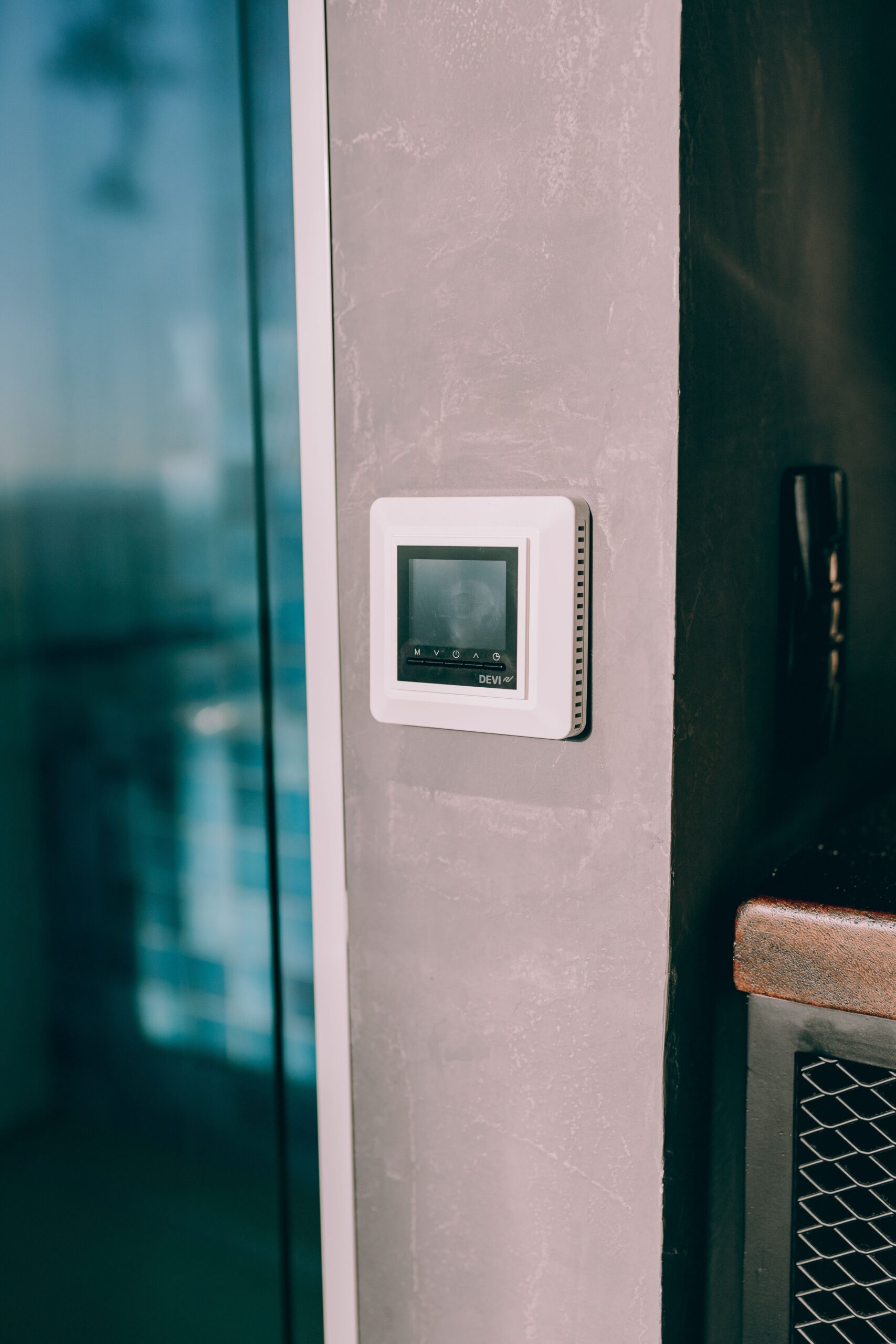
Heating controls require more than successful packet delivery. A room sensor must associate its measurements with the correct zone, while an electronic radiator thermostat must distinguish a received setpoint from an implemented mechanical adjustment. Software needs to track stale readings, unsuccessful commands, and any fallback operating state during connectivity loss. The agreement does not describe Styrvel’s application algorithms or claim certification against a particular building control standard.
Licensing permits more freedom over PCB size, sensors, radio component selection, and firmware integration, but also places responsibility for those decisions on the product developer. Antenna location, power delivery, electromagnetic compatibility, firmware update procedures, and end-product certification remain necessary. A validated networking stack is one component of the finished hardware rather than its complete compliance assessment.
NeoCortec publishes low-current and multi-year battery-life examples for particular network assumptions. Such values cannot be transferred to Styrvel devices without measurement: the thermostat actuator, sensor sampling schedule, temperature, control traffic, and battery chemistry will affect each product’s lifetime. Styrvel has not disclosed results from operating installations or maintenance intervals.
The licence establishes NeoMesh as the chosen communication protocol for Styrvel’s retrofit product development. Device-level specifications, actual installations, measured radio reliability, and demonstrated battery lifetime remain to be reported. The partners have provided no deployment total or timetable against which to assess those outcomes.