
IN Brief:
- 800V architectures are pulling battery monitoring and safety electronics into tighter packaging constraints.
- BorgWarner’s modular BMS design scales across BEV and PHEV pack formats using BMU and CMU building blocks.
- Production-proven electronics are being extended into new vehicle lines as OEMs broaden electrified portfolios.
BorgWarner has secured an expansion to its series-production battery management system programme with a major global OEM, extending the deployment of its existing BMS architecture to additional battery-electric and plug-in hybrid vehicle lines.
The system has been in production with the customer since 2023, with the expanded applications scheduled to begin in 2029 across additional B-segment and C-segment passenger cars as well as light commercial vehicles. The timescale matters for electronics suppliers because it signals a move from early platform launches into broader, multi-nameplate rollouts, where cost, packaging, and upgrade paths tend to dominate design decisions.
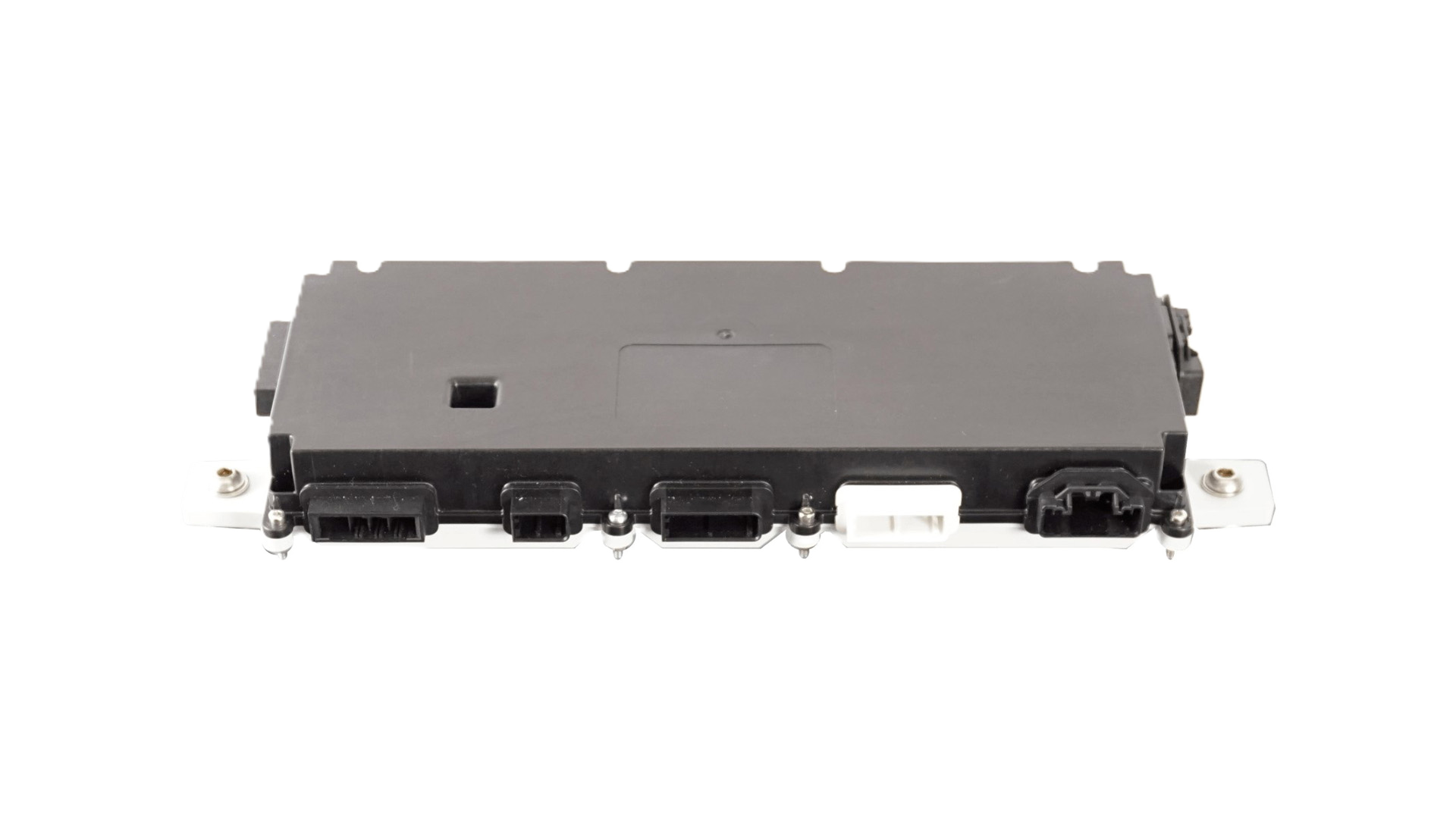
BorgWarner’s BMS is structured as a modular electronics system, with a central battery monitoring unit connected to cell monitoring units at the battery modules. In practical terms, that topology is designed to scale across pack sizes and module counts without forcing a full redesign, while keeping measurement and balancing functions close to the cells. BorgWarner says the architecture monitors charge level, battery health, and temperatures, measures cell voltages, and performs passive cell balancing to support performance and durability over service life.
On high-voltage platforms, fast charging compatibility is no longer optional, and BorgWarner is explicit about communications support for direct current charging, alongside built-in controls and diagnostics intended to help meet demanding safety expectations. The company describes the system as suitable for applications operating up to 800V, with design targets aligned to Automotive Safety Integrity Level D functional safety goals.
The company’s packaging argument is equally direct: compact module-level units are intended to enable flexible placement in the pack, and BorgWarner says the electronics platform can be upgraded to support future functions. For OEMs that are standardising battery enclosures while iterating on software and safety features over successive model years, the ability to extend capability without a new hardware family is becoming part of the supplier selection calculus.
Dr. Stefan Demmerle, Vice President of BorgWarner Inc. and President and General Manager, BorgWarner PowerDrive Systems, said: “We’re pleased to expand our series-production battery management program, highlighting our customer’s confidence in our production-proven design that’s already performing in real-world vehicle applications.”

