
IN Brief:
- Quantum photonics is shifting from lab-scale devices towards foundry-aligned process flows.
- Tower and Xanadu are co-engineering custom material stacks and production steps for SiPho quantum circuits.
- The work targets scalable platforms that can support larger, fault-tolerant photonic quantum systems.
Tower Semiconductor and Xanadu have expanded their collaboration to develop advanced silicon photonics manufacturing tailored to photonic quantum computing hardware, with an emphasis on process flows aligned to high-volume production.
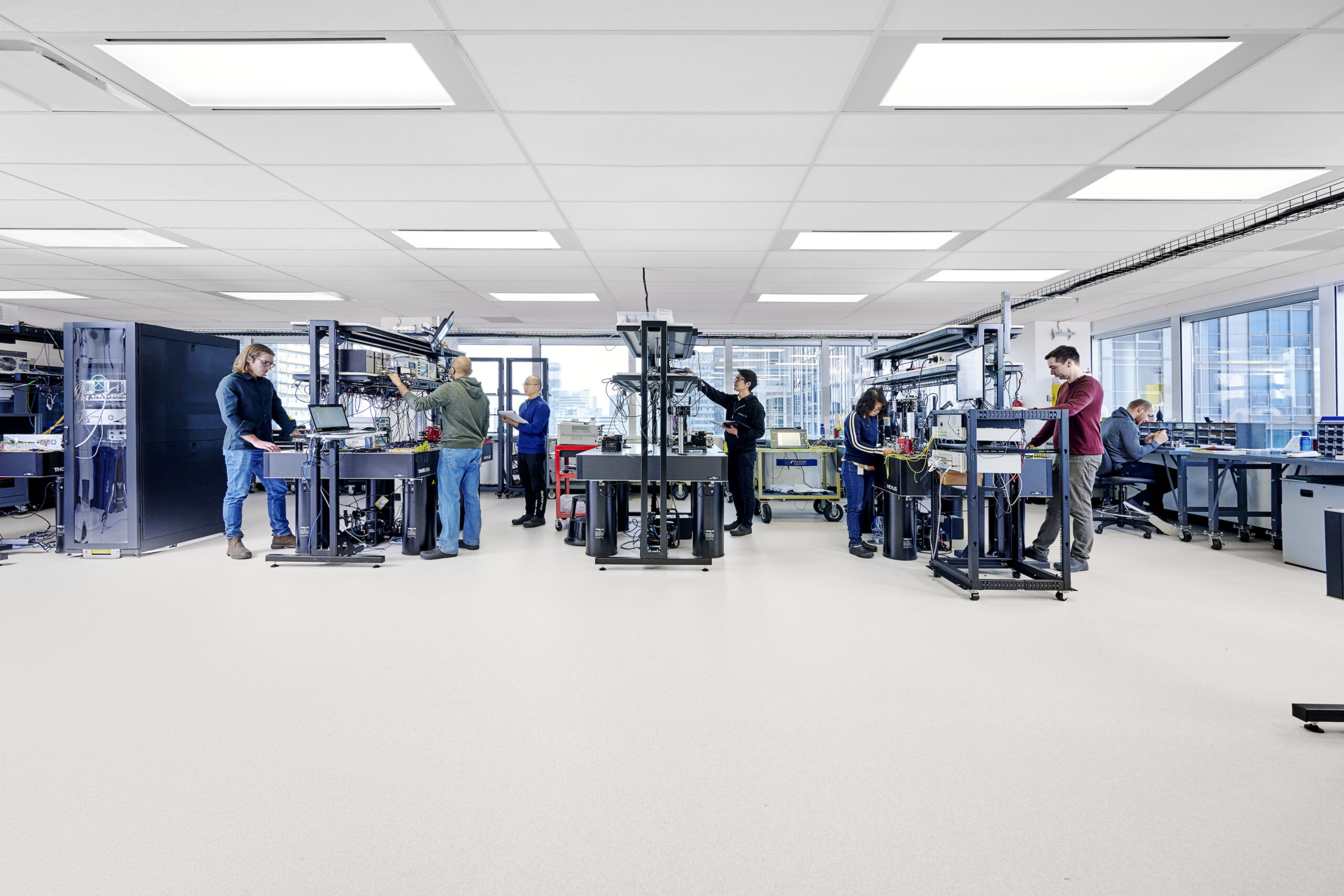
The companies say they have co-engineered a unique production flow for Xanadu’s custom material stack, aiming to deliver a manufacturing-aligned, architecture-compatible platform for next-generation photonic quantum hardware. The work builds on earlier joint development, including a series of tapeouts used to test and refine Xanadu designs on Tower process flows.
The current development focus is on optimising critical components using standard product flows for ultra-low loss silicon nitride (SiN) and integrated photodiodes. The intent is to validate photonic circuit designs against an established manufacturing baseline, rather than treating fabrication as a bespoke, one-off research exercise.
Christian Weedbrook, Founder and CEO of Xanadu, said: “Our work with Tower has been instrumental in moving our hardware from concept to prototype to demonstrator systems within a scalable manufacturing environment. By combining our architectural breakthroughs, fabrication process engineering and design innovations with Tower’s world-class technology and manufacturing expertise, we are building the foundation for a truly useful quantum computer.”
For photonic quantum computing, the manufacturing problem is inseparable from the architecture. Scaling requires repeatable control over waveguide loss, coupler performance, detector integration, and variability across large photonic integrated circuits, alongside packaging and test strategies that do not collapse under yield pressure. A foundry-aligned process flow, particularly one rooted in silicon photonics capacity already serving other markets, is a pragmatic way to push beyond small demonstrators.
Tower is positioning the collaboration as an extension of a broader silicon photonics platform that already spans data centres, telecoms, and automotive, and is now being adapted for quantum hardware requirements. Dr. Ed Preisler, Vice President and General Manager of the RF Business Unit at Tower Semiconductor, said: “Xanadu is advancing one of the most scalable quantum architectures in the industry, and we’re pleased to deepen our collaboration to support manufacturable scale. This reinforces the broad applicability of our platform across multiple advanced domains including quantum computing, data centers, telecom and automotive applications.”
The reference to “standard product flows” is a key detail. Quantum photonics projects often stall at the step where process tweaks required for a particular device set become incompatible with stable and economically viable foundry operation. Anchoring SiN and integrated photodiode work inside standardised flows suggests a deliberate attempt to keep the quantum-specific stack close to a manufacturable centreline.
The remaining challenge is translating photonic circuit design rules, device libraries, and test coverage into something that behaves predictably across wafers, lots, and time. The companies are framing this collaboration as part of meeting manufacturability requirements as the sector pushes towards commercial-scale systems, where photonic quantum hardware will be judged less on a single demonstration and more on its ability to ship, calibrate, and operate at scale.

