IN Brief:
- Iridium is targeting high-volume, price-sensitive IoT deployments with a hybrid connectivity module.
- The 9604 integrates Iridium Short Burst Data, LTE-M, and GNSS, with a unified host interface and power architecture.
- Iridium is positioning the module alongside a broader roadmap that includes standards-based Iridium NTN Direct.
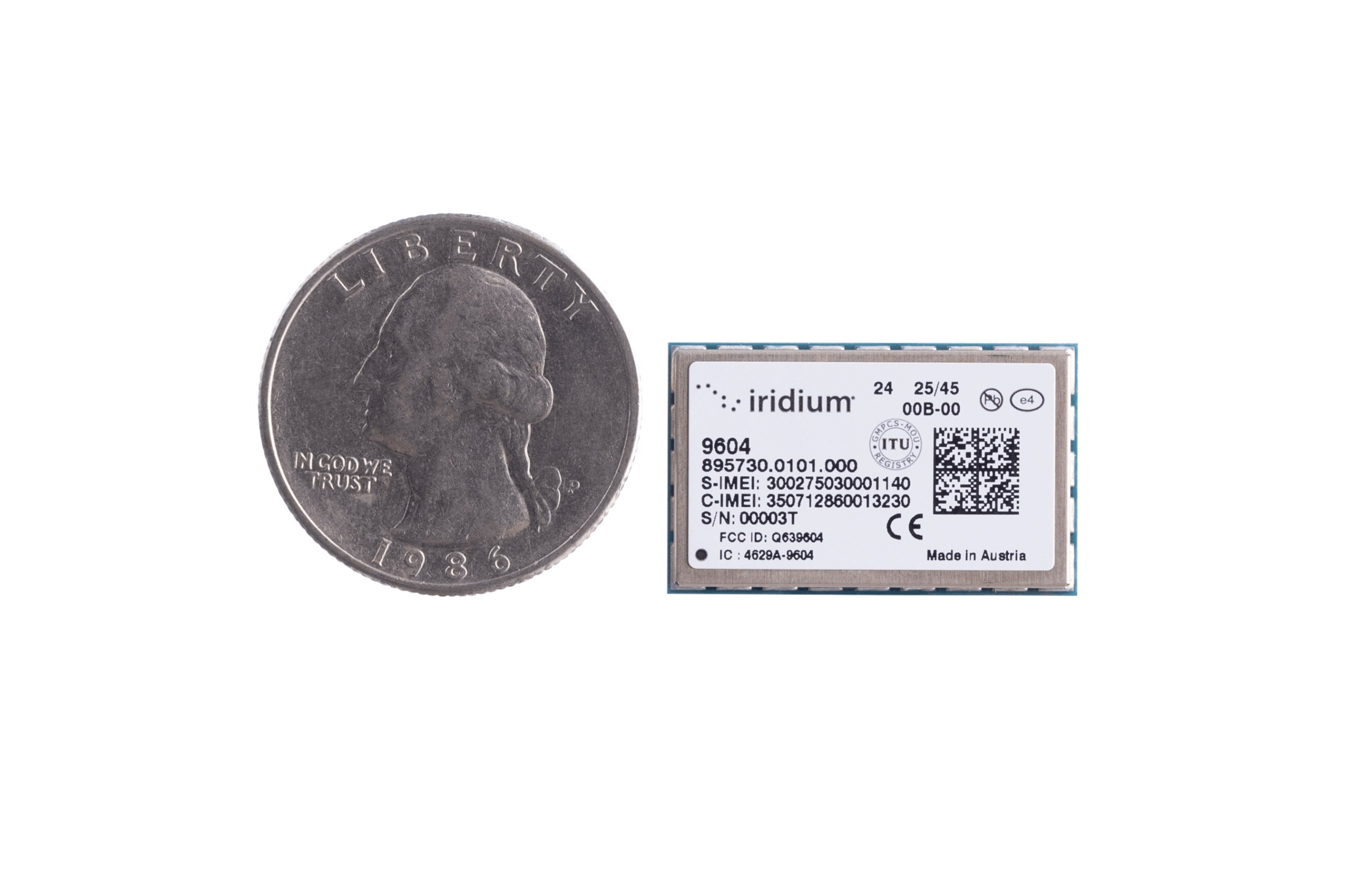
Iridium Communications has launched the Iridium 9604, a compact IoT module that combines Iridium Short Burst Data (SBD) satellite service, LTE-M cellular connectivity, and GNSS positioning in a single platform, aimed at reducing board space, integration effort, and bill-of-materials complexity in dual-mode designs.
The company is pitching the 9604 as a practical route to hybrid IoT architectures where cellular handles routine traffic and satellite provides coverage continuity. “By integrating cellular, GNSS, and Iridium satellite into a single, power-efficient module, we’re giving customers the flexibility to design and deploy lower cost, smaller, power-efficient, and location-aware solutions without the burden of integrating multiple components,” said Tim Last, executive vice president at Iridium.
Iridium says its 9604 beta programme has already run with a limited group of developers, and that the early access cohort was oversubscribed. The company claims the combined design can deliver board-space savings of 60 percent or more versus a three-component approach, while enabling location-aware network selection using GNSS positioning data.
Technically, the 9604 is built on the u-blox SARA-R5 platform and targets a 16 mm × 26 mm × 2.4 mm form factor, with dual RF ports for Iridium/GNSS and LTE-M. On the satellite side, the module supports Iridium SBD payload sizes of 340 bytes mobile-originated and 270 bytes mobile-terminated, and it is specified for operation from −40°C to +85°C. Iridium is also emphasising implementation control: the module provides independent control of the satellite, cellular, and GNSS subsystems rather than forcing automatic switching, allowing designers to define routing, failover, and cost controls in firmware. A unified AT command set and associated developer resources are intended to shorten integration cycles for teams building first hardware.
Early developer feedback in the launch announcement focused on cost and footprint. “We eliminated two components from our bill of materials, reduced our board size, and simplified our power architecture,” said Alastair MacLeod, CEO at Ground Control, adding that dual-mode connectivity enables smarter, location-aware network selection in the company’s application. Everlink is also positioning the module as a way to expand service coverage for remote assets through tighter coupling between device connectivity and a cloud platform, according to comments from CEO Dean Welten.
The 9604 launch sits alongside a wider Iridium IoT positioning that now spans three paths: proprietary SBD, standards-based Iridium NTN Direct for NB-IoT and direct-to-device use cases using third-party chips, and Iridium Messaging Transport-based services aimed at larger payloads via Certus modules. Iridium has said commercial availability of the 9604 begins in June 2026, with a development kit offered to support satellite and cellular testing ahead of volume deployments.