
IN Brief:
- XPENG has set 2027 as the start point for global delivery of its VLA 2.0 intelligent driving system, with Volkswagen named as the first launch partner in China.
- VLA 2.0 moves to an end-to-end vision-to-action architecture and is being validated through Robotaxi public-road testing in China and planned overseas road validation.
- In Europe, XOS 5.8.7 begins rollout in March, tuning ACC and lane-centring behaviour and improving CarPlay, Android Auto, and OTA update performance.
XPENG has put a date on its next intelligent-driving step change and, at the same time, has queued a software update intended to make today’s vehicles behave more cleanly on European roads. The company says global delivery of its second-generation Vision-Language-Action system, VLA 2.0, is planned to begin in 2027, while the XOS 5.8.7 over-the-air update starts rolling out to existing European owners in March, beginning with an early access programme.
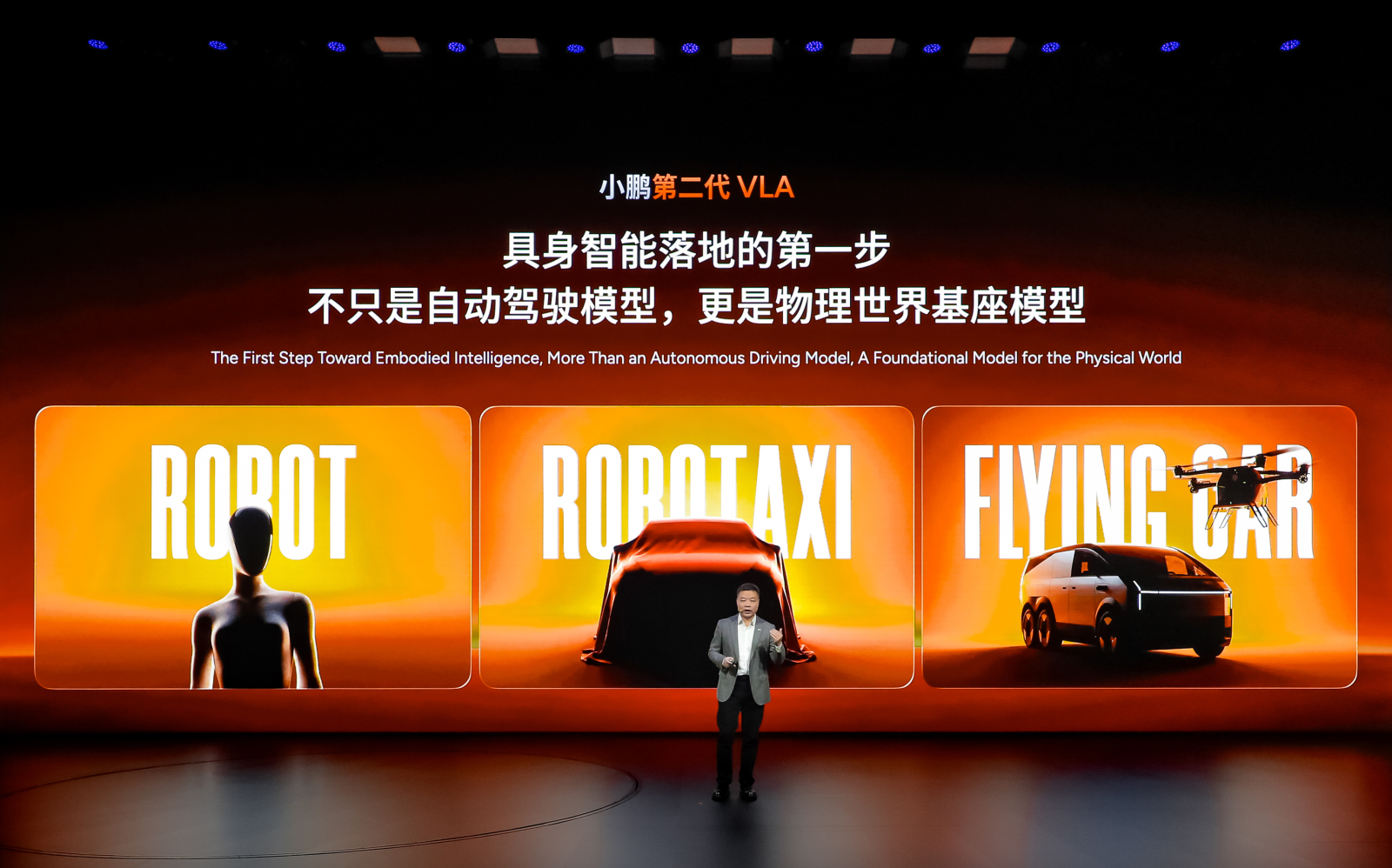
VLA 2.0 is positioned as a shift in architecture rather than a feature drop. Instead of a sequential vision–language–action pipeline — perception translated into language-like reasoning, then converted into actions — XPENG is moving to an end-to-end vision-to-action model intended to map perception directly to driving decisions. The company says the approach reduces dependence on high-definition maps and rigid, rule-based logic, aiming for stronger generalisation across varied road layouts and traffic behaviours.
In early testing cited by the company, VLA 2.0 improved “driving efficiency” by 23% in measured runs during Guangzhou’s evening rush hour, with traffic efficiency described as exceeding traditional L2 intelligent driving systems and Robotaxi models. The company also lists edge cases it expects the system to handle — erratic vehicles, accident scenes, animals, narrow lanes, potholes, and start-from-standstill scenarios — alongside operation on campus lanes and rural dirt roads.
He Xiaopeng, Chairman and CEO of XPENG, said: “XPENG’s VLA 2.0 is the first version designed to achieve full autonomous driving and will iterate at an unprecedented pace. We believe that full autonomy will arrive within the next one to three years, making autonomous driving a natural part of people’s daily travel.”
Deployment starts in China, where XPENG says Robotaxi vehicles equipped with VLA 2.0 have entered supervised public-road testing, with trial operations scheduled to commence later this year. Volkswagen is named as the first customer and commercial partner to adopt VLA 2.0 in the Chinese market, with XPENG framing the arrangement as a launch milestone for the system.
Hardware remains central to whether an end-to-end model can be shipped at scale. XPENG says the system is powered by its proprietary Turing AI chip, rated at up to 2,250 TOPS of effective compute per chip, with multiple chips deployed per vehicle to lift inference throughput for larger models.
For markets outside China, the company says it will soon begin overseas road validation, and it flags alignment with United Nations Regulation No. 171 on driver control assistance systems (DCAS), including support for system-initiated continuous lane changes and more advanced manoeuvres, subject to local regulatory approval.
Alongside the roadmap, XOS 5.8.7 is a near-term tune-up for European fleets. XPENG says updates to adaptive cruise control reduce unnecessary deceleration, while lane-centring refinements remove small-amplitude steering oscillations on straight roads. The release also lists stability improvements, stronger CarPlay and Android Auto connectivity, optimised interface language display, and faster OTA update speeds — incremental changes, but the kind owners notice every day.

