
IN Brief:
- Embedded World has placed Embedder among its 2026 startup nominees, underlining rising interest in silicon-aware AI tooling.
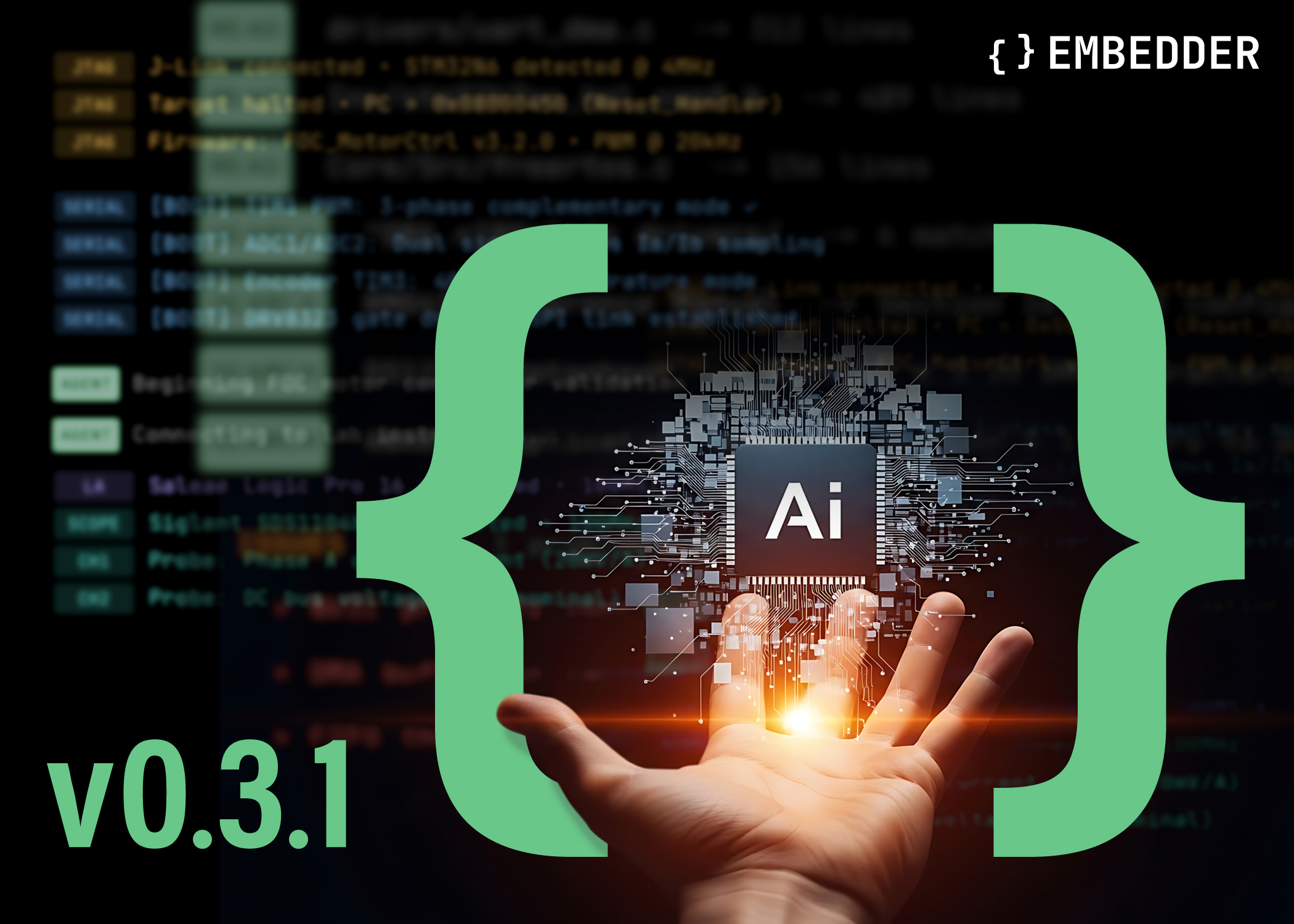
- Version 0.3.1 adds multi-device serial monitoring and broader platform support around a hardware-grounded firmware workflow.
- The company is pushing AI as a verification-aware embedded toolchain, rather than another general coding assistant.
At Embedded World 2026, Embedder is trying to turn one of AI’s weakest habits — plausible-looking wrong answers — into the thing it is judged against. The company’s nomination in the embedded award startup category lands just as it pushes v0.3.1 as a more mature firmware engineering platform, built around hardware-specific documentation, closed-loop verification, and tighter enterprise workflows.
That matters because embedded development still resists the shortcuts that work elsewhere in software. Register maps, timing diagrams, errata, power domains, and revision-specific quirks do not tolerate guesswork, and a generated driver that looks tidy in an editor can still fail the moment it hits real silicon. Embedder’s approach is that firmware agents need a different foundation: pre-indexed hardware knowledge, multimodal parsing of datasheets and diagrams, and direct validation against simulation targets or boards on the bench.
The latest release sharpens the practical side of that proposition. Version 0.3.1 introduces a revamped serial monitor with multi-device support, aimed at teams working on mesh networks and other multi-node systems, while the platform has also widened support across Arduino, Raspberry Pi, Infineon, and Nordic environments. On the product side, Embedder is already touting coverage for more than 300 MCU variants and a workflow that blends software-in-the-loop and hardware-in-the-loop validation with document-grounded code generation.
“Our vision is to bring modern, capable tooling into an archaic stack,” said Ethan Gibbs, CEO of Embedder. “The innovation phase is behind us. v0.3.1 is a mature, validated environment. We’re empowering professional engineers at startups and enterprises to safely handle their IP and deploy code that works.”
The harder question is whether embedded teams are ready to trust agentic tools with work that sits close to product failure modes, certification pressure, and protected IP. Embedder is clearly aiming above the hobby tier, with private cloud and air-gapped deployment options, and with a workflow that sits inside existing toolchains rather than asking teams to rebuild around a browser demo. The award nomination does not settle that argument, but it does signal where the market is looking: less fascination with AI writing C, more attention on whether it can understand hardware constraints well enough to survive production.

