IN Brief:
- Lumotive has demonstrated what it describes as the first programmable 2D photonic beamforming semiconductor built on its LCM architecture.
- The chip electronically steers light across two axes without moving parts, opening a route to flatter and more software-defined optical systems.
- Potential applications span optical switching, AI data-centre interconnects, communications, and next-generation sensing platforms.
Lumotive has demonstrated a programmable two-dimensional photonic beamforming chip, marking a notable step for semiconductor-based optics at a point when AI networking and advanced sensing are both demanding more flexible control of light.
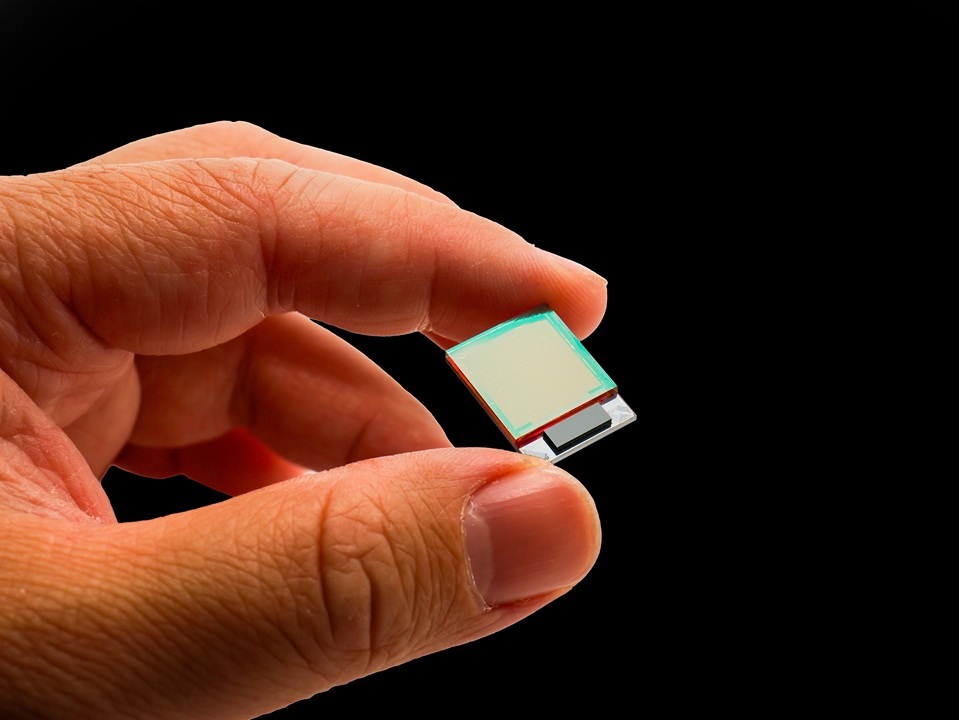
The core change is architectural. Rather than relying on mechanical motion or a stack of fixed optical components, Lumotive’s Light Control Metasurface platform electronically forms and steers beams across two spatial axes inside a single chip. That matters because two-dimensional beam steering has been one of the harder problems in practical photonics, especially where designers also want semiconductor-style scalability and reliability.
Lumotive is framing the breakthrough around optical circuit switching in AI data centres, photonic communications, optical computing, and 3D sensing. The attraction is not just beam control, but system simplification: the same semiconductor surface can potentially take over work that would otherwise require mirrors, lenses, beam splitters, or more complex assemblies. In effect, the company is pushing toward flatter, more programmable optical hardware where behaviour is defined in software rather than fixed in the package.
The wider significance is that programmable optics is starting to look less like a lab curiosity and more like a platform question for future systems. AI infrastructure is already exposing the limits of electrical interconnect density and power overhead, while robotics and sensing markets continue to want smaller and more robust beam-steering hardware. Lumotive has published more detail on the breakthrough here.