
IN Brief:
- EMIS has launched a new filter for EMI and RFI suppression in MRI installations.
- The device is designed for power entry and signal-line protection in shielded imaging rooms.
- Electromagnetic control remains a persistent engineering challenge in medical electronics infrastructure.
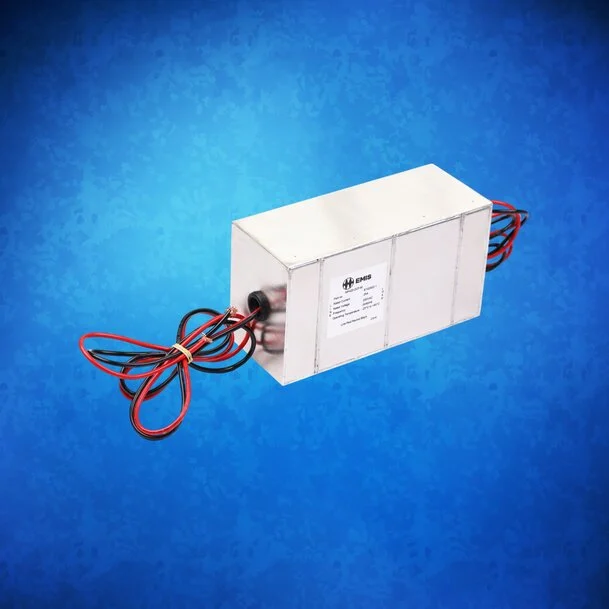
EMIS has launched the MF420-2CF-M MRI filter, a new suppression component designed for use in imaging environments where electromagnetic interference can affect signal integrity, image quality, and regulatory compliance. The filter is intended for high-field MRI installations and is built to address both power-line and signal-line interference paths inside and around shielded rooms.
MRI systems combine strong static magnetic fields with the need to detect extremely low-level radio-frequency signals. Any unwanted interference in the surrounding installation can reduce signal-to-noise ratio, introduce artefacts, or disrupt associated monitoring and control systems. That makes EMI control an infrastructure issue as much as a subsystem issue, particularly in facilities where multiple power and data lines must pass through shielding boundaries.
The MF420-2CF-M is designed to deliver high attenuation up to 10GHz. EMIS has identified use cases at main AC power entry points, gradient amplifier feeds, RF amplifier interfaces, and a range of signal connections including Ethernet, alarms, sensors, and monitoring systems. That places the filter across several potential interference paths rather than limiting it to a single mains input.
The mechanical design reflects installation demands as much as electrical performance. The filter is housed in a sealed metallic enclosure intended to protect against dust, moisture, and corrosion, with threaded conduit support and flexible wire leads to simplify integration in constrained spaces. Internal discharge provision through a bleeder resistor and low leakage current are also part of the design, supporting long-life operation in environments where service access is limited and uptime is tightly managed.
MRI infrastructure is becoming more complex as imaging systems advance in sensitivity and facilities add more digital equipment around them. Monitoring systems, networked support tools, and modern building services have increased the electromagnetic density of the clinical environment rather than reducing it. That places more emphasis on the quality of shielding, grounding, and filtering decisions made during installation and retrofit work.
Medical electronics often draws attention at the instrument level, but supporting components such as filters, connectors, penetrations, and grounded interfaces still shape how reliably the wider system performs. In high-field environments, weaknesses in EMC design can produce large operational effects even when the core imaging hardware is performing to specification. The integrity of the installation remains inseparable from the integrity of the signal.
There has also been a wider tightening of electromagnetic discipline across healthcare facilities. Hospitals and specialist centres now operate increasingly complex estates in which imaging, monitoring, communications, and IT infrastructure coexist in close proximity. EMC is no longer a specialist concern tucked away at the end of the project. It is part of baseline design practice for rooms and systems that must remain stable under heavy electrical and digital load.
Products like the MF420-2CF-M sit directly in that shift. They are specialised components, but they support a broader need for cleaner power entry, better suppression of conducted and radiated noise, and more dependable shielding performance at the room boundary. In medical electronics, those details are rarely decorative. They are part of whether the system works as intended in day-to-day operation.
As imaging technology continues to advance, the supporting hardware around it is under closer scrutiny. Filters, grounding schemes, and interference control components are becoming more visible in procurement and installation planning for one simple reason: the more sensitive the system, the less room there is for weak infrastructure.

