
IN Brief:
- Infineon is participating in the CHAMP-ION, SUPREME, and SPINS pilot-line projects.
- The programmes are intended to move quantum hardware from laboratory work toward industrial fabrication.
- Europe is putting more emphasis on sovereign manufacturing capability in advanced semiconductor technologies.
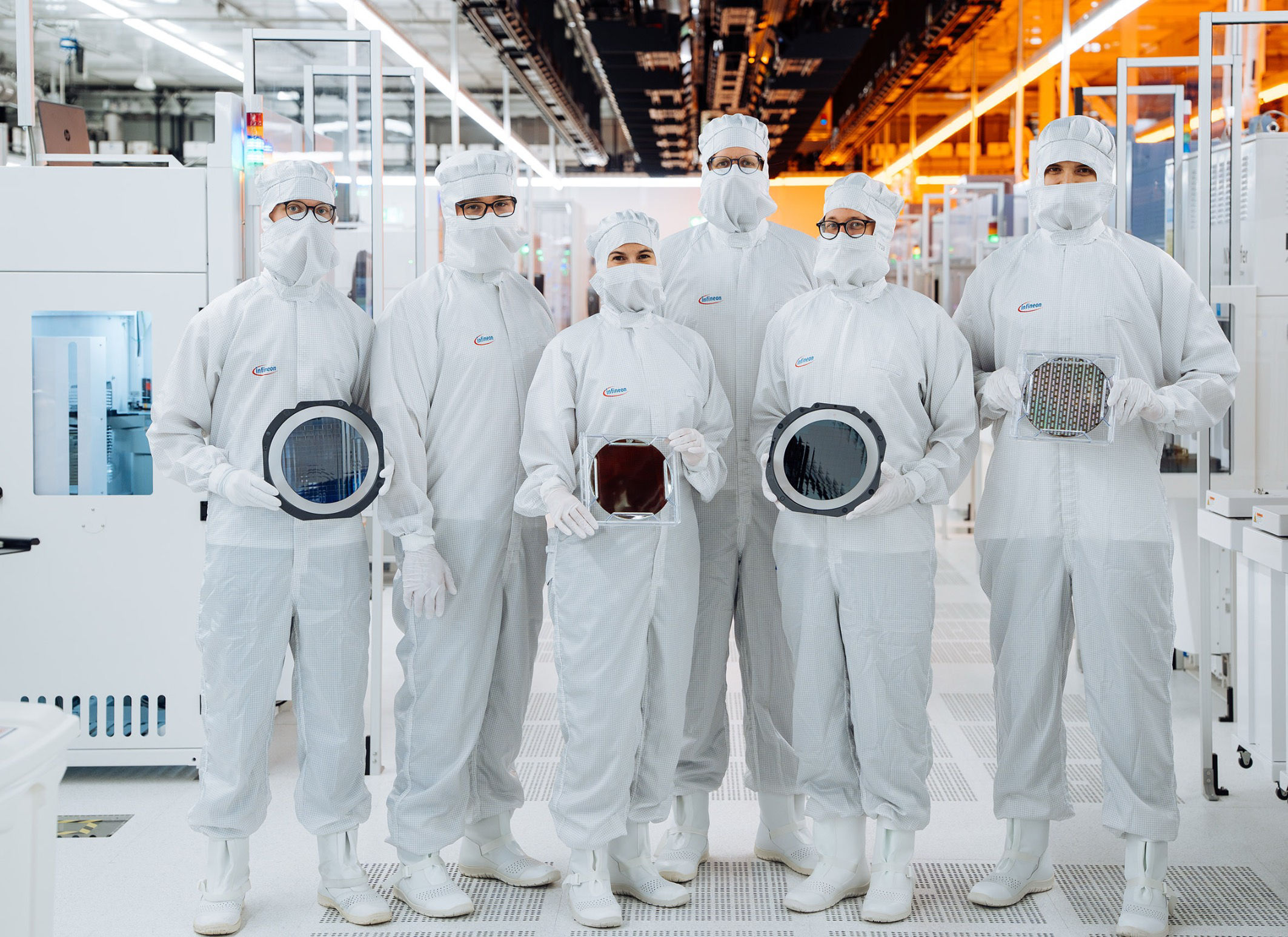
Infineon Technologies has become a core industrial partner in three European quantum pilot-line projects, extending its role in the region’s quantum semiconductor effort beyond research support and into manufacturing-scale development. The company is contributing engineering and production expertise to CHAMP-ION, SUPREME, and SPINS, three programmes intended to move quantum hardware from laboratory work toward repeatable industrial fabrication.
The pilot-line model is designed to close a gap that has become increasingly visible across the quantum sector. Europe has a strong research base in quantum computing, communication, and sensing, but turning experimental devices into manufacturable hardware depends on more than scientific progress alone. Process control, test infrastructure, yield learning, reproducibility, and access to industrial-grade facilities all become decisive once the goal shifts from demonstration to production.
Infineon’s participation spans three distinct hardware approaches. CHAMP-ION, led by Silicon Austria Labs, is focused on establishing Europe’s first advanced ion-trap quantum chip manufacturing line, bringing together design, microfabrication, and testing with integrated electronics and photonic structures. SUPREME, led by VTT, centres on superconducting quantum technology and includes a milestone around a 200-qubit 3D integrated module intended to improve stability, yield, and reproducibility. SPINS, coordinated by imec, is working on quantum chips based on pure silicon and silicon-germanium structures using largely standard CMOS manufacturing methods, alongside standardised quantum design kits and multi-project wafer runs.
Across those three projects, the shared objective is to industrialise several promising quantum platforms at once rather than wait for a single architecture to pull ahead. That makes manufacturing expertise particularly valuable. Quantum systems differ in device physics, but they still face familiar scaling problems once production becomes the goal: process variation, packaging consistency, contamination control, throughput, and integration with supporting electronics all start to matter more than they do at the laboratory stage.
The pilot lines are backed through the Chips for Europe initiative and the Chips Joint Undertaking, with co-funding from the European Union and participating national programmes. Six projects in total have been selected across different hardware platforms over a seven-year period. SPINS alone carries a project value of €50 million, illustrating the level of public and industrial commitment now moving into quantum semiconductor capability.
The wider industrial context is clear enough. Europe has been trying to strengthen semiconductor sovereignty in areas where strategic value may emerge before large-scale commercial volume does. Quantum devices are still early in their industrial lifecycle, but the skills needed to manufacture them overlap with broader strengths in process engineering, advanced materials, photonics integration, and highly controlled fabrication. Building those capabilities now helps shape a future semiconductor base that is less reliant on external manufacturing ecosystems.
The multi-platform approach is also pragmatic. Quantum technology has not converged on a single winning architecture, and there is no reason to force that outcome prematurely. Ion-trap, superconducting, and semiconductor spin technologies each offer different strengths, integration paths, and scaling challenges. Supporting several of them in parallel allows industrial learning to progress without locking Europe’s effort to one technical bet too early.
For Infineon, the work also fits a broader shift in the semiconductor industry. Large manufacturers are becoming more involved in technologies that once sat almost entirely in the research domain, particularly where their process discipline and scale-up experience can accelerate the move toward usable hardware. In quantum, the question is no longer only whether devices can function in a laboratory. It is whether they can be made reliably, repeatedly, and in a way that supports a wider supply chain.
That is where the European pilot lines carry weight. They are not just research collaborations. They are part of the manufacturing groundwork required to turn quantum promise into an industrial capability that can be designed, built, and supported within Europe’s own semiconductor base.

