IN Brief:
- Infineon is inviting startups to develop hardware and system concepts for humanoid robotics.
- Focus areas include artificial skin, environmental sensing, motor control, digital twins, and edge AI.
- Selected teams will pitch in Dresden before presenting demonstrators in Graz and Munich later in 2026.
Infineon Technologies has opened its 2026 Startup Challenge with a focus on humanoid robotics, inviting deep-tech startups to develop hardware and system concepts for next-generation robotic platforms.
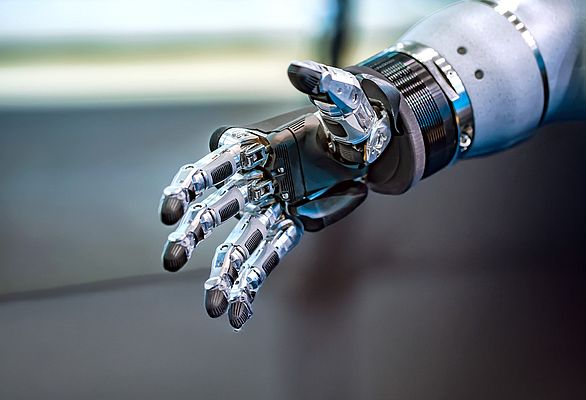
The challenge centres on the electronics needed to make humanoid systems more capable, responsive, and practical outside controlled demonstration environments. Focus areas include artificial skin, environmental sensing, motor control, digital twins, and edge AI, bringing together several of the core design disciplines now shaping physical AI systems.
Applications close on 27 May 2026, with selected startups due to pitch at Silicon Saxony Days in Dresden in June. From an initial group of 24 pre-selected teams, up to 12 will move into the official programme, beginning with a kick-off workshop on 18–19 June.
Participants will gain access to prototyping kits, development resources, and technical support from Infineon specialists. Würth Elektronik and Rutronik are also supporting the programme as technology partners, giving teams access to component portfolios and implementation expertise as they move from concept to working demonstrator.
The available development resources include the PSOC Edge E84 AI Evaluation Kit, PSOC 4000T Multi-Sense Prototyping Kit, a visual feedback kit, a laser beam scanning kit, a motor-control kit, ModusToolbox software, and Deepcraft Studio for edge AI model development.
That hardware mix illustrates the breadth of the engineering problem. A humanoid platform has to sense pressure, position, movement, and proximity, while controlling motors smoothly enough to interact safely with people and the built environment. Local processing must also interpret sensor data quickly, because cloud-dependent control loops are unsuitable for many real-time movement and safety functions.
As humanoid robotics develops, more of the design burden is shifting into tightly integrated electronics. Motor-control electronics must balance torque, efficiency, heat, and responsiveness. Sensor systems must provide reliable feedback through touch, vision, radar, microphones, and motion detection. Embedded compute has to support local inference without overwhelming the platform’s power and thermal envelope.
The challenge also reflects a wider convergence across industrial automation, automotive electronics, low-power AI, and sensor fusion. Technologies originally developed for factory automation, advanced driver assistance, smart sensing, and compact motor drives are now being pulled into robotic systems that need to operate closer to people, materials, tools, and infrastructure.
Selected teams will continue through a demonstration stage at the EBS Conference in Graz on 6 October, before winners are invited to pitch at Infineon Startup Night in Munich on 22 October. Successful participants may then move into a one-year innovation programme.
For European electronics developers, humanoid robotics is becoming a system-integration contest as much as a mechanical design challenge. The companies able to connect sensing, actuation, embedded AI, and power electronics into repeatable hardware platforms will be better placed as robotics moves into logistics, inspection, care, service, and industrial support roles.