IN Brief:
- Benewake’s TF-UW500 underwater single-point ToF LiDAR is now available through Mouser Electronics.
- The compact sensor provides centimetre-level underwater distance measurement for robots, mapping, positioning, and obstacle avoidance.
- Underwater robotic systems are adding optical sensing to complement acoustic, inertial, and camera-based measurement.
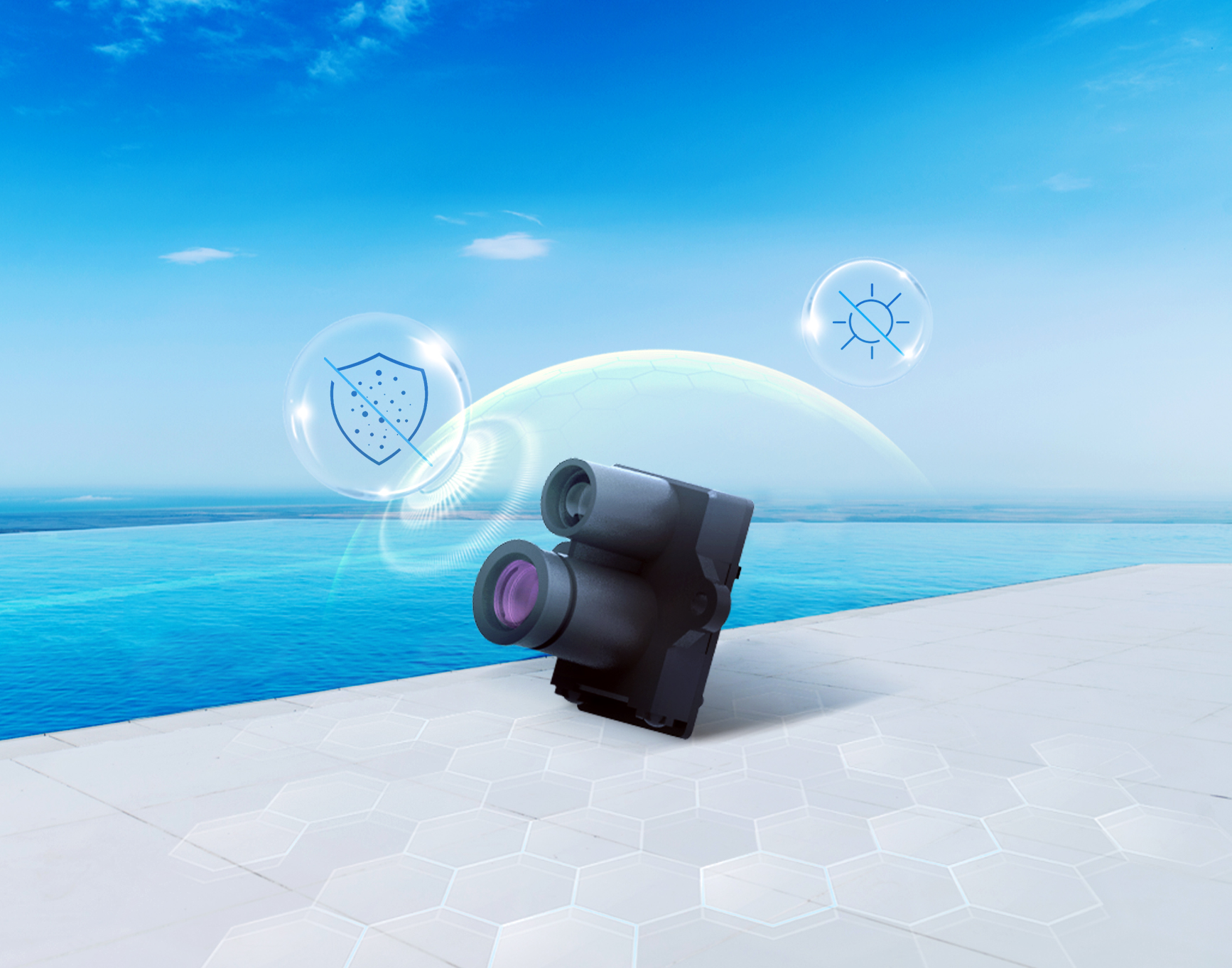
Benewake’s TF-UW500 underwater single-point time-of-flight LiDAR sensor is now available through Mouser Electronics, giving embedded and robotics designers access to compact optical distance sensing for underwater measurement.
The TF-UW500 uses direct time-of-flight sensing and is designed for underwater robots, mapping, positioning, obstacle avoidance, logistics systems, and industrial automation applications. Benewake lists an underwater detection range of more than 5m in suitable low-turbidity water, with a 0.5° field of view, centimetre-level accuracy, and millimetre-level repeatability.
The sensor measures 24mm x 16mm x 20.4mm and weighs less than 5g, making it suitable for compact robotic platforms where payload space and power budgets are constrained. It uses a Class 1 visible laser and a small optical spot to support directional measurement, with hardware-level filtering and anti-glare algorithms designed to maintain performance in strong light or turbid water.
Repeatability is listed at below 1cm at 1σ, while accuracy is below 3cm over a 0.1m to 2m range. Operating temperature extends from 0°C to +50°C. The sensor has also been calibrated across common pool materials, giving it a defined application path in pool-cleaning robots and other controlled underwater environments.
Underwater sensing is difficult because water affects each measurement technology differently. Ultrasonic sensors can operate over longer ranges and through murkier water, but beam spread, multipath effects, and lower spatial resolution can complicate close-range mapping. Cameras can provide rich visual information, but they are sensitive to lighting, turbidity, and surface reflections. Inertial systems provide continuity, but drift becomes a concern when external references are limited.
A compact single-point optical sensor adds another layer to that measurement mix. It will not replace sonar, cameras, inertial sensors, or pressure measurement, but it can provide precise local distance data for collision avoidance, wall following, docking, tank mapping, pool coverage, and stabilised positioning close to structures.
The wider LiDAR market is already spreading beyond conventional automotive perception. Ouster’s Rev8 native colour LiDAR family showed how LiDAR is being adapted for robotics, autonomy, infrastructure, mapping, and industrial perception. Benewake’s TF-UW500 moves the same sensing principle into underwater environments, where the constraints are different but the demand for compact, machine-readable distance data is similar.
Small autonomous and remotely operated underwater platforms are becoming more capable as motors, batteries, sensors, and embedded processors improve. Inspection, maintenance, aquaculture, energy infrastructure, logistics, and enclosed water systems all create use cases where robots need to understand their immediate surroundings without relying on one sensing modality.
That mixed-sensor architecture places a premium on compact, low-power devices that can be integrated without dominating the mechanical design. The TF-UW500’s size and measurement characteristics make it a useful option for the short-range local sensing layer, particularly where precision close to surfaces is more important than long-range scene capture.
Underwater perception is likely to remain a blended discipline, combining acoustic, optical, inertial, and control-system data. Benewake’s TF-UW500 gives system developers another building block for that stack, especially in compact robotic systems that need more reliable distance information close to walls, floors, structures, and obstacles.