
IN Brief:
- Texas Instruments’ TPS7E67-Q1 LDO supports 3V to 40V input operation and up to 300mA output current.
- The regulator draws 2.8µA no-load quiescent current for always-on automotive subsystems.
- The device targets standby MCUs, CAN transceivers, body control, telematics, lighting, and powertrain electronics.
Texas Instruments has introduced the TPS7E67-Q1 low-dropout linear regulator for direct-to-battery automotive applications requiring low standby current, wide input voltage operation, and tight DC accuracy.
The device supports a 3V to 40V input range, with output options from 1.2V to 38V in adjustable configuration and 1.8V to 12V in fixed configuration. It can deliver up to 300mA of load current while drawing 2.8µA quiescent current at no load. TI has specified the regulator for always-on vehicle functions including standby microcontrollers, CAN transceivers, body control modules, telematics, lighting, and powertrain electronics.
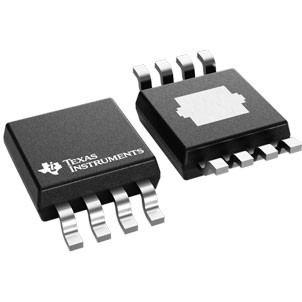
The TPS7E67-Q1 is designed to maintain ±1.2% DC accuracy across line, load, and temperature. It includes power-good monitoring with adjustable delay and de-glitch functions, alongside built-in protection for over-current, over-temperature, and over-power conditions. The regulator is stable with output capacitance from 4.7µF to 100µF and is available in WSON, HVSSOP, and HSOIC package options.
Vehicle electronics increasingly remain partially awake when parked. Remote access, body monitoring, security, telematics, battery supervision, diagnostics, and communications functions all create standby loads. Each device may draw little current in isolation, but the combined parked-load budget becomes harder to manage as electronic content increases across body, cabin, safety, and powertrain domains.
Automotive power design is also shaped by cold-crank behaviour, voltage transients, load dumps, reverse-battery events, and electromagnetic noise. LDOs connected close to the battery must support wide input variation without creating unstable rails for downstream microcontrollers and transceivers. Fast recovery from cold-crank conditions is important where control units must maintain state or restart predictably during sharp battery voltage dips.
Low-voltage power architecture is becoming more complex as vehicles adopt higher-speed connectivity and more distributed intelligence. Automotive Ethernet bandwidth increases show the data side of that shift, with zonal architectures, ADAS, LiDAR, radar, and central compute placing greater demand on vehicle networks. Those systems still depend on stable local rails, clean wake behaviour, and protection from the electrical environment around the vehicle.
Power-supply devices that look modest beside traction inverters or data-centre converters can determine whether a vehicle module behaves reliably across years of service. A standby LDO must balance battery preservation with readiness, support reliable power sequencing, avoid nuisance resets, and tolerate transients that occur in real vehicles rather than ideal bench conditions. The power-good function adds a defined control signal for downstream logic before operation proceeds.
Package selection also reflects production and inspection realities. Wettable flank packaging supports automated optical inspection, which is valuable in automotive assembly where solder-joint visibility and quality assurance affect manufacturing throughput. Smaller packages help reduce PCB area, although thermal dissipation, creepage, layout, and output capacitance still need careful handling in compact modules.
Software-defined vehicles are changing expectations around low-power states. More functions need to wake, sleep, communicate, and recover without excessive battery drain or unstable rail behaviour. Regulator selection therefore reaches beyond nominal voltage and current. Standby current, transient response, diagnostic signalling, inspectability, thermal behaviour, and protection functions all contribute to system reliability.
The TPS7E67-Q1 adds a direct-to-battery regulator option for designs operating under those constraints. Its value sits in dependable low-power rails inside vehicles that are never fully off, increasingly connected, and increasingly sensitive to the cost of every microamp in standby.

