
IN Brief:
- Altus is adding approximately 363m² to its Redditch headquarters.
- A new customer centre will demonstrate connected electronics manufacturing from assembly through backend processes.
- Applications support and line trials will help manufacturers assess equipment interaction before investment.
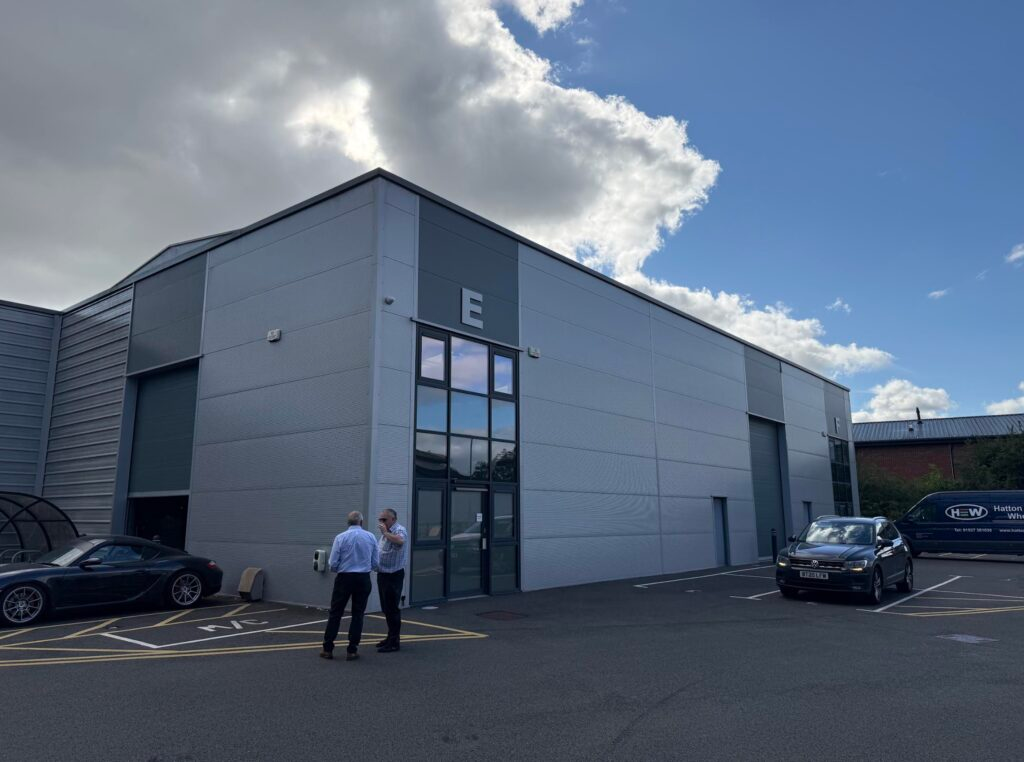
Altus Group is expanding its Redditch headquarters with an applications and customer centre built around complete electronics manufacturing lines rather than isolated production machines. The adjoining facility will add approximately 363m² to the site established in 2019, with opening planned for September 2026.
Equipment for surface mount assembly, through hole production, backend processes, and component management will be brought into a connected manufacturing environment. Customers will be able to examine how machinery exchanges material and data across the production flow, rather than assessing each stage through separate demonstrations.
Dedicated training, applications engineering, and collaborative development areas are also planned. Participation from several equipment suppliers will allow trials to cover the practical interaction between machines from different manufacturers, including the interfaces needed to establish a functioning line.
Representative assemblies can be used to investigate new product introduction, process development, and capital equipment selection. Cycle times, changeovers, inspection performance, handling, traceability, and software integration can then be measured before machinery is installed on an operating factory floor.
The familiar SMT sequence of printing, placement, reflow, inspection, and board handling will sit alongside later production stages. Through hole assembly, selective soldering, coating, mechanical integration, test, and final configuration remain central to industrial, defence, medical, power, and transport electronics, where many products do not fit an SMT only manufacturing model.
Complete line demonstrations can also expose assumptions that remain hidden when equipment is specified individually. A machine may meet its stated throughput in isolation yet spend much of its working time waiting for boards, material, data, maintenance, or decisions from an operator.
Output depends on the complete production flow
Electronics manufacturing investment is frequently assessed machine by machine, although delivered output is governed by the least stable or most constrained part of the process. High placement speed offers limited benefit when feeders are poorly prepared, inspection produces excessive false calls, assemblies queue before selective soldering, or product data has to be entered independently at every station.
Once the machinery is connected, those interactions can be measured under representative production conditions. Conveyor timing, buffer capacity, board support, recipe control, component replenishment, fault recovery, and the exchange of manufacturing data can alter throughput more profoundly than the nominal cycle time printed on an equipment specification.
Guided assembly technology supplied by Altus applies digital work instructions and verification to manual production stages, which remain important within many high mix operations. Placed beside automated equipment, these systems expose operator workload, material presentation, rework, and process control across the complete flow.
The UK electronics sector contains a large number of high mix, lower volume manufacturers serving regulated and technically demanding markets. Product changes are frequent, while individual assemblies may remain in production for many years, making traceability, offline programming, controlled changeover, feeder preparation, and repeatable process recovery as important as maximum placement rate.
Even when the production process is stable, component availability introduces another source of variation. Alternative parts, revised packages, and customer approved substitutions can require changes to inspection libraries, placement data, thermal profiles, and test limits; assessing those revisions away from a live line reduces the production risk attached to an already constrained material decision.
Training on connected equipment provides similar benefits because modern assembly depends on engineers who understand solder behaviour, design for manufacture, component handling, inspection data, process capability, and the interaction between software and mechanics. Instruction limited to one machine interface cannot show how a local setting affects yield or throughput elsewhere on the line.
Before automation can be justified, projects need realistic assumptions about utilisation and changeover. Equipment may be technically capable of a process but commercially unsuitable when changeovers are lengthy, programming is fragmented, maintenance support is distant, or factory software cannot exchange data with the machine without custom work.
Altus’ expansion creates a UK location where those constraints can be investigated before capital is committed. Its value will lie in exposing the less visible elements of integration, including material movement, data discipline, operator work, service support, and recovery from disruption, rather than presenting a sequence of machines as though proximity alone created a production system.

