IN Brief:
- LITEON has qualified Wolfspeed SiC technology for its 800VDC sidecar and compute-rack power platforms.
- The partnership covers SiC MOSFETs and Wolfspeed’s 200mm manufacturing platform for future hyperscale deployments.
- Device numbers, system ratings, efficiency, customer deployments, and production timing have not been disclosed.
LITEON has qualified silicon carbide technology from Wolfspeed for its 800VDC power sidecar and compute-rack power supply platforms, targeting future hyperscale artificial intelligence data centre deployments.
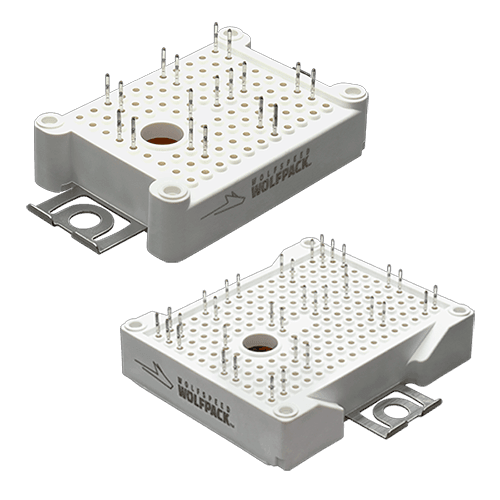
LITEON plans to use Wolfspeed silicon carbide MOSFETs within the architecture and draw on the supplier’s 200mm SiC manufacturing platform. The companies are positioning the arrangement around power supply units and battery backup systems for major cloud service providers.
The qualification is more substantive than an early-stage memorandum because it indicates that the technology has passed LITEON’s evaluation for the named platforms. Neither company has disclosed MOSFET part numbers, system power ratings, conversion efficiency, switching frequency, customer deployments, or a production timetable.
Robert Feurle, chief executive of Wolfspeed, said: “Our partnership with LITEON demonstrates Wolfspeed’s commitment to enabling the rapidly growing AI data center market through advanced silicon carbide technology and a robust, scalable supply chain. As hyperscale customers accelerate investments in AI infrastructure, Wolfspeed is uniquely positioned to support the industry’s transition to higher-efficiency power architectures.”
Higher-voltage direct-current distribution is being developed as rack power rises. Delivering a fixed amount of power at higher voltage reduces current, which can lower resistive losses and reduce the amount of copper required in busbars and cables. Those advantages become more important as accelerator racks move well beyond the power levels associated with conventional server installations.
An 800VDC architecture does not eliminate conversion. Electricity must still pass through rectification, protection, backup, rack distribution, intermediate buses, and point-of-load stages before reaching processors operating at low voltage and very high current. The design challenge is to reduce cumulative loss while keeping fault response, isolation, monitoring, and service procedures manageable.
A power sidecar moves some conversion and backup equipment into an enclosure beside the compute rack. That can release rack space for processors and cooling, while separating high-voltage equipment from the most densely packed electronics. It also creates interfaces between the sidecar and rack that must carry substantial power safely and remain serviceable.
Silicon carbide is suited to high-voltage conversion because appropriate devices can switch with lower losses than conventional silicon alternatives while operating at high junction temperatures. Faster switching may allow smaller magnetic components and filters, but it increases the importance of gate-drive control, layout, electromagnetic compatibility, and protection against abnormal operating conditions.
Device selection therefore depends on more than the semiconductor material. On-resistance, switching energy, short-circuit withstand, package inductance, thermal impedance, isolation, and cost all affect the final converter. LITEON’s platform qualification confirms compatibility at a supplier level, but system data will be needed before customers can compare it with competing SiC, GaN, or silicon implementations.
Wolfspeed’s 200mm manufacturing platform forms the supply argument behind the technical announcement. Larger wafers can produce more dies per manufacturing cycle and may improve cost as yields mature, although wafer diameter alone does not guarantee dependable output. Crystal quality, fabrication yield, package capacity, qualification, and delivery performance remain decisive.
Hyperscale operators also require long planning horizons. Rack architectures are developed alongside data centre electrical systems, cooling, backup power, and procurement programmes, making a component supply interruption more disruptive than a simple substitution on an isolated board. Qualified second sources and capacity commitments can be as important as peak efficiency.
The partnership gives Wolfspeed a route from SiC wafer capacity into a defined LITEON power platform, while LITEON gains an evaluated device source for 800VDC development. The next evidence will need to include production hardware, measured efficiency across realistic load profiles, thermal behaviour, protection performance, and the timing of the first customer deployment.
Until those figures are available, the announcement establishes platform qualification and supply intent rather than a completed hyperscale installation. It nevertheless places silicon carbide within one of the principal power architectures being developed to support higher-density AI computing.