IN Brief:
- SH602FA combines LTE Cat 4, Android 16, an MT8786 octa-core processor, multimedia interfaces, GNSS, Wi-Fi, and Bluetooth.
- SE505FE extends the smart-module architecture to sub-6GHz 5G, with Android 16, GNSS, multimedia interfaces, and camera support up to 32MP.
- Integrating processing and communications in one module can reduce board-level integration, but it makes software maintenance and module lifecycle increasingly important design decisions.
Quectel has added two Android 16 smart-module families covering LTE Cat 4 and sub-6GHz 5G, combining cellular connectivity with application processing, multimedia interfaces, positioning, and local wireless functions. The SH602FA targets 4G equipment, while the SE505FE extends the same integrated architecture into higher-bandwidth 5G designs.
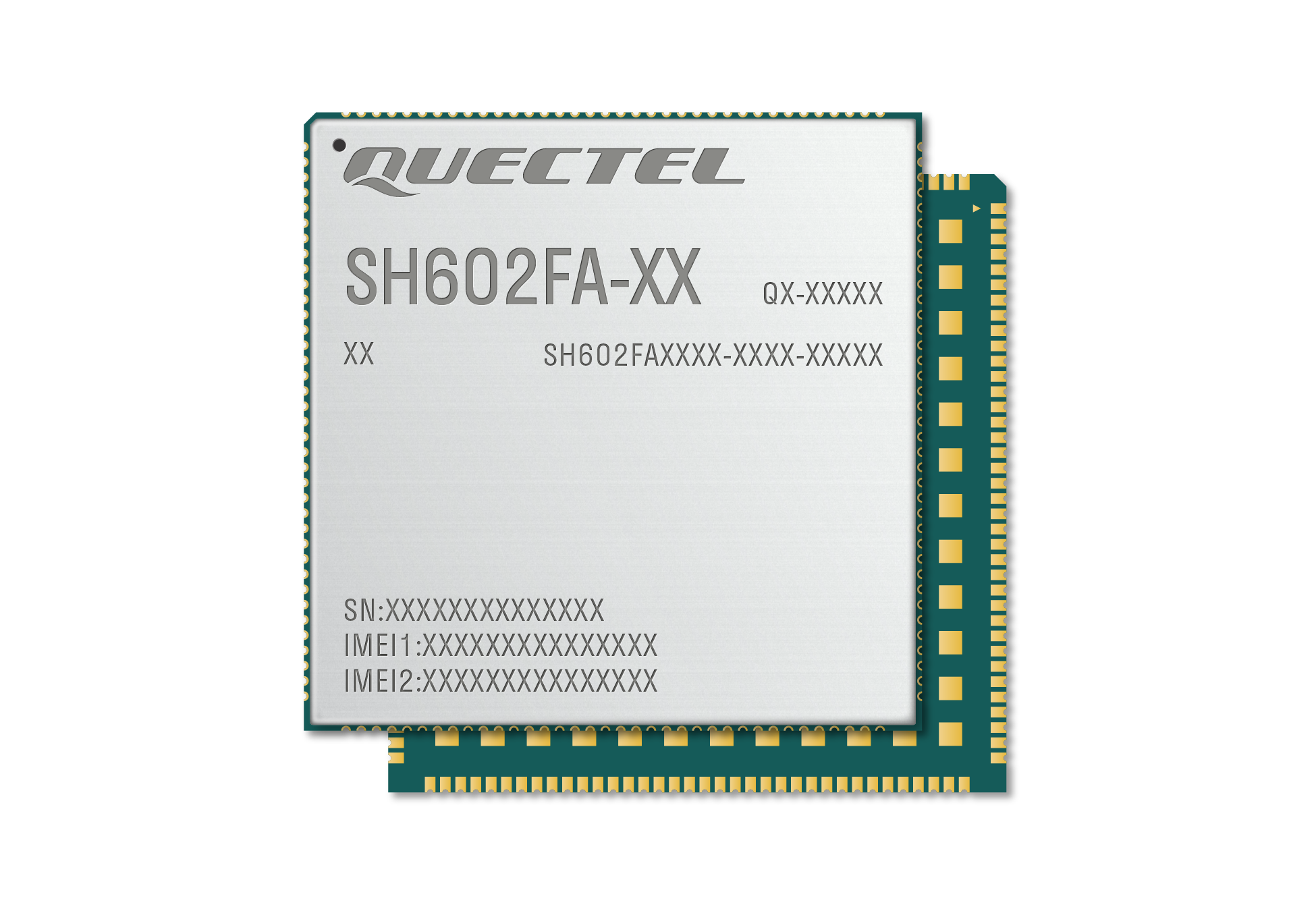
SH602FA is based on MediaTek’s MT8786 64-bit octa-core processor, combining two Arm Cortex-A75 cores at up to 2.0GHz with six Cortex-A55 cores at up to 1.8GHz and a Mali-G52 GPU. Quectel specifies LTE Cat 4 peak data rates of 150Mbps downlink and 50Mbps uplink, alongside Wi-Fi, Bluetooth, and multi-constellation GNSS.
The module uses an LCC form factor measuring 40.5 × 40.5 × 2.8mm and is specified for operation from -35°C to +75°C. Four variants cover European, North American, Japanese, and Wi-Fi-focused configurations, allowing equipment makers to use the same broader module architecture across several regional products.
Multimedia capability is a substantial part of the platform. SH602FA supports an FHD+ MIPI display at 1,080 × 2,520 pixels and 60 frames per second, concurrent operation of two cameras, and recording and playback at 2,560 × 1,440 pixels and 30 frames per second. Interfaces include camera, touch, audio, UART, USB, I2C, I2S, and SPI.
The SE505FE family moves the architecture into sub-6GHz 5G. It uses a 42.5 × 56.5 × 2.95mm LGA package, supports Android 16, Wi-Fi and Bluetooth, and is specified across the same -35°C to +75°C operating range. Quectel lists European, North American, and Wi-Fi/Bluetooth-only variants.
Camera support extends to 32MP at 30 frames per second, while video recording and playback are specified up to 1,080 × 2,520 pixels at 120 frames per second. The module also includes multi-constellation GNSS and interfaces for displays, cameras, touch input, microphones, UART, USB, I2C, and SPI.
Smart modules occupy a different point in the embedded architecture from a conventional cellular modem. A modem normally leaves application processing, graphics, storage, camera handling, and much of the peripheral control to a separate host processor. Quectel’s approach places those functions alongside the cellular subsystem, allowing a single module to run the operating system and application software as well as provide wide-area connectivity.
That can reduce the number of board-level interfaces an equipment designer has to integrate. Products such as industrial handhelds, payment terminals, vehicle equipment, robots, video systems, and logistics terminals often need displays, cameras, positioning, Wi-Fi, Bluetooth, and cellular communications in addition to the application processor itself.
Consolidation also changes the lifecycle calculation. Choosing a smart module ties application software more closely to the supplier’s processor platform, Android build, peripheral support, security maintenance, and availability schedule. Replacing a conventional modem can be disruptive; replacing the module that also hosts the user interface and application environment is potentially more so.
Android 16 therefore carries more significance than an operating-system label on a modem. These modules can run substantial application software locally, so OEMs will need to consider how Quectel’s Android support, security updates, device drivers, and module availability align with the intended service life of the finished equipment.
The two families also let developers separate connectivity requirements from application complexity. Many industrial devices can operate adequately over Cat 4 LTE, especially where mature coverage and modest data volumes are more important than peak bandwidth. Video-heavy or higher-throughput equipment can use the SE505FE while retaining the broader smart-module approach.
Quectel’s published specifications show how far cellular modules have expanded beyond their original communications role. Processing, graphics, cameras, positioning, local wireless connectivity, and application software now sit inside components that still occupy a module footprint on the main PCB. That integration can shorten hardware development, but it makes software support and long-term component availability part of the same design decision as radio performance.