IN Brief:
- Merge Labs has licensed Butterfly's Poseidon Ultrasound-on-Chip family for development of ultrasound-based brain-computer interfaces.
- Butterfly's semiconductor platform uses wafer-integrated CMUT elements rather than conventional piezoelectric transducer assemblies.
- The agreement includes licence payments, hardware commitments, technology-access fees, and potential royalties, but does not establish a commercial BCI product.
Butterfly Network has agreed to license its Poseidon family of Ultrasound-on-Chip technology to Merge Labs for the development of ultrasound-based brain-computer interfaces, extending its semiconductor transducer platform into a field where acoustic control, electronics integration, and biological interfaces remain active areas of research.
The multi-year agreement operates through Butterfly Embedded, the company’s licensing and co-development business. Merge will gain access to the Poseidon technology as a foundation for its own neural-interface systems, while Butterfly will act as its exclusive CMOS-MEMS chip-based ultrasound partner. Butterfly retains the right to license the underlying technology to other companies, so the exclusivity applies to the companies’ partnership rather than the entire neural-interface market.
The commercial arrangement includes upfront and milestone-based licence payments, hardware purchase commitments, technology-access fees, and potential royalties on future commercial sales. Neither company has disclosed the financial value of those elements, and the agreement does not establish that a finished brain-computer-interface product has completed development, clinical evaluation, or regulatory approval.
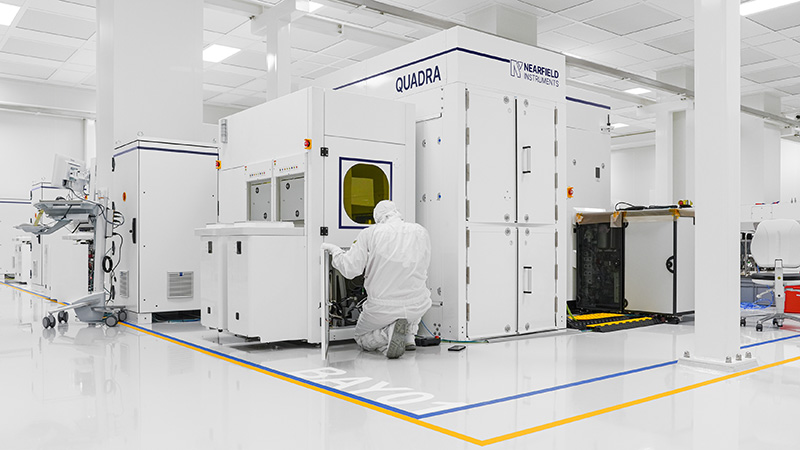
The electronics interest lies in Butterfly’s method of generating and detecting ultrasound. Conventional diagnostic probes normally use piezoelectric material to convert electrical energy into acoustic waves and returning echoes into electrical signals. Butterfly instead uses capacitive micromachined ultrasonic transducers, or CMUTs, manufactured using semiconductor MEMS processes.
The company integrates thousands of transducer elements directly with the circuits that control them at wafer level. In its established imaging platform, that architecture allows one semiconductor probe to cover functions that traditionally require several probes built around different piezoelectric arrays. Butterfly specifies a 1MHz to 12MHz frequency range for its current handheld imaging technology, although that figure should not be assumed to describe the eventual Poseidon configuration used by Merge.
Wafer-level integration changes the engineering options available to an embedded-system developer. Transducer arrays can sit much closer to their controlling electronics, while semiconductor fabrication provides a route to repeatable production without the extensive crystal dicing and interconnection used in conventional probes. More of the acoustic behaviour can consequently be managed electronically and through software rather than being fixed solely by the physical geometry of a traditional transducer assembly.
Brain-computer interfaces create a different set of requirements from handheld diagnostic imaging. An experimental neural-interface platform may need tightly controlled acoustic focusing, repeatable electronic steering, synchronisation with sensing and computing hardware, and sufficient programmability to evaluate different operating modes. Those requirements make the electronics surrounding the transducer at least as important as the acoustic element itself.
Butterfly’s current material does not disclose the acoustic frequency, array geometry, channel count, package size, power consumption, or signal architecture planned for Merge’s system. Nor does the licensing agreement demonstrate what biological information a resulting interface might ultimately record, stimulate, or interpret. Semiconductor ultrasound is therefore an enabling hardware technology in this programme, not evidence that the wider scientific and regulatory problems of a practical neural interface have already been solved.
Butterfly has been broadening Ultrasound-on-Chip beyond its own point-of-care scanners through Butterfly Embedded, offering the platform to companies developing new medical and research systems. The licensing model allows external engineering teams to start from an industrialised semiconductor ultrasound architecture rather than designing a bespoke transducer, electronics stack, and manufacturing process from scratch.
For Merge, that potentially shifts development effort towards the neural-interface system around the chip. Acoustic coupling, signal processing, control electronics, packaging, thermal behaviour, manufacturing variability, and eventual safety verification still have to be addressed, but the project begins with a transducer platform that Butterfly has already taken through semiconductor manufacturing and commercial medical deployment in another application.
The agreement is therefore a technology-transfer milestone rather than a product launch. Its significance lies in applying wafer-integrated ultrasound electronics to a new class of interface, while leaving the difficult system questions to subsequent development. The next useful evidence will come from disclosed hardware specifications and measured performance, not from the breadth of the licensing announcement itself.