IN Brief:
- GomSpace North America has received a $2.4m order from an undisclosed US defence customer.
- Pre-engineered platform kits span 6U-to-16U CubeSat and microsatellite-class configurations for rapid payload integration.
- Hardware deliveries are expected over coming quarters as GomSpace begins a new relationship with the customer.
GomSpace has received a $2.4 million order from an undisclosed US defence customer for modular small-satellite platform kits supporting a US government mission.
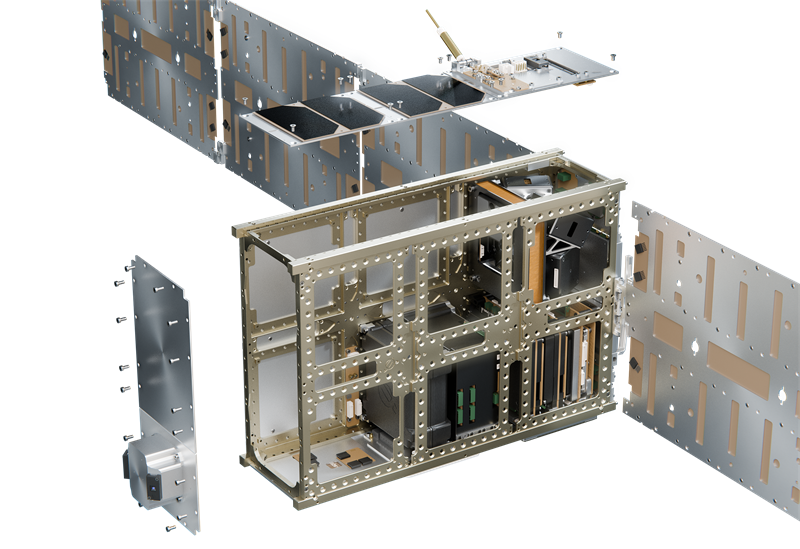
The contract, placed with GomSpace North America, covers pre-engineered spacecraft buses from 6U to 16U CubeSat formats alongside microsatellite-class configurations. Deliveries are expected over the coming quarters, and the supplier describes the programme as the start of a new customer relationship.
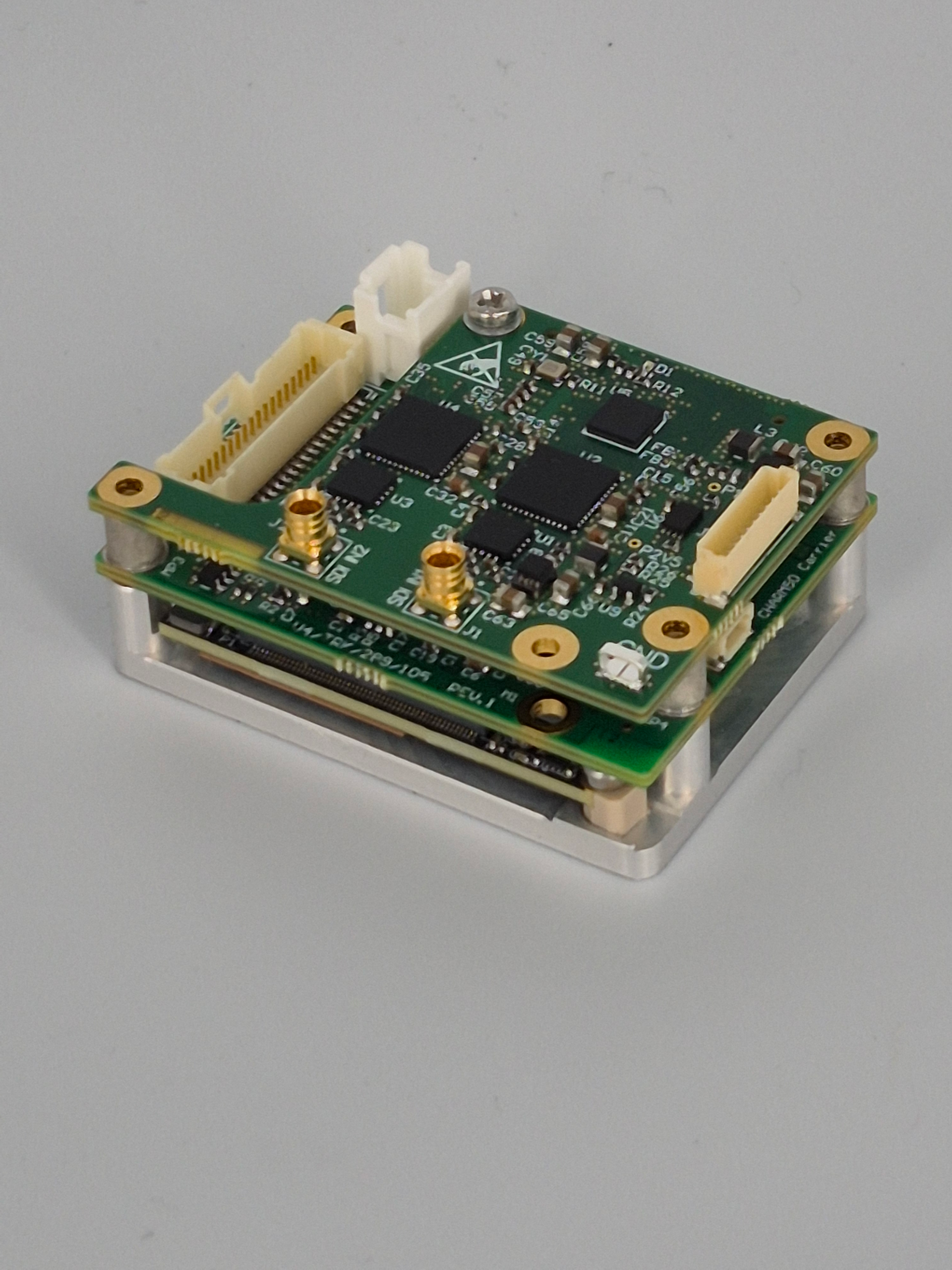
Platform kits sit between a collection of independent spacecraft subsystems and a fully bespoke satellite. Structural, electrical, power, control, and interface elements are supplied within an established architecture, leaving the mission integrator to accommodate the payload and mission-specific functions without beginning with a clean-sheet bus design.
That approach can shorten development where programme timing matters as much as ultimate optimisation. A conventional spacecraft programme has to define interfaces, select and qualify subsystems, develop engineering models, complete environmental testing, and resolve the interaction between payload and platform before flight hardware is ready.
Reusing a mature bus architecture removes some of that non-recurring engineering. The payload, communications configuration, flight software, and mission verification remain specific to the customer, but the supporting electronics and mechanical platform begin from a known design rather than an entirely new set of interfaces.
Slava Frayter, CEO of GomSpace North America, said the kits allow customers to “accelerate their mission development while reducing technical and programmatic risk”.
The range from 6U CubeSats to microsatellite-class platforms also reflects how far the small-satellite sector has broadened. A compact 6U spacecraft may accommodate relatively modest payload, power, and communications requirements, while larger formats provide more volume for sensors, processors, radios, batteries, attitude-control hardware, and thermal-management equipment.
Scaling between those classes is not simply a matter of making the enclosure larger. Power distribution has to support different payload loads, data interfaces must accommodate changing sensor bandwidths, and the attitude-control system may face tighter pointing requirements as optical or RF payloads become more capable.
Thermal behaviour changes with component density and duty cycle, while electromagnetic compatibility can become more difficult as higher-power radios and processors share a confined structure. Modular hardware helps by retaining known subsystem interfaces across several configurations, but each mission still has to establish that the selected combination operates within its electrical and thermal limits.
Government customers are increasingly using smaller spacecraft where payload technology changes faster than traditional satellite acquisition cycles. A standardised bus can allow a new sensor, communications package, or onboard processor to reach orbit without waiting for development of a unique platform around it.
That changes the competitive balance for electronics suppliers. Components and subsystems with established interface documentation, environmental performance, and flight heritage are easier to incorporate into rapid programmes than hardware requiring another extended qualification cycle.
GomSpace develops complete small-satellite missions as well as individual subsystems, with its main operational base in Aalborg, Denmark, and additional activities in the United States, France, and Luxembourg. Its catalogue includes spacecraft power, communications, control, and other embedded systems that can be combined within the platform-kit architecture.
The customer and mission remain undisclosed, limiting the available detail on payload function and final configuration. The disclosed contract value, hardware range, and delivery schedule nevertheless show that the programme has progressed beyond a study into ordered spacecraft hardware.
At $2.4 million, the contract is small beside conventional defence-satellite programmes, but it illustrates a procurement model in which schedule and configurability are becoming design requirements in their own right. GomSpace is selling less of a single spacecraft design than a repeatable electronics and platform architecture that can be adapted around successive payloads.