IN Brief:
- Lattice's third-quarter revenue increased 118% to $291m, including $39.1m from AMI after its July acquisition.
- FPGA revenue rose approximately 90%, with Compute and Communications generating $171.9m.
- Fourth-quarter revenue is forecast at approximately $335m, with continued industrial and embedded growth.
Lattice Semiconductor reported third-quarter 2026 revenue of $291m, an increase of 118% year on year, following substantial growth in programmable logic sales and the addition of acquired firmware specialist AMI. FPGA revenue rose approximately 90%, while AMI contributed $39.1m after joining the group in July. Computing infrastructure and industrial embedded applications supported demand for the company’s existing semiconductor portfolio.
The quarter ended on 3 October 2026, with total revenue rising from $133.3m a year earlier and $201.1m in the preceding quarter. The 118% annual increase includes the newly acquired business, making the comparison different from one based solely on the sales of Lattice’s established FPGA operations.
AMI joined the company on 27 July 2026, and its results were consolidated from that date. Its $39.1m contribution represents approximately 13% of the latest quarter’s revenue. The acquired business develops firmware and platform management technology used in computing systems, extending Lattice’s activities beyond semiconductor devices into infrastructure control and security software.
Revenue from Compute and Communications reached $171.9m, compared with $74.0m a year earlier. The segment accounted for approximately 59% of total reported quarterly sales. The increase reflects demand from applications requiring programmable logic within computing and communications equipment, including systems that incorporate specialised processing and high-speed electronic interfaces.
Industrial and Embedded revenue reached $80.0m, compared with $59.3m in the third quarter of 2025. This segment represented approximately 28% of group sales, with AMI recorded separately. Its annual growth was more modest than that of Compute and Communications, although the company reported continued momentum in embedded applications.
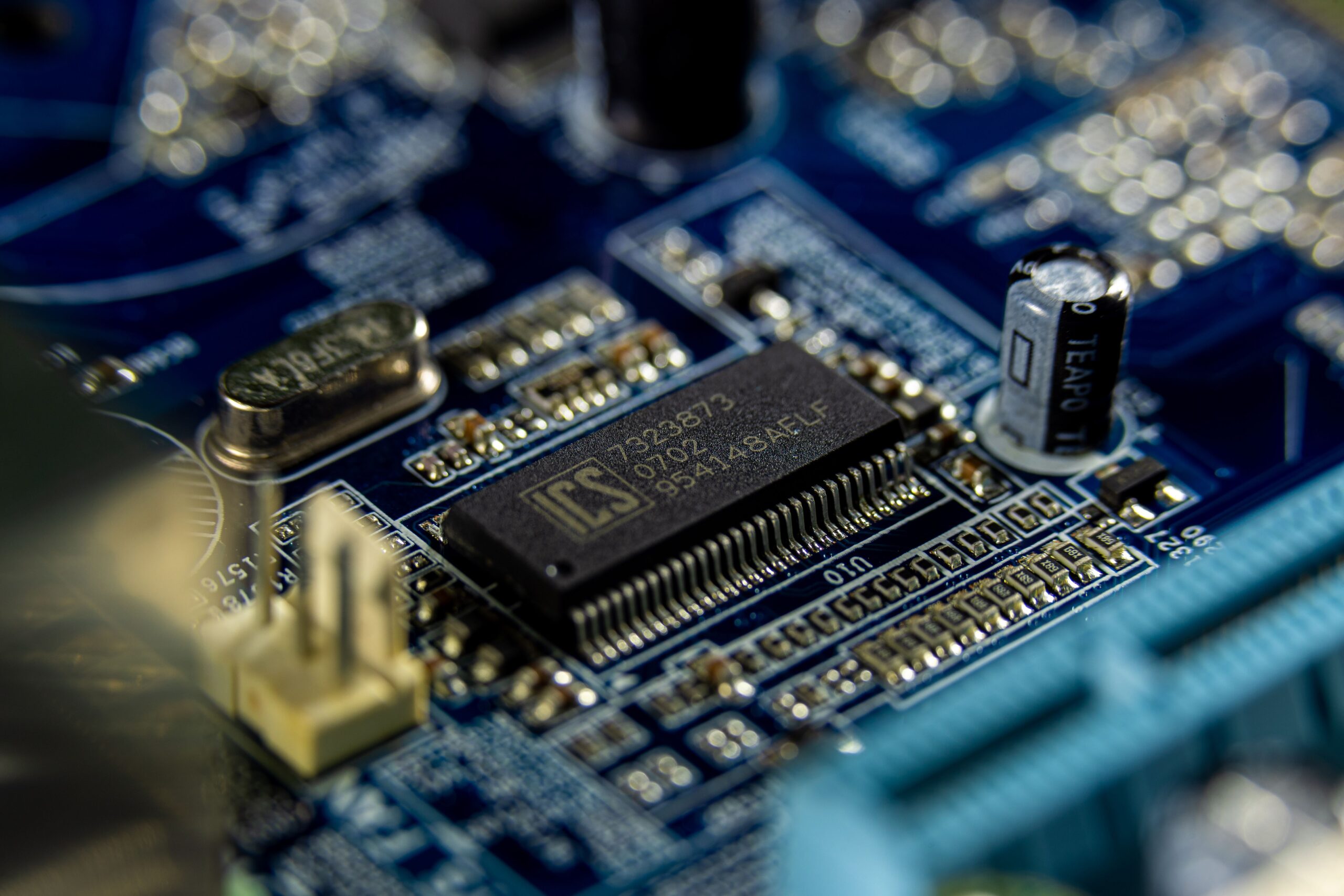
Field-programmable gate arrays contain logic structures that can be configured after the semiconductor has been manufactured. Designers use those resources to implement control functions, interface logic, and other digital operations appropriate to the equipment. This allows hardware behaviour to be defined within the programmable device without developing a dedicated integrated circuit for every application.
The arrangement offers flexibility in products where electronic interfaces or processing requirements can change between designs. A manufacturer can implement different functions within an FPGA family, subject to the available logic resources, memory, clocking, and interface capabilities. The resulting hardware design must still be verified for timing, power consumption, and compatibility with the surrounding system.
FPGAs can also perform operations through parallel logic structures. Unlike software executing a sequence of instructions on a conventional processor, several independent functions can be implemented to operate concurrently within the programmable hardware. The performance benefit depends on the nature of the task and the resources available in the selected device.
Lattice concentrates on low-power programmable logic used in equipment requiring control, connectivity, and specialised digital functions. Its products can manage interfaces between processors and peripheral devices, provide hardware-based control functions, or support processing tasks that benefit from deterministic execution.
These capabilities are relevant to computing infrastructure containing different processors, memory devices, and communications interfaces. Such systems require circuitry for configuration, monitoring, power sequencing, and coordination between components. The principal processors perform the main computing workload, while supporting logic and management electronics handle functions needed to bring the system into operation and maintain its specified behaviour.
AMI contributes firmware operating at a different level of that control architecture. Its products provide functions associated with platform initialisation, system management, security, and monitoring. Combining programmable semiconductor devices with firmware expertise allows Lattice to develop related hardware and software offerings, although customers can continue selecting individual products according to their existing platform arrangements.
The company has identified early commercial activity involving security retrofits, rack boot functions, plug-and-play infrastructure, and power and cooling management. These functions relate to the operation and supervision of computing equipment rather than directly executing AI calculations. Their implementation can involve firmware, management controllers, sensor interfaces, and supporting logic working across the hardware platform.
Power and cooling control illustrates the interaction between these elements. Measurements from the equipment provide information about electrical or thermal conditions, while management functions interpret the data and coordinate responses. Programmable logic can perform suitable time-sensitive interface or control functions, with firmware managing configuration and higher-level operational behaviour.
The acquisition therefore broadens Lattice’s commercial offering at the same time as demand for its existing FPGA products is increasing. Its reported 90% growth in FPGA revenue provides a separate measure of semiconductor sales expansion, while AMI’s contribution accounts for part of the increase in total consolidated revenue.
GAAP gross margin reached 67.4%, while non-GAAP gross margin was 70.9%. The company recorded GAAP net income of $11.2m and diluted GAAP earnings per share of $0.08. Non-GAAP diluted earnings per share were $0.72, reflecting the adjustments applied to the company’s financial results.
Operating cash flow totalled $95.0m, representing 32.7% of quarterly revenue. Non-GAAP free cash flow reached $77.6m, equivalent to 26.7% of revenue, while adjusted EBITDA was $131.0m. These measures describe different aspects of financial performance and are not interchangeable with reported net income.
Lattice expects fourth-quarter revenue of approximately $335m. The company is forecasting annual revenue growth of approximately 130% in that period, with Industrial and Embedded revenue growth expected to accelerate to around 70%. Those figures remain projections, with the outcome dependent on customer demand, semiconductor deliveries, and the performance of the newly acquired operation.
The next financial results will provide a further comparison between FPGA sales and AMI’s contribution as the firmware business completes additional time under Lattice ownership. The latest quarter establishes growth in the existing programmable logic portfolio alongside the first partial-quarter contribution from its expanded platform management activities.