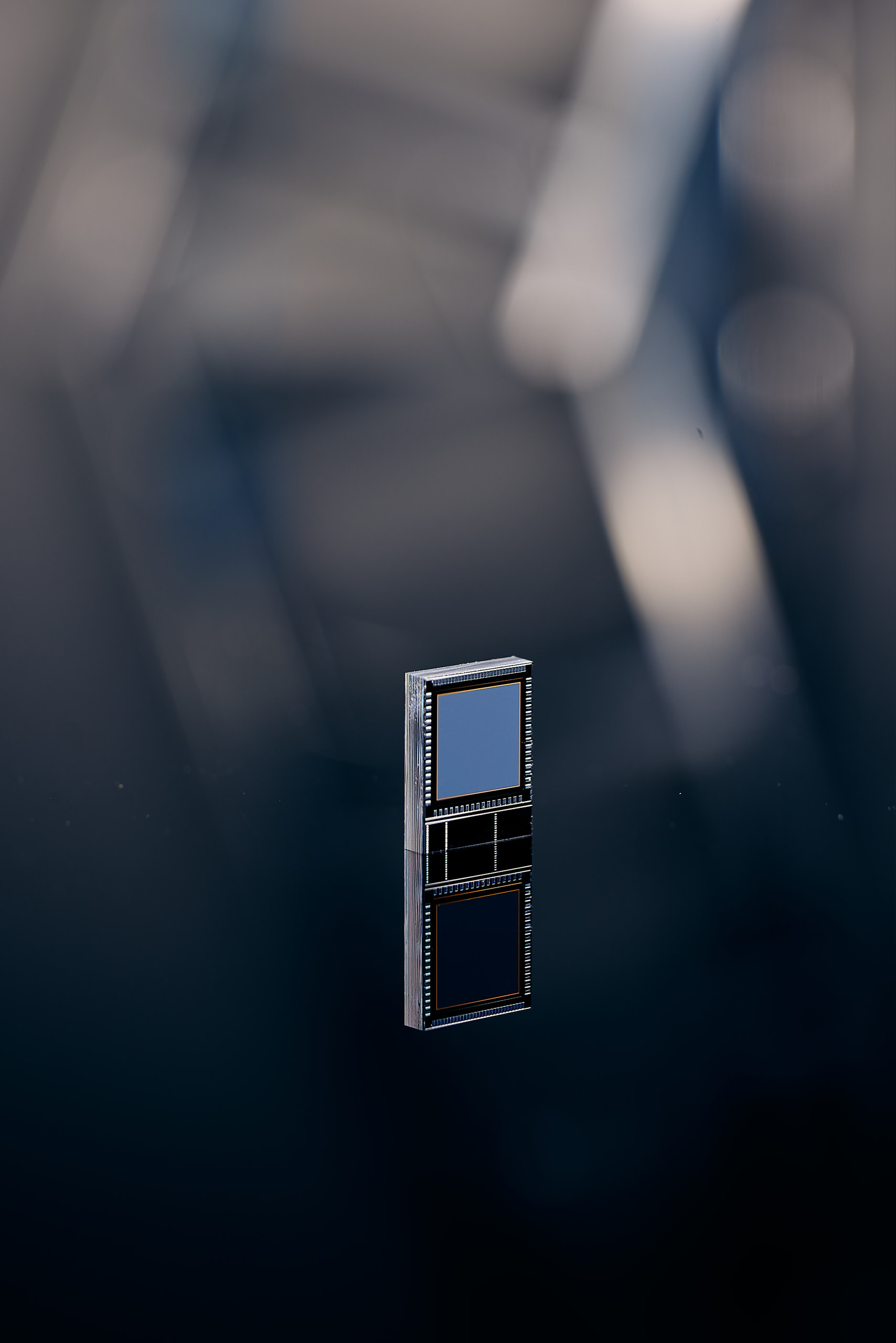
IN Brief:
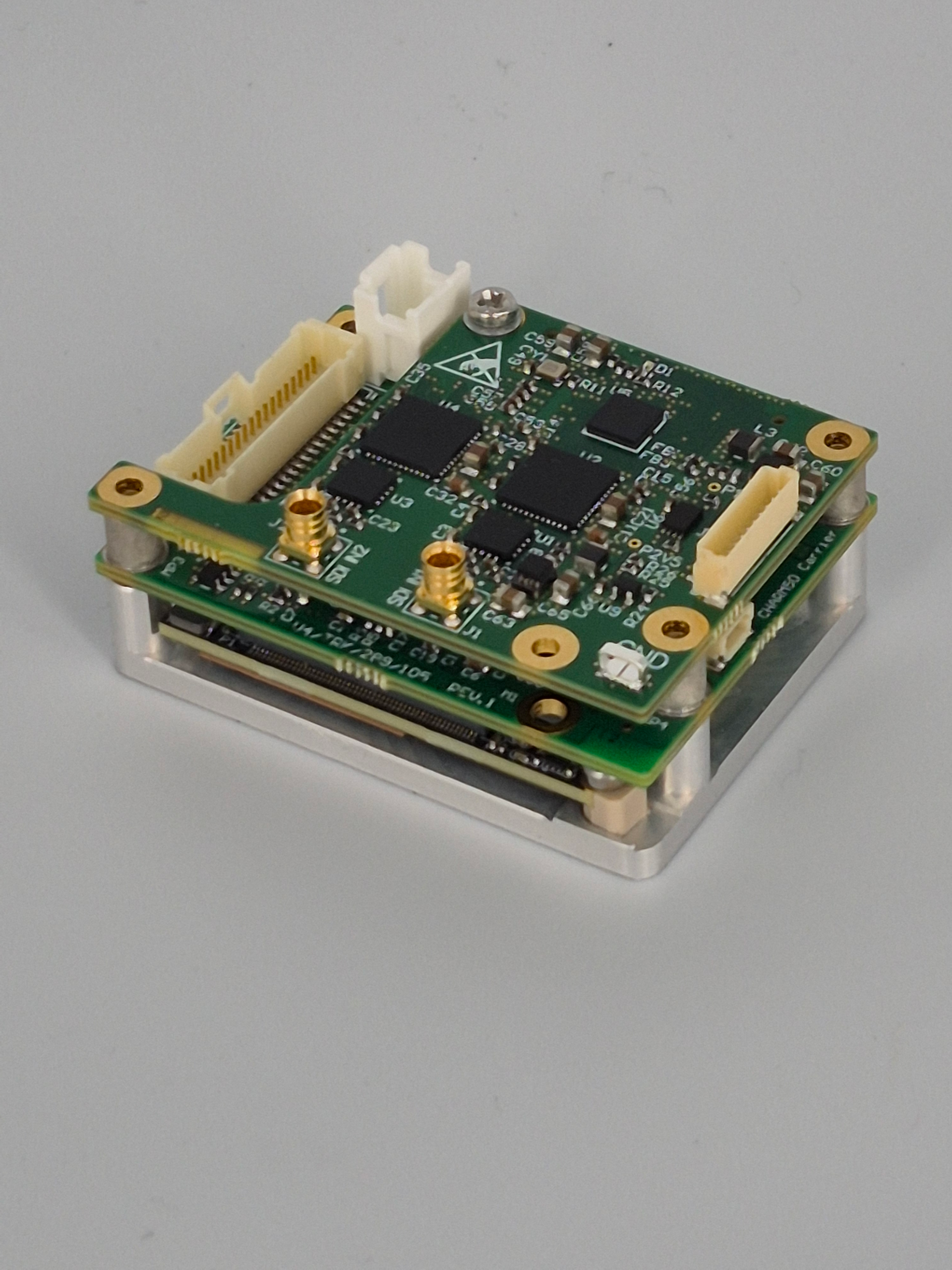
- CHARM50 measures approximately 50mm by 35mm and is around half the size of the CHARM100NX.
- Two HD-SDI streams can be processed simultaneously, while single-input operation supports higher-bandwidth 3G-SDI video.
- Local AI processing is intended to reduce raw-video bandwidth and latency in distributed low-SWaP sensor systems.
Chess Dynamics has expanded its Vision4ce CHARM range with CHARM50, a compact edge video processing module designed to put AI-enabled detection, classification, and tracking closer to electro-optical sensors.
The module measures approximately 50mm by 35mm, around half the size of the CHARM100NX, and is aimed at systems where the available space, weight allowance, and electrical power rule out a larger processing unit. Chess is targeting airborne surveillance, unmanned platforms, compact gimbals, hand-held sensors, and other distributed sensing applications.
Moving processing closer to the detector changes the amount and type of information that has to travel through the wider system. Instead of continuously sending every raw video stream to a central computer, the sensor assembly can process imagery locally and pass detections, classifications, tracking data, or selected video onwards.
CHARM50 can process two HD-SDI inputs simultaneously, supporting sensor heads that combine daylight and thermal cameras. A single-input configuration can accept higher-bandwidth 3G-SDI video, giving integrators a choice between two parallel HD channels and a faster individual stream.
The board is designed to run Vision4ce image processing functions including detection, classification, and tracking. Chess’s current CHARM hardware specification also identifies an NXP i.MX95 processor, integrated AI and machine-learning acceleration, its FrameWorkx processing environment, and DEFT tracking software within the CHARM50 platform.
Owen Sogeler, Vision4ce sales manager at Chess Dynamics, said: “We’re seeing growing demand for processing capability that can be deployed closer to the sensor.”
That requirement is becoming more pronounced as electro-optical systems carry more capable detectors while being installed on smaller platforms. Raw visible and infrared video can consume substantial interface and network bandwidth, particularly when several payloads share a communications link with navigation, command, telemetry, and other mission data.
Local processing allows part of that data volume to be reduced before it leaves the sensor. A tracking system can transmit coordinates or target metadata alongside selected imagery, for example, rather than requiring another processor to analyse every full-rate frame after transmission.
The approach can also shorten the processing path between image capture and a system response. Network latency is only one part of that delay; transferring a stream, buffering it at another processor, and then running detection or tracking adds further time. Edge processing removes some of those stages, although higher-level sensor fusion and decision functions may still sit elsewhere in the platform.
The engineering constraint is that the embedded processor has to fit within the same thermal and electrical envelope as the sensor equipment. A small gimbal or unmanned payload has limited space for heat sinking and power conversion, so adding processing capability cannot simply mean installing a conventional high-performance computer beside the cameras.
CHARM50 extends a family that also includes CHARM80, CHARM100NX, and CHARM150AGX. Those modules allow more processing capacity to be selected where platform size and power permit it, while the smaller board targets installations where packaging constraints dominate the system design.
The modular interface is intended to support integration with different camera systems rather than tying the processing board to a single optical payload. That gives equipment manufacturers scope to retain the processing architecture while changing detector types, optics, or platform configurations around it.
Distributed sensing architectures still require careful decisions about which functions belong at the edge and which remain centralised. Local detection and tracking reduce communications and central processing loads, but system-wide correlation, command, storage, and multi-sensor fusion may continue to require larger computers elsewhere.
CHARM50 places more of the first-stage image interpretation inside the sensor package. As embedded AI hardware becomes small enough to sit alongside increasingly capable detectors, the division between an imaging sensor and an image-processing subsystem is becoming progressively less distinct.