IN Brief:
- Oxa packages LTE Cat 4 and Gigabit Ethernet connectivity into a board intended for integration inside OEM equipment.
- A 1.3GHz Arm Cortex-A7 runs RutOS with 128MB DDR2 memory and 512MB SPI flash.
- Protocol support includes Modbus TCP, OPC UA, DNP3, BACnet/IP, MQTT, and Teltonika's remote-management platform.
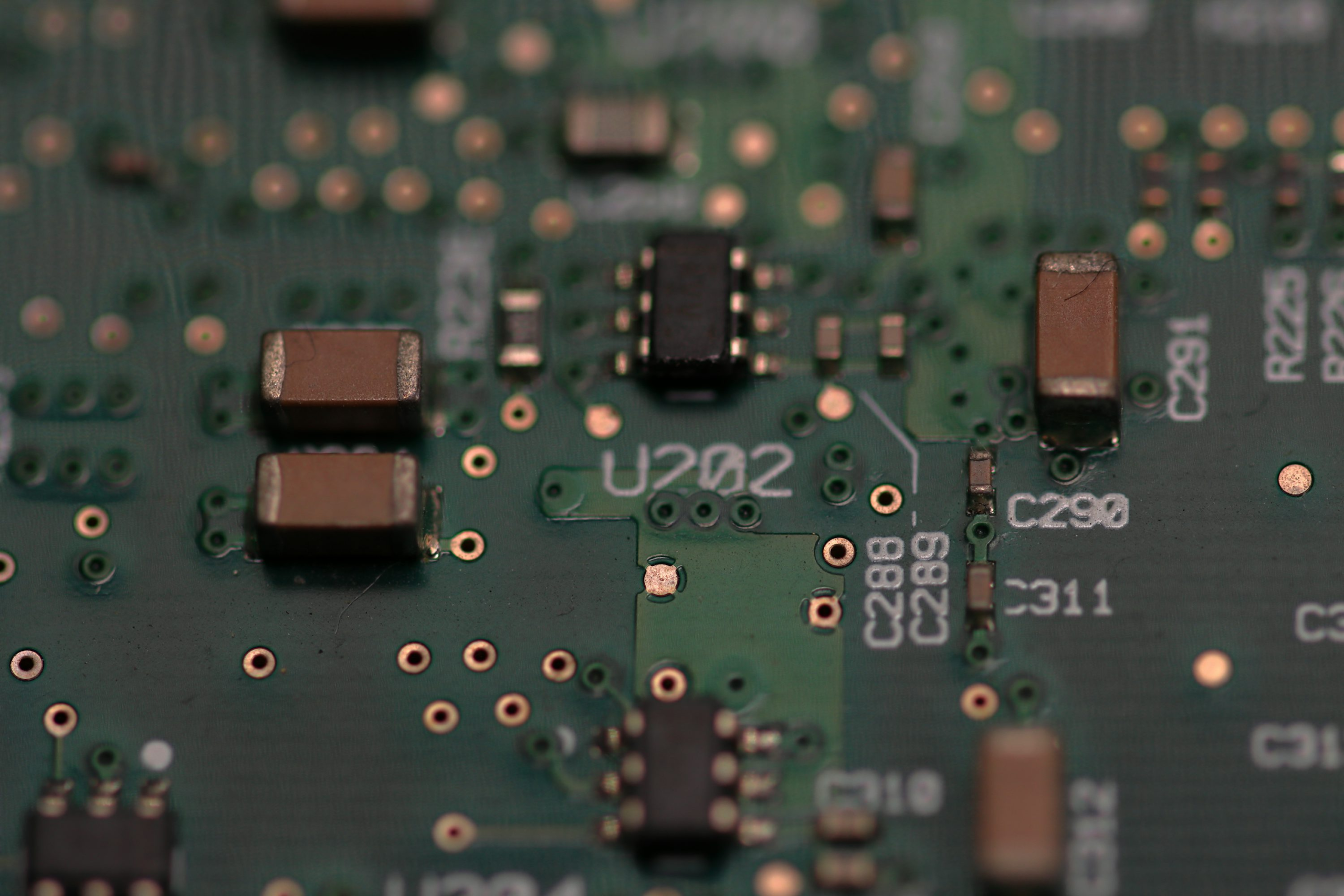
Teltonika Networks has introduced Oxa, a board-level industrial IoT gateway designed for equipment manufacturers that need cellular and Ethernet connectivity without installing a conventional enclosed router. The platform combines LTE Cat 4, Gigabit Ethernet, Teltonika’s RutOS software, and industrial communications functions on hardware intended to sit inside a host product.
The casing-free format places Oxa between a cellular modem module and a finished industrial gateway. A modem gives the equipment designer control over the surrounding hardware, but leaves more responsibility for routing, VPN support, firewall functions, firmware maintenance, and remote management. An enclosed gateway provides those functions as a finished appliance, although its enclosure, mounting system, connectors, and physical volume may be redundant when the electronics are being built into another machine.
Oxa uses a 1.3GHz Arm Cortex-A7 processor with 128MB of DDR2 memory and 512MB of SPI flash storage. LTE Cat 4 provides theoretical cellular rates of up to 150Mbit/s downstream and 50Mbit/s upstream, while Gigabit Ethernet handles the local wired connection. The board measures roughly 70mm × 18.2mm × 67.7mm and weighs 36g.
RutOS supplies the networking layer, including routing, VPN, firewall, monitoring, and management functions already used across Teltonika’s industrial networking products. Compatibility with the company’s Remote Management System allows installed gateways to be monitored, configured, updated, and diagnosed centrally rather than relying solely on local access to the host machine.
The software stack also supports industrial protocols including Modbus TCP, OPC UA, DNP3, BACnet/IP, and MQTT. Those interfaces allow the gateway to sit between local equipment and supervisory, building-management, industrial-control, or cloud systems without requiring every protocol conversion function to be developed separately by the OEM.
That distinction becomes important once a connected product moves beyond a prototype. Cellular access is only one part of the deployed system; device identity, secure remote access, firmware updates, logging, protocol handling, configuration control, and fault diagnosis all remain in service for as long as the equipment itself. Incorporating those functions through an established networking platform can remove a substantial block of non-core development work.
The embedded format also transfers several mechanical responsibilities to the host equipment. Without its own protective enclosure, Oxa depends on the surrounding product for physical protection, mounting, thermal management, and access during assembly or servicing. Teltonika specifies operation from -40°C to 75°C, but the finished design still has to account for antenna position, conducted and radiated emissions, power integrity, heat flow, and the interaction between the gateway and other electronics inside the enclosure.
Antenna integration can be particularly awkward where the host uses metalwork, motors, power electronics, or other sources of electromagnetic noise. LTE performance measured at board level does not guarantee equivalent field performance once the radio is installed inside a machine, so antenna placement and cable routing remain part of the OEM design rather than something solved by the gateway itself.
Teltonika has identified access-control equipment as one potential application, placing the board inside gates or barriers to connect credential readers and control hardware to central systems over cellular links. The same architecture can be used in remote machinery, distributed monitoring equipment, industrial controllers, kiosks, energy infrastructure, and other products where fixed communications are unavailable or commercially unattractive.
The protocol set broadens that role beyond simple internet connectivity. Modbus and OPC UA remain common in industrial systems, BACnet/IP addresses building automation, while DNP3 is widely encountered in utility and infrastructure applications. Support for MQTT provides another route into cloud and telemetry architectures without forcing the host controller to carry every networking function itself.
Board-level gateways do, however, tie the lifecycle of the networking subsystem more closely to the lifecycle of the product around it. Equipment manufacturers may expect machinery to remain in service far longer than a consumer communications device, making firmware support, cellular-network evolution, security maintenance, component availability, and replacement compatibility material design considerations.
Oxa consequently turns an established industrial gateway software stack into an embedded subsystem rather than presenting LTE Cat 4 as the main differentiator. Its usefulness will depend on how readily the board can be qualified inside third-party equipment and how consistently Teltonika can support the hardware and RutOS environment over the operating lives expected in industrial deployments.