IN Brief:
- The nRF54LC10A combines a 128MHz Cortex-M33, RISC-V coprocessor, 1MB NVM, and 192KB RAM.
- Wireless support covers Bluetooth LE, Channel Sounding, Thread, Zigbee, Matter, and proprietary 2.4GHz operation.
- Sampling is open now, development kits are due by Q1 2027, and production is expected during Q2 2027.
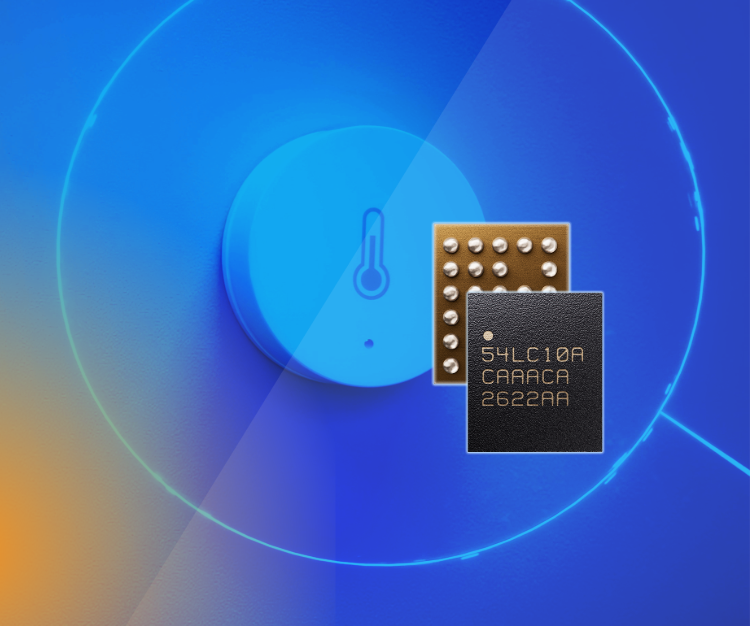
Nordic Semiconductor has expanded its nRF54L wireless family with the nRF54LC10A, a compact multiprotocol system-on-chip aimed at cost-sensitive connected products including tags, trackers, sensors, and smart-home devices. The part combines a 128MHz Arm Cortex-M33 processor, a RISC-V coprocessor, and a 2.4GHz radio in packages extending down to 1.9 × 2.3mm.
The device supports Bluetooth Low Energy, Bluetooth Channel Sounding, Thread, Zigbee, Matter, and proprietary 2.4GHz operation. It includes 1MB of non-volatile memory and 192KB of RAM, together with three SPI/TWI/UART peripheral instances and an ADC. That allocation places the nRF54LC10A below more feature-rich members of the nRF54L family while retaining the same protocol and software environment.
Nordic is targeting two main application groups. The first is compact Bluetooth LE equipment, where the combination of a small footprint, low operating current, and Channel Sounding support suits asset trackers and other location-aware products. The second is smart-home hardware using Thread or Zigbee, including simpler Matter sensors whose application and protocol requirements fit within the available memory.
The nRF54LC10A can also operate as a Thread radio coprocessor alongside a separate host MCU or application processor. That arrangement allows the wireless stack and Thread connectivity to remain on Nordic silicon while a larger processor handles the principal application, giving hub and border-router designers another way to partition memory, software, and security responsibilities.
The SoC is manufactured on a 22nm process and includes Arm TrustZone isolation and protection intended to raise resistance to physical attacks. Firmware-over-the-air support and remote observability through Nordic’s nRF Cloud services provide lifecycle functions for devices expected to remain deployed and maintainable for years.
Power figures are central to the part’s positioning. Nordic specifies 4.0mA receive current and 5.8mA transmit current at 0dBm, with maximum transmit power of +4dBm. Receiver sensitivity is listed at -97dBm for Bluetooth LE 1M and -101dBm for IEEE 802.15.4, while sleep current ranges from 0.5µA to 1.6µA depending on configuration. Preliminary processor figures are 239 CoreMark/mA and 503 CoreMark.
Those specifications have to be considered across a complete product duty cycle. A tracker or sensor may spend most of its operating life asleep, so leakage, memory retention, wake-up behaviour, sensor activity, advertising intervals, and radio conditions can influence battery life more than a single active-current figure. Channel Sounding adds further dependence on RF layout, antenna implementation, calibration, and the surrounding environment.
Security and maintainability are becoming design constraints even in inexpensive connected products. TrustZone can separate sensitive execution from the main application, while firmware update support provides a route to patch vulnerabilities after deployment. Those features do not remove the need for secure provisioning, protected credentials, and a defined update policy, but they allow low-cost tags and sensors to use the same basic lifecycle mechanisms as more capable devices in the family.
Bluetooth Channel Sounding also broadens the radio’s role beyond ordinary data transfer. The feature can support distance-estimation applications without adding a separate ranging radio, which is useful in compact trackers, access products, and asset-management hardware. Practical accuracy will still depend on antenna placement, multipath, calibration, and the implementation at both ends of the link, so the protocol capability does not by itself guarantee centimetre-class results in every installation.
Nordic is offering two chip-scale packages at 1.9 × 2.3mm alongside a QFN option. CSP reduces board footprint for compact tags and sensors, while QFN can simplify assembly, inspection, and handling for some manufacturing processes. Supporting both formats gives product teams room to trade physical size against production requirements and PCB cost.
“The nRF54LC10A brings the protocols, advanced security, and software ecosystem of the nRF54L Series to a small, cost-sensitive device, enabling developers to build simple products without sacrificing capability,” said Øyvind Strøm, EVP Short-Range at Nordic Semiconductor.
A common software base across the nRF54L family is intended to make product scaling easier. Nordic says devices in the series use the same qualified wireless stacks, embedded software, and development tools, allowing a design to migrate as memory, peripheral, or processing requirements change without replacing the entire connectivity environment.
The nRF54LC10A is available for sampling now, development kits are due for general availability by the first quarter of 2027, and production is expected during the second quarter. The interval gives developers time to validate protocol coexistence, RF performance, power consumption, security, and production test before committing the device to volume products.