IN Brief:
- Quobly will use FAMES semiconductor equipment and process modules to evaluate new process flows and patterning approaches.
- Its QSOI architecture combines silicon spin qubits with FD-SOI and is being industrialised on 300mm infrastructure with STMicroelectronics.
- Alloy Pioneer is planned for commercialisation by the end of 2026, followed by a longer roadmap towards fault tolerant systems.
Quobly is extending its silicon quantum processor development through access to CEA-Leti’s FAMES Pilot Line, adding an advanced process development route alongside its industrial collaboration with STMicroelectronics.
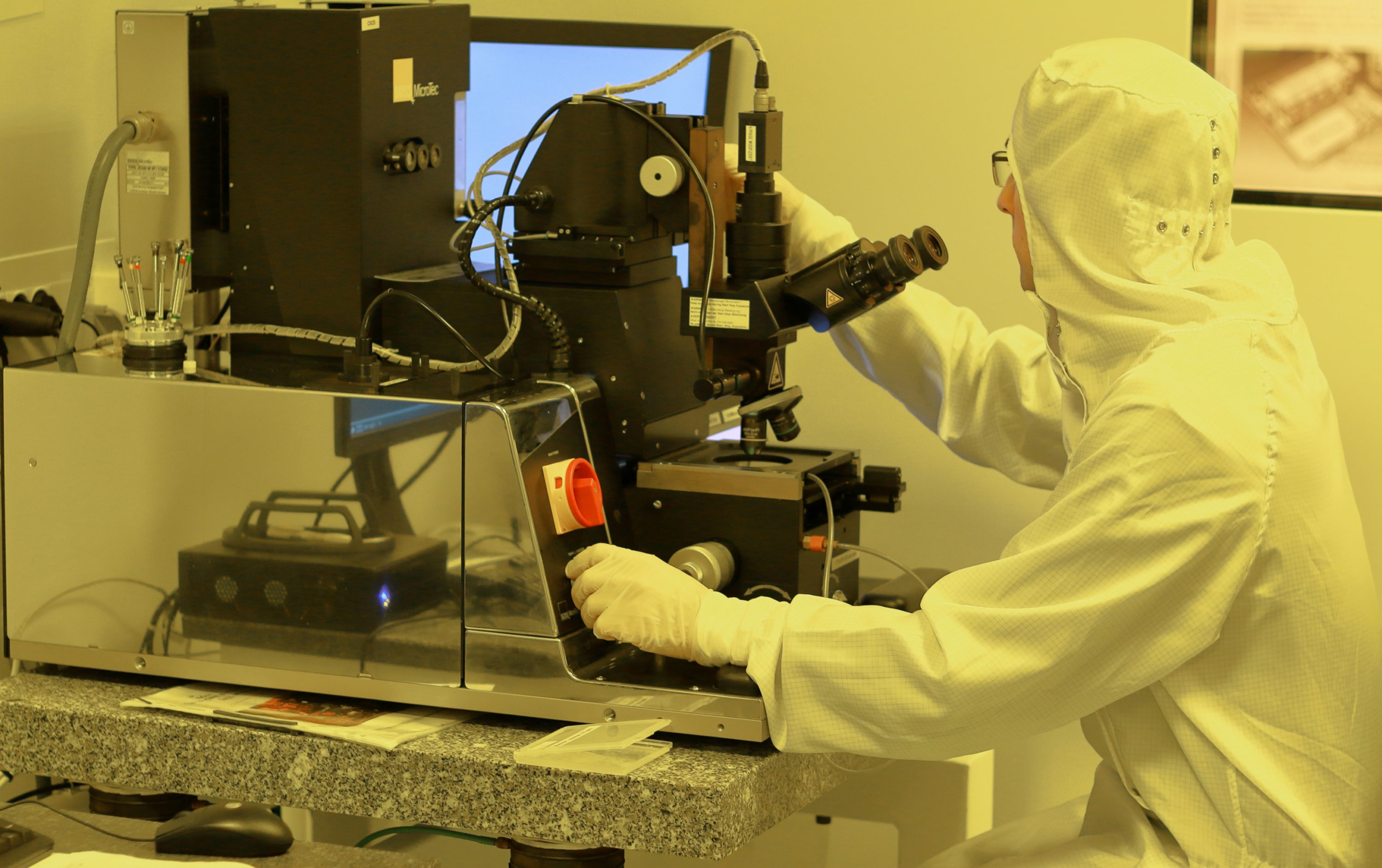
The Grenoble company develops quantum computers around silicon spin qubits and its QSOI architecture, which combines the qubit technology with an FD-SOI semiconductor platform. Access to FAMES will allow Quobly to use semiconductor equipment and process modules to develop and evaluate new process flows and patterning approaches for later processor generations.
The pilot line work complements rather than replaces Quobly’s existing manufacturing programme with STMicroelectronics. QSOI is already being industrialised on 300mm semiconductor infrastructure, while FAMES provides an environment in which alternative process options can be developed before they are considered for future production generations.
Quobly’s relationship with CEA-Leti reaches back to the research from which the company emerged. Founded in 2022, it builds on more than 15 years of work at CEA-Leti and CNRS in silicon spin qubits. In 2016, CEA-Leti and its research partners demonstrated a silicon spin qubit fabricated using an industrial CMOS process based on FD-SOI on a 300mm wafer.
That manufacturing route is central to Quobly’s scaling strategy. Silicon spin qubits offer the possibility of using process technology and wafer infrastructure derived from the semiconductor industry rather than developing every fabrication step around specialist quantum hardware. The approach also brings quantum devices closer to established methods for integrating large numbers of repeated structures on a wafer.
Scaling those structures remains difficult. Qubit dimensions and electrical characteristics have to be controlled closely, while interconnect, readout and cryogenic control functions must develop alongside the quantum devices themselves. Changes that improve an individual device can introduce penalties elsewhere in the process, making a pilot line useful for investigating alternatives before they reach an industrial manufacturing flow.
FAMES provides that intermediate environment. The European programme covers FD-SOI technologies, embedded non-volatile memory, RF, 3D integration and power management ICs, while its open-access structure gives semiconductor companies and research organisations access to process technologies, equipment and development resources.
For Quobly, the immediate focus is on process flows and patterning approaches for later quantum processor generations. Development can therefore continue outside the production-oriented STMicroelectronics route without disconnecting the research programme from technologies designed for semiconductor manufacturing.
The distinction becomes more important as the company moves beyond small numbers of devices. Large quantum processors require repeatable fabrication across many structures, with variation controlled tightly enough for the resulting devices to operate together. Yield, interconnect density, control electronics and packaging become part of the same scaling problem as qubit performance.
Quobly plans to commercialise its first quantum computer, Alloy Pioneer, by the end of 2026, with initial cloud access aimed at high performance computing and research users. Its longer roadmap extends towards large fault tolerant systems and a target of one million qubits by 2032.
Those targets leave substantial process and system engineering between current devices and the intended scale. Semiconductor manufacturing can provide established infrastructure, but quantum hardware still imposes requirements around material quality, variability, control and cryogenic operation that conventional logic processes were not developed to handle.
FAMES brings another development layer into that programme without turning exploratory process work into production changes. Quobly can investigate future device and patterning options through CEA-Leti while its work with STMicroelectronics continues on the 300mm industrial route.
The next milestones will therefore be measured as much in repeatable process integration as in individual qubit demonstrations. Quobly has tied its commercial roadmap to semiconductor manufacturing, and access to FAMES gives it more room to develop the process steps that later generations will have to reproduce at scale.