IN Brief:
- Nexus converts a 212G PAM4 host link into four 53G NRZ optical-side lanes using a reverse gearbox.
- Oscar provides laser-driver and transimpedance interfaces to microVCSEL and photodiode arrays.
- Eliyan says both chiplets are sampling; proposed larger optical configurations remain subject to integration.
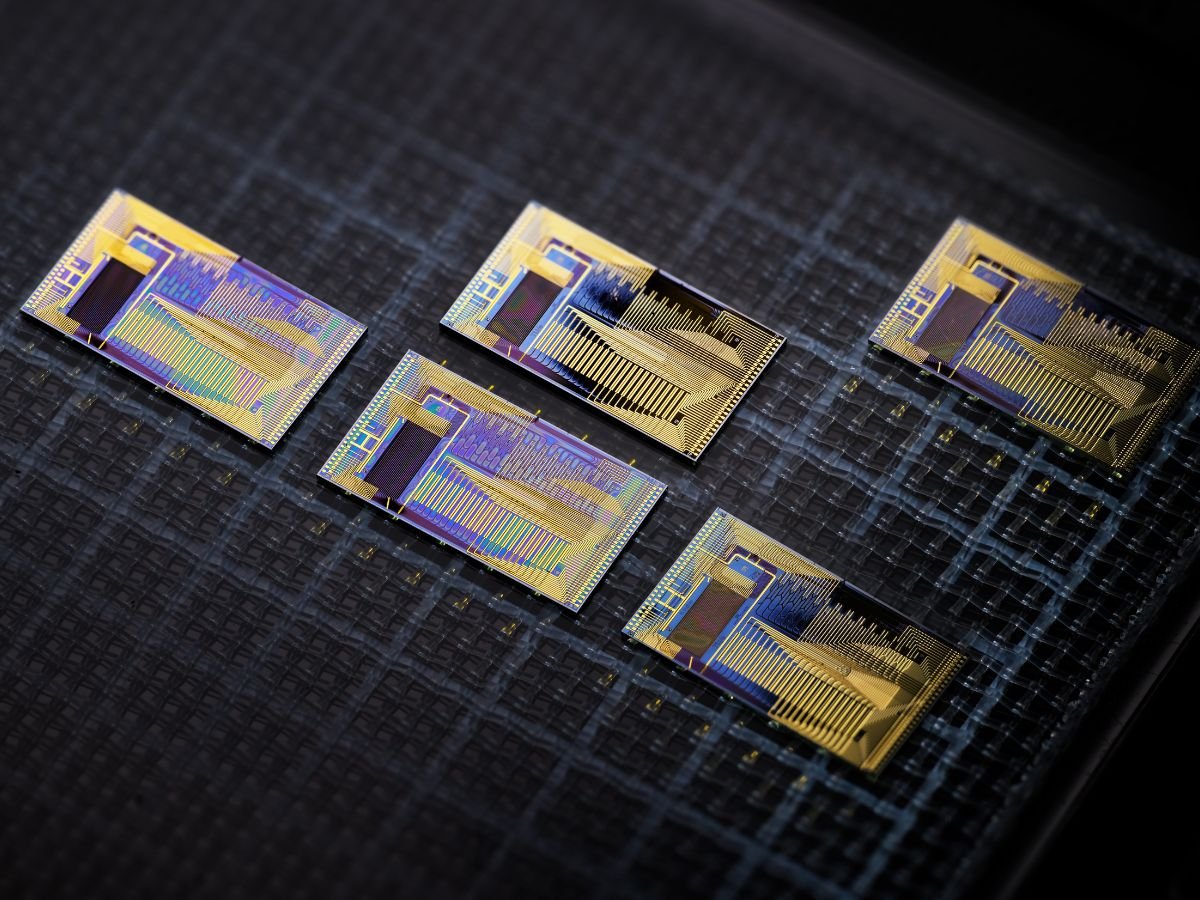
Eliyan has introduced the Nexus and Oscar chiplets as the first announced components of its NuLight optical interconnect platform. The devices separate high-speed electrical signal conversion from the circuits driving and receiving micro-scale vertical-cavity surface-emitting lasers. Eliyan says both parts are sampling, with the architecture intended to connect processors and accelerators over optical paths that extend beyond the practical reach of some high-bandwidth copper connections.
Nexus is a reverse gearbox built around high-speed electrical interfaces. Its announced conversion takes each 212G PAM4 host link and divides the data into four 53G non-return-to-zero paths. PAM4 uses four signalling levels to convey more information per symbol, whereas NRZ operates with two principal levels. Distributing the total data rate across more lanes changes the electrical demands on each optical channel while increasing the number of paths that must be integrated and controlled.
The reverse gearbox must manage timing and data alignment as information moves between the host interface and parallel optical channels. Eliyan says independent parts-per-million frequency offsets can be accommodated across gearbox paths, a feature intended to support different configurations of linked equipment. Retiming and error monitoring remain important because a high aggregate data rate can expose small inconsistencies between lanes.
Oscar provides the electrical interface to the optical elements. Driver circuits supply current to the microVCSEL transmitters, while transimpedance amplifiers turn the small currents generated by receiving photodiodes into useful electrical signals. Integrating those functions into a dedicated chiplet creates a defined boundary between the high-speed host interface and the optical engine.
Dense arrays of transmitters and receivers introduce engineering challenges that differ from those of a single optical lane. Adjacent channels can interact through electrical coupling and heat, while changes in temperature influence laser behaviour and receiver conditions. Eliyan says its implementation includes techniques to manage crosstalk and thermal interaction, but the announcement does not provide independent results for the behaviour of a fully populated commercial system.
The company proposes a slow-and-wide optical arrangement in which lower-speed individual optical channels together carry a high total data rate. This approach can relax some lane-level signalling requirements compared with driving each optical device at the host’s highest electrical rate. It also creates assembly and testing demands because many optical channels must be positioned and connected reliably. The overall benefit depends on optical loss, electrical conversion overhead and manufacturing yield.
MicroVCSEL devices can be fabricated using established gallium arsenide technology and arranged in relatively dense arrays. Eliyan argues that the supply base and packaging approach could support more economical links, but the comparison with copper depends on more than the price of the emitter. Lasers, photodiodes, driver circuitry, fibre alignment, connectors, cooling and testing all contribute to the installed cost of an optical connection.
Nexus and Oscar are intended to serve as modular building blocks. Eliyan describes 1.6Tbps slices that can be combined into configurations described as 6.4Tbps near-packaged optics and 12.8Tbps extended-package optics. The company also outlines a path towards co-packaged optical connections. These figures describe architectural combinations; the release does not establish commercial deployment of every configuration.
Eliyan has proposed optical lane repair using spare channels that can take over when another lane becomes unsuitable. Such redundancy could limit the effect of some individual optical faults, provided the system detects the failure and can redirect traffic correctly. Reliability at platform level depends on the number of spare lanes, the fault modes encountered and the behaviour of the surrounding control system.
The announced commercial status is sampling of the two chiplets, not mass production of an assembled interconnect platform. Qualification will require data on optical transmission margins, power consumption, thermal performance, interoperability and production consistency. That evidence will determine how the proposed architecture performs when integrated into complete AI systems.