IN Brief:
- Zaptics has selected Lumissil's IS32CG5317 HomePlug Green PHY transceiver for two vehicle-side charging communication controller products.
- The Specter module measures 45 × 45mm, while the Pearson standalone controller adds an IP65 enclosure, dual CAN interfaces, and charge-port motor control.
- The products currently support ISO 15118-2 and established IEC/DIN protocols, with ISO 15118-20 functionality still in development.
Lumissil Microsystems has been selected to provide HomePlug Green PHY communications technology for two electric vehicle charging controllers developed by Indian automotive electronics specialist Zaptics.
Zaptics has integrated Lumissil's IS32CG5317 transceiver technology into its Specter system-on-module and Pearson standalone electronic control unit. The products support Combined Charging System 2 communications on the vehicle side, providing interfaces for coordination between the vehicle and compatible charging equipment.
Both controllers use a software stack developed by Zaptics, supporting ISO 15118-2 and established IEC/DIN charging protocols. The company is developing support for ISO 15118-20, but that functionality is not part of the currently confirmed implementation.
The products address a communications function that is separate from the power conversion hardware used to charge a battery. Before electrical energy can be transferred under the required conditions, the vehicle and charging equipment must exchange information about their capabilities, operating states, and the permitted charging process.
The charging communication controller manages the relevant protocol exchanges and provides connections to the vehicle electronics responsible for functions such as battery supervision, contactor operation, and charge-port locking.
Within the Combined Charging System, HomePlug Green PHY provides the physical communication technology used to exchange data over the charging interface. Its signalling functions allow compatible equipment to transmit the messages required by the higher-level charging protocols.
Lumissil's IS32CG5317 is an automotive-oriented HomePlug Green PHY transceiver. It contains the communication circuitry required to interface with a host microcontroller or processor, which remains responsible for executing the appropriate charging control software.
The device integrates analogue front-end and communications functions, with SPI and MII/RMII host interfaces available for supported system designs. It is qualified to AEC-Q100 Grade 2 and specified for an ambient operating temperature range from -40°C to +105°C.
These specifications concern the semiconductor device. The complete charging controller must separately satisfy the electrical, mechanical, environmental, and functional requirements of its installation.
Powerline communications used in charging systems must operate alongside switching power electronics and other equipment capable of generating electrical interference. The design of the communication interface therefore requires suitable filtering, circuit layout, and consideration of the surrounding electrical environment.
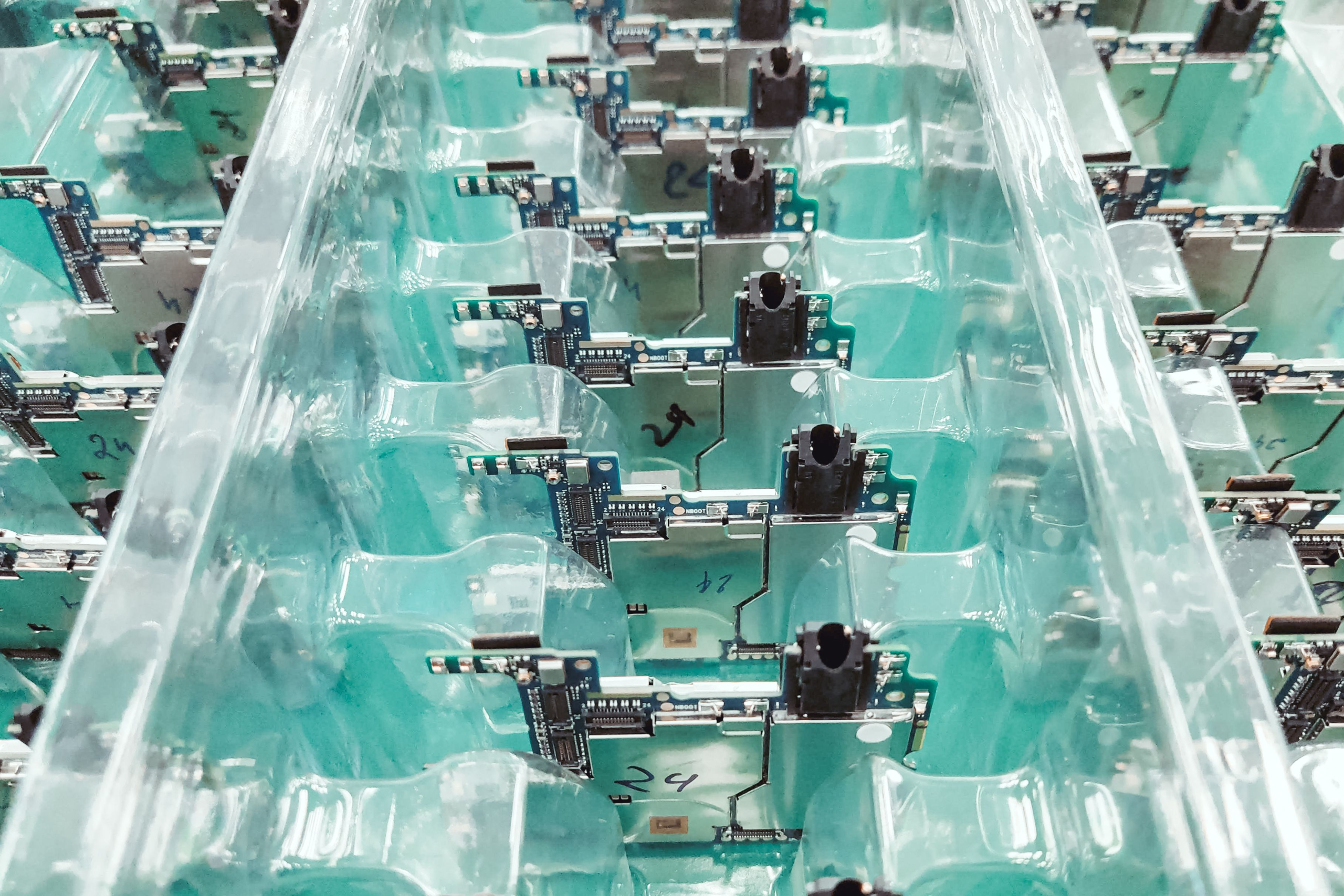
Zaptics has incorporated the relevant communication circuitry into two product configurations. Specter provides a compact system-on-module intended for installation within an existing vehicle control unit or battery management system, whereas Pearson supplies a more complete electronic control unit for direct vehicle installation.
The Specter module measures 45 × 45mm and incorporates powerline communication transformers and analogue filters. Its interfaces include CAN, UART, and SPI, allowing the charging software to exchange information with the vehicle's existing electronic controllers.
The module operates from a 3.3V supply and has a specified temperature range from -30°C to +105°C. Its supported vehicle functions include contactor, charge-port lock motor, and thermistor interfaces through the CAN communications arrangement.
Integrating the module into an existing control unit allows the charging communication function to share the vehicle's established electronic architecture. However, the surrounding hardware and software must still provide the required power management, fault handling, and coordination with the battery system.
The standalone Pearson controller is intended for installations where a separate charging communication ECU is preferred. It includes an IP65-rated enclosure, dual CAN 2.0B interfaces, and a dedicated H-bridge driver for the charge-port locking motor, incorporating feedback functionality.
The motor driver allows a suitable locking mechanism to be operated electrically, with feedback available to determine its state. Mechanical locking must be coordinated with the charging sequence so that the vehicle and charging equipment operate under the intended connection conditions.
Pearson operates from a 9–32V supply and is specified for temperatures from -30°C to +105°C. The IP65 enclosure rating describes protection against dust ingress and water jets under the applicable test conditions; the suitability of the finished installation also depends on connectors, mounting, and environmental exposure.
Both hardware variants use the same underlying charging software. This provides a consistent protocol implementation while allowing the physical controller arrangement to be selected according to the vehicle manufacturer's integration requirements.
ISO 15118-2 defines communication functions used between electric vehicles and charging infrastructure, including information exchange during supported charging operations. Successful implementation requires the corresponding vehicle and charging equipment to support compatible features and correctly execute the relevant protocol sequence.
The newer ISO 15118-20 specification extends the available communications framework. Zaptics identifies support for this version as an ongoing development activity rather than a currently available capability of its two controller products.
Zaptics reports that the hardware and software have been tested for interoperability with more than 35 chargers in India, including installations involving operating vehicles. These results provide evidence of compatibility with the equipment evaluated, but do not establish that every charging station or protocol implementation will function identically.
Interoperability depends on more than the physical communications transceiver. The software must handle supported protocol options, system-state changes, timing requirements, and fault conditions while coordinating with the vehicle's battery and charging controls.
The company states that its EVCC product is in production and being introduced to customers, with increasing interest in the compact module configuration. Its reference design is available to vehicle manufacturers and suppliers seeking to integrate the communications function into their own equipment.
Zaptics is also planning charging-station-side control products, but these remain separate from the two currently described vehicle-side controllers. The company intends to apply its existing control-system development approach to that additional hardware.
The collaboration combines Lumissil's established communications semiconductor with Zaptics' vehicle interfaces and charging software. Further deployment will depend on customer integration, compatibility testing, and the completion of additional protocol functions, including the planned ISO 15118-20 implementation.