IN Brief:
- Ainstein announced the opening of its Lenexa, Kansas, radar sensor manufacturing facility on 16 November.
- The plant has a stated annual manufacturing capacity of 44,000 radar units, not confirmed sales or output.
- Ainstein has not disclosed plant utilisation, product allocation, investment value or further expansion dates.
Ainstein has opened a radar sensor manufacturing facility in Lenexa, Kansas, with stated annual production capacity for 44,000 sensors. The company held its opening ceremony on Friday 13 November and disclosed the expansion on 16 November. It says the investment responds to demand for radar products used in unmanned aircraft, autonomous systems, commercial vehicles and other specialist applications.
The 44,000 figure describes the new plant’s design capacity, not its current production rate or customer shipments. Ainstein has not disclosed the number of sensors already completed there, its operating utilisation, the value of the investment or a breakdown of the products scheduled for assembly. The facility therefore adds a stated manufacturing capability, but the release alone does not establish that sales or delivered output have increased by an equivalent number.
Ainstein develops radar electronics and associated software for aerospace, specialty vehicles and other sensing markets. Its wider product range includes systems operating at different frequencies and with different interfaces, allowing equipment manufacturers to select sensors for altitude measurement, obstacle detection or other functions. The company has not identified the exact product families or frequency bands assigned to the Lenexa site. Details of the existing portfolio should not be mistaken for a production plan for this particular facility.
Radar sensing differs from an optical camera because the instrument transmits radio-frequency energy and processes signals reflected by objects in its field of view. Depending on the waveform and processing architecture, returned signals can provide information about distance, relative speed or target position. Millimetre-wave operation can support compact antennas and sensors, while actual detection range and resolution depend on antenna design, transmit power, signal processing and the characteristics of the target.
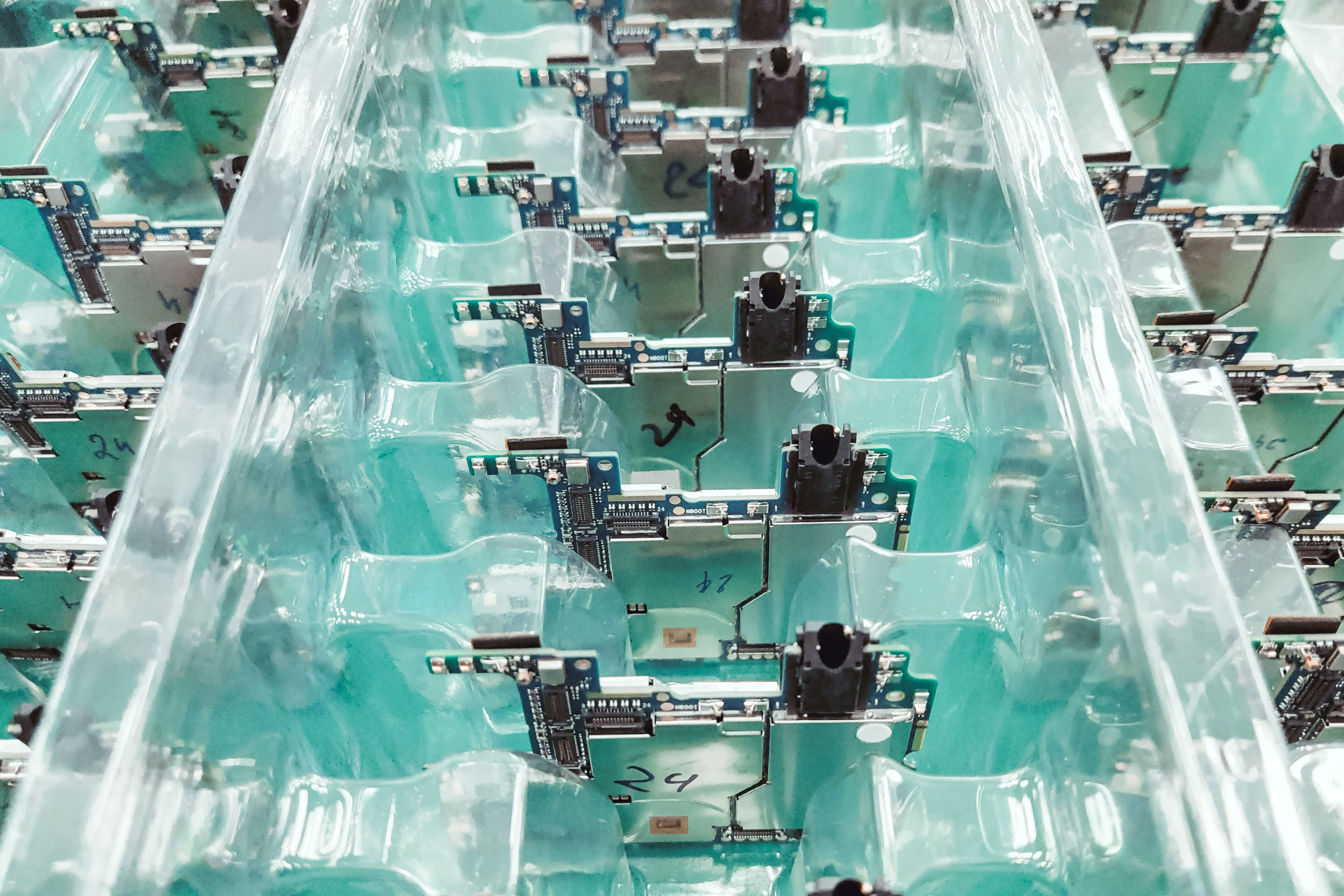
Replicating radar performance at volume requires control of component assembly, antenna geometry, mechanical fit and radio-frequency calibration. A change in housing alignment or connection quality can affect the signal received by a radar unit, while the finished sensor may also need environmental and functional testing appropriate to its application. The Lenexa announcement gives no detailed account of the production line or test stations. These are engineering requirements for repeatable manufacture, not verified descriptions of equipment installed at the new site.
Ainstein has previously supplied radar altimeters for unmanned aircraft and radar systems for specialty vehicles. Its US-D1 Pro, launched in 2025, was specified for altitude measurements from 0.5m to 120m and designed with dual CAN FD connections. Such products illustrate the relationship between measurement electronics and system-level interfaces: a sensor must communicate usable, time-relevant measurements to a flight controller or vehicle system, and that integration depends on more than the radar front end alone.
The company’s wider development activities include application-specific radar processing and sensor fusion, combining measurements with other information sources for navigation or environmental awareness. In mobile industrial equipment, deployment conditions can differ substantially from laboratory tests. Metal structures, moving machinery, precipitation and complex surrounding geometry affect the signals available to the sensor, while software must distinguish relevant objects from clutter. Production capacity can support customer supply, but it does not replace application-specific testing and integration.
Ainstein has previously worked with Doosan Bobcat on radar sensing for construction equipment. That relationship illustrates the range of potential users beyond unmanned aircraft, where radar information can support awareness of objects around moving machinery. The company has not associated the new Kansas capacity with a specified Bobcat order, customer programme or delivery allocation, and the opening is not evidence of a new contract with that customer.
The Lenexa operation also sits alongside manufacturing activity already established outside Kansas. Ainstein announced a separate Jiading facility in Shanghai in 2023 for production of 77GHz automotive radar products. Lenexa is therefore an additional location, not the company’s first manufacturing plant. The new release gives no indication that production previously undertaken elsewhere is being relocated to the US.
Ainstein describes the Lenexa plant as an initial element of its longer-term manufacturing investment, without publishing subsequent expansion dates or investment amounts. The stated capacity of 44,000 radar sensors annually is the principal measurable commitment. Actual throughput, product allocation and any change to customer lead times will become clearer only as the operation reports production and shipment results.