IN Brief:
- Infineon introduced the TLV55624-1O omnipolar TMR magnetic switch on 17 November.
- The switch draws approximately 7nA typical current and can drive loads drawing up to 50mA continuously.
- A 1.50 × 1.50 × 0.38mm package, LOCK and FSLP controls support compact, sealed battery electronics.
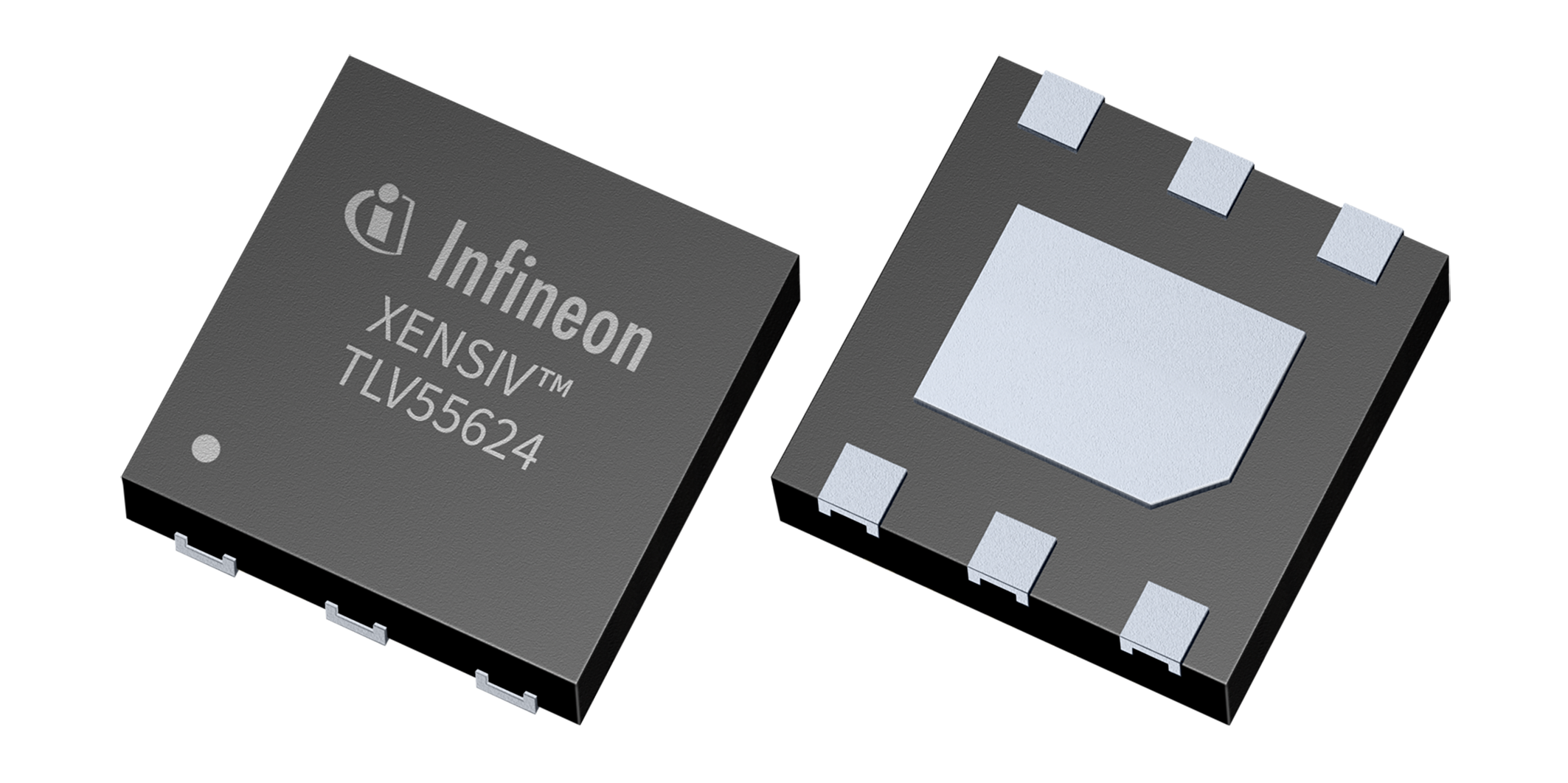
Infineon Technologies has expanded its XENSIV magnetic sensor portfolio with the TLV55624-1O, a tunnelling magnetoresistance (TMR) switch designed for battery-powered devices that may spend long periods in storage. The component combines magnetic sensing, switching logic and a load-driving output in a package measuring 1.50 × 1.50 × 0.38mm. Introduced on 17 November, it is aimed at compact medical disposables, continuous glucose monitoring (CGM) patches and wearable electronics.
The TLV55624-1O has a typical current consumption of approximately 7 nanoamperes in its specified low-power operating mode. It accepts supply voltages from 1.1V to 3.6V, covering compact battery designs. A system’s total standby current will also depend on leakage through other connected components and the battery’s own self-discharge. The 7nA specification is therefore not a measurement of the complete device’s storage consumption or its eventual service life.
A push-pull output can switch a continuous downstream load of up to 50mA, removing the need for a separate load-switching FET in some circuits. That reduces potential PCB area and bill-of-materials complexity, although it remains necessary to verify switching transients, available supply current and the power needs of the load. The 50mA output rating does not authorise arbitrary peak currents or guarantee that every peripheral in a wearable can be powered directly.
TMR sensing uses changes in the electrical resistance of a magnetic structure to detect an applied magnetic field. Infineon has integrated the sensing element with a comparator, power management circuitry and a push-pull output stage. Unlike a conventional mechanical contact, the device can respond to a nearby magnet without requiring an opening through the enclosure. This approach can simplify sealed construction in disposable medical electronics, where moisture ingress and contamination are engineering concerns.
Infineon describes a CGM patch that is kept inactive by the magnetic arrangement in its applicator. Once the patch is removed, the magnetic field seen by the sensor changes and the electronics can wake without an additional NFC command, telephone or dedicated activation controller. This is an example of contactless first-use activation; the finished monitoring product may still require wireless communication and its own medical-device validation.
In a worked example using a 6mAh silver-oxide cell, Infineon calculates that the switch could extend shelf life by a factor of ten. The comparison is application-specific, not a guarantee for all CGM patches. Storage temperature, cell chemistry, current drawn by other circuits and the length of time the product spends inactive affect the result. The low-current switch can reduce one source of drain, but cannot remove the remaining losses from the system.
The device integrates a TMR element, comparator, power management and push-pull output circuitry. Its dedicated LOCK input can retain an output state, while the FSLP input forces sleep. A glitch filter rejects brief magnetic-field transients before allowing the output to change. Those features provide control over activation behaviour, but the actual switching thresholds and timing still need to be checked against the magnetic field produced by the finished assembly.
The switch operates with omnipolar magnetic sensing, responding to either the north or south pole of the activating magnet. This reduces the dependence on magnet orientation during assembly, although field strength at the sensor is still affected by spacing, adjacent materials and alignment. Infineon supplies the TLV55624-1O in a PG-XQFN-7-1 package measuring 1.50 × 1.50 × 0.38mm, small enough for dense PCB layouts where the magnet and sensing element must be positioned close together.
The medical and wearable applications described by Infineon impose requirements beyond the switch itself. Contactless activation may help preserve enclosure sealing, but finished products still require verification of electrical performance, environmental durability, battery behaviour and any applicable medical approvals. Infineon has not announced clinical validation of a glucose monitoring system using the new device; the development is an electronic component intended for use by equipment manufacturers.
Infineon provides a product page and an evaluation board for testing the component’s switching behaviour. The supplier lists the part as active and preferred. No unit price or first shipment date is specified in the 17 November communication; these should not be inferred from the current evaluation documentation. Equipment manufacturers will still need to qualify the component within their complete electronic and enclosure designs.