IN Brief:
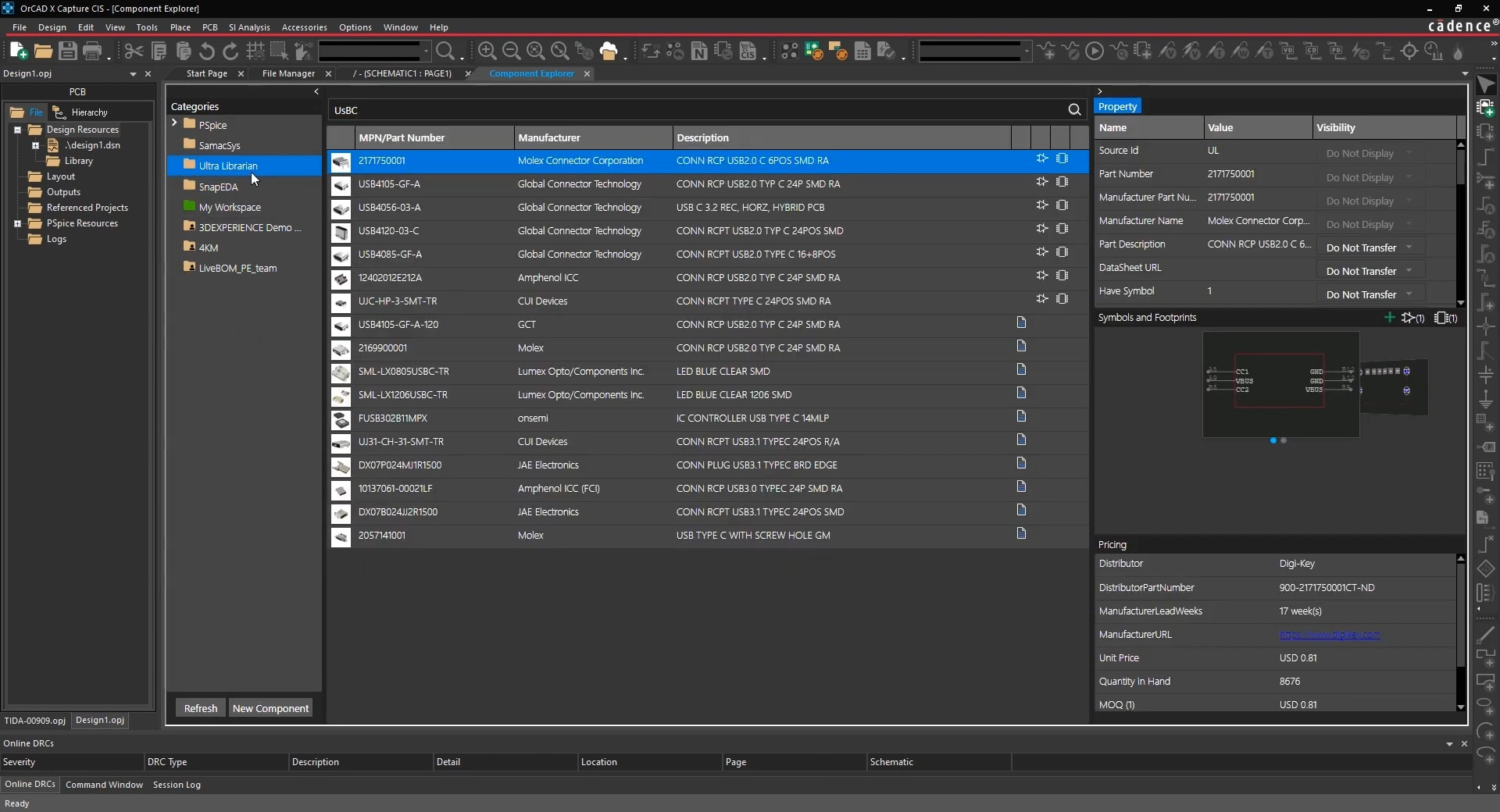
- Cadence has introduced OrCAD Xplore, integrating component research, design information, and procurement within OrCAD X Capture.
- The Ultra Librarian ecosystem provides access to more than 16 million verified schematic symbols, PCB footprints, and 3D models.
- DigiKey integration supplies component availability and sourcing information, with an integrated shopping cart for purchasing bills of materials.
Cadence Design Systems has introduced OrCAD Xplore, connecting component discovery, technical documentation, supply chain information, and procurement directly with the OrCAD X Capture schematic design environment. The platform combines manufacturer-verified design resources with commercial component information, allowing electronic circuit development and sourcing decisions to proceed within a common workflow.
The system is built around Cadence's OrCAD X software and Ultra Librarian component library, with initial manufacturer and distribution partners including Texas Instruments, STMicroelectronics, Murata, Molex, and DigiKey. Their contributions cover component models, reference designs, technical information, sourcing data, and access to purchasing services. Cadence is initially targeting individual engineers and smaller design teams.
Component selection has several dependencies beyond the nominal electrical characteristics listed in a catalogue. A device must satisfy requirements for operating voltage, current, temperature, timing, package geometry, and communication interfaces. Its supporting circuit may also need particular passive components, power arrangements, and PCB connections before the intended functionality can be implemented.
Correct design data is essential when moving from component selection to schematic capture and board layout. A schematic symbol represents the electrical connections available on a component, while its PCB footprint defines the pads and mechanical geometry used during assembly. The two must accurately represent the chosen manufacturer part number, including pin assignments and package variations.
Errors in those records can introduce incorrect connections or unsuitable mounting geometry, even when the circuit's intended electrical behaviour is otherwise sound. Verification against authoritative component documentation therefore forms part of the design process. Where suitable library data does not exist, engineers may need to create and check the symbol, footprint, and associated three-dimensional model themselves.
OrCAD Xplore gives users access to the Ultra Librarian ecosystem, which Cadence says contains more than 16 million verified symbols, footprints, and 3D models. The company reports average savings of three hours per component from avoiding manual model creation and verification. The figure describes its stated experience with the library, rather than a fixed saving for every component or project.
Manufacturer documentation and simulation resources are available alongside the physical design models. Reference designs can provide examples of how a device should be connected and supported within a wider circuit, while simulation models allow selected electrical behaviour to be examined before hardware is built. Their usefulness depends on whether the model represents the chosen device and operating conditions accurately.
Component models also differ in scope. A footprint does not establish electrical performance, and a simulation model may omit behaviour outside its intended operating range. Design teams must therefore distinguish between information used for mechanical integration, circuit simulation, compliance assessment, and final component qualification.
Cadence is integrating lifecycle and sourcing information into the same environment. Users can examine availability, lead times, pricing, compliance information, and potential sourcing risks while evaluating components. These details can affect a design long before production begins, especially where equipment is expected to remain in manufacture or service for several years.
A component may satisfy its electrical specification but present a procurement problem because of limited supply, a product discontinuation notice, or an unsuitable delivery period. Identifying those constraints during schematic development allows alternative parts to be considered while changes to the circuit and PCB are comparatively manageable.
Substitution still requires technical assessment. Components with similar headline specifications may use different packages, pin assignments, timing behaviour, tolerances, or protection features. A proposed alternative must be evaluated against the complete design rather than accepted solely because it belongs to the same product category.
OrCAD Xplore uses AI-powered natural-language interaction to assist with component research, selection, replacement, and sourcing. These capabilities draw on technical content provided through the platform's manufacturer and distribution integrations. Their recommendations remain dependent on the completeness and accuracy of that information, particularly when a request involves detailed application constraints.
Cadence reports that customers spend more than half their engineering time outside design tools researching components and checking availability or replacement options. It claims the connected workflow can reduce component research time by up to 80%. That improvement has not been presented as an independently established benchmark across a standard set of electronic designs.
Procurement integration is provided through DigiKey, enabling users to assess stock and pricing information and place components from a bill of materials into an integrated shopping cart. The connection moves selected purchasing activities closer to circuit development, although prices, quantities, and supplier availability remain subject to change.
The platform does not replace the detailed electrical verification or procurement controls required before a design enters production. Component selection must still account for application-specific behaviour, while purchasing and manufacturing arrangements may require approved suppliers, traceability information, and additional commercial checks.
OrCAD Xplore also forms part of Cadence's wider electronic design software portfolio. Projects that begin within the OrCAD environment can progress towards more complex design workflows using related Cadence tools, including Allegro X. The company intends to expand the Xplore partner network beyond its initial participants, adding further manufacturer and distribution information.
Cadence has not specified a detailed timetable for those partner additions or supplied a separately measured design-to-procurement productivity comparison. The initial release establishes the integrated research and purchasing workflow, with its value in production projects depending on model coverage, the quality of supply data, and compatibility with existing component approval procedures.