IN Brief:
- Cardiff and Swansea have signed an agreement to investigate jointly coordinated compound semiconductor pilot foundry capabilities.
- The proposal would connect research, prototyping, testing, and industrial manufacturing across the South Wales cluster.
- A joint delivery group will develop the technical roadmap and investment proposition with industry and government.
Cardiff University and Swansea University have signed an agreement to investigate coordinated compound semiconductor pilot foundry capabilities across South Wales. The proposed multi-institution model would connect university research with industrial design, fabrication, and testing, building on manufacturing and materials expertise already concentrated in the region. The institutions will now work with companies and public-sector partners to establish how the capabilities could operate.
The memorandum of understanding starts a joint feasibility exercise involving industry, government, and other stakeholders. A delivery group will prepare a shared technical roadmap and investment proposition, identifying which existing facilities can contribute to the proposed foundry network and where additional capability would be needed. Decisions on sites, capital spending, management, and a construction timetable will follow that assessment.
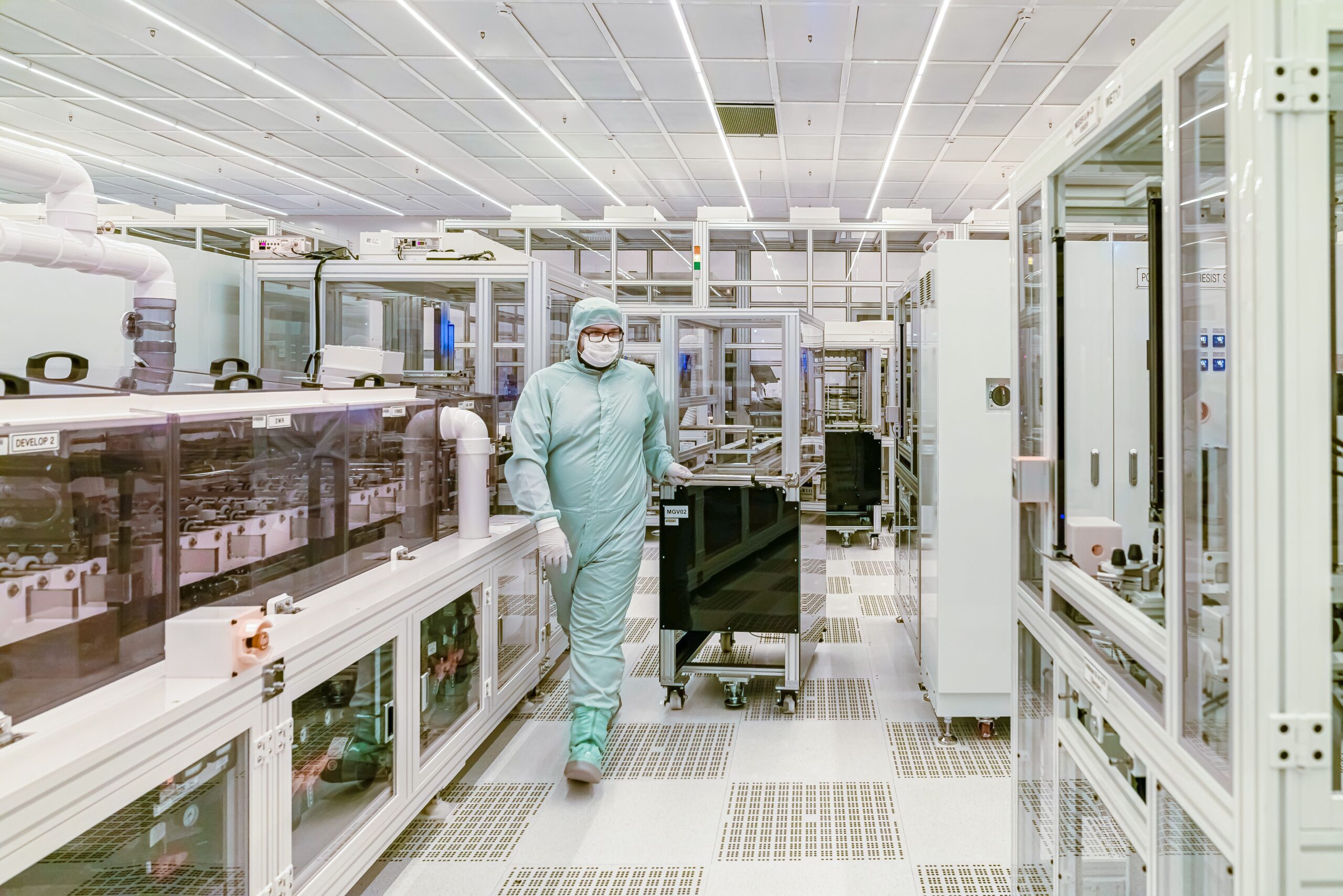
Pilot foundries occupy the demanding interval between a promising laboratory device and repeatable production. A research group may demonstrate a new device on a small number of substrates, while a manufacturer must establish whether the process can be reproduced at the required quality and throughput. Pilot-scale fabrication permits experiments on process sequences, material handling, device structures, and measurements under more controlled conditions than isolated research batches.
Compound semiconductor technologies introduce particular manufacturing challenges because their material properties, substrate requirements, and processing conditions can differ substantially from established silicon workflows. Gallium nitride and silicon carbide, for example, are used in classes of power and radio-frequency devices where high electric fields, operating temperatures, and switching behaviour influence design choices. Translating laboratory structures into commercial components also requires packaging, testing, and qualification appropriate to their intended applications.
South Wales already contains several stages of that industrial chain. The UK government’s 2026 semiconductor sector study identifies IQE’s Newport epitaxial operations, Vishay’s wafer fabrication capability, and KLA’s semiconductor equipment activities among the region’s strengths. It also describes substantial university materials research and pilot-scale activity, including Swansea’s commercial epitaxial foundry service for ultra-wide-bandgap materials.
A coordinated network would allow individual facilities to contribute different stages of the semiconductor process instead of requiring the same equipment at every institution. A device developer may need access to epitaxial material growth, lithography, deposition, etching, electrical characterisation, and reliability testing in sequence. Compatibility between those operations, as well as consistent process records, is essential for tracing defects and comparing results between experimental lots.
External access arrangements will be another part of the operating model. Companies bringing proprietary designs into a pilot line need clear processes for intellectual property, equipment reservations, process documentation, and the transfer of fabrication data into commercial production. Cardiff and Swansea plan to work directly with industrial partners as they establish the technical and governance framework for the proposed capabilities.
Howard Rupprecht, managing director of CSconnected Ltd, said companies need facilities to “prototype and prove their technology at pilot scale”. His comments also connected the pilot capability to the fabrication infrastructure where commercial products would be made. Matching these environments can help engineers carry process settings, measurements, and reliability evidence from prototypes into subsequent production development.
The UK government’s 2026 semiconductor sector study counted 705 semiconductor-related companies, with dedicated businesses generating an estimated £10.6 billion in annual revenue in 2025. The study identifies manufacturing and materials expertise in South Wales alongside continuing constraints involving access to capital, specialist skills, and UK operating costs. Those factors will shape the proposed pilot network’s investment requirements and the practical terms on which businesses could use its facilities.
The European Chips for Europe programme provides one international model, supporting pilot lines for process development, testing, and experimentation that can bridge early research and industrial use. Rupprecht linked a coordinated South Wales pilot line to the cluster’s ambition to participate in future European initiatives under a possible Chips Act II. Cardiff and Swansea will develop the proposal with government and industrial stakeholders as its technical scope and investment requirements are assessed.
The universities will also examine training provision for fabrication operators, process engineers, device designers, and test specialists alongside the proposed infrastructure. Pilot-scale work depends on people who can interpret process variation and reproduce experimental results under controlled conditions. The joint delivery group’s roadmap will establish which South Wales assets can be linked, the gaps in equipment or expertise, and the investment needed to support industrial access.