IN Brief:
- The global digital twin market is forecast in the contributed article to exceed $384 billion by 2034.
- Industrial digital twins depend on reliable IoT data from equipment, sensors, automation systems, and connected assets.
- Manufacturers scaling digital twins across plants need to address connectivity resilience, security, and network management.
Smart factories now routinely generate, capture and analyse data to make operations as automated, efficient and cost-effective as possible. The IoT, and now digital twins, enable and support this by giving visibility, insight and control to operations managers. They are part of the move towards intelligent ecosystems, but a digital twin’s virtual model is only as resilient as the data that feeds it. Without reliable IoT connectivity, it is little more than a novel mock-up.
The global digital twin market is forecast to be worth over $384 billion by 2034. This growth is driven largely by industrial sectors with manufacturing the third largest contributor, behind only aerospace and defence, and automotive and transportation.
Digital twins: a recap
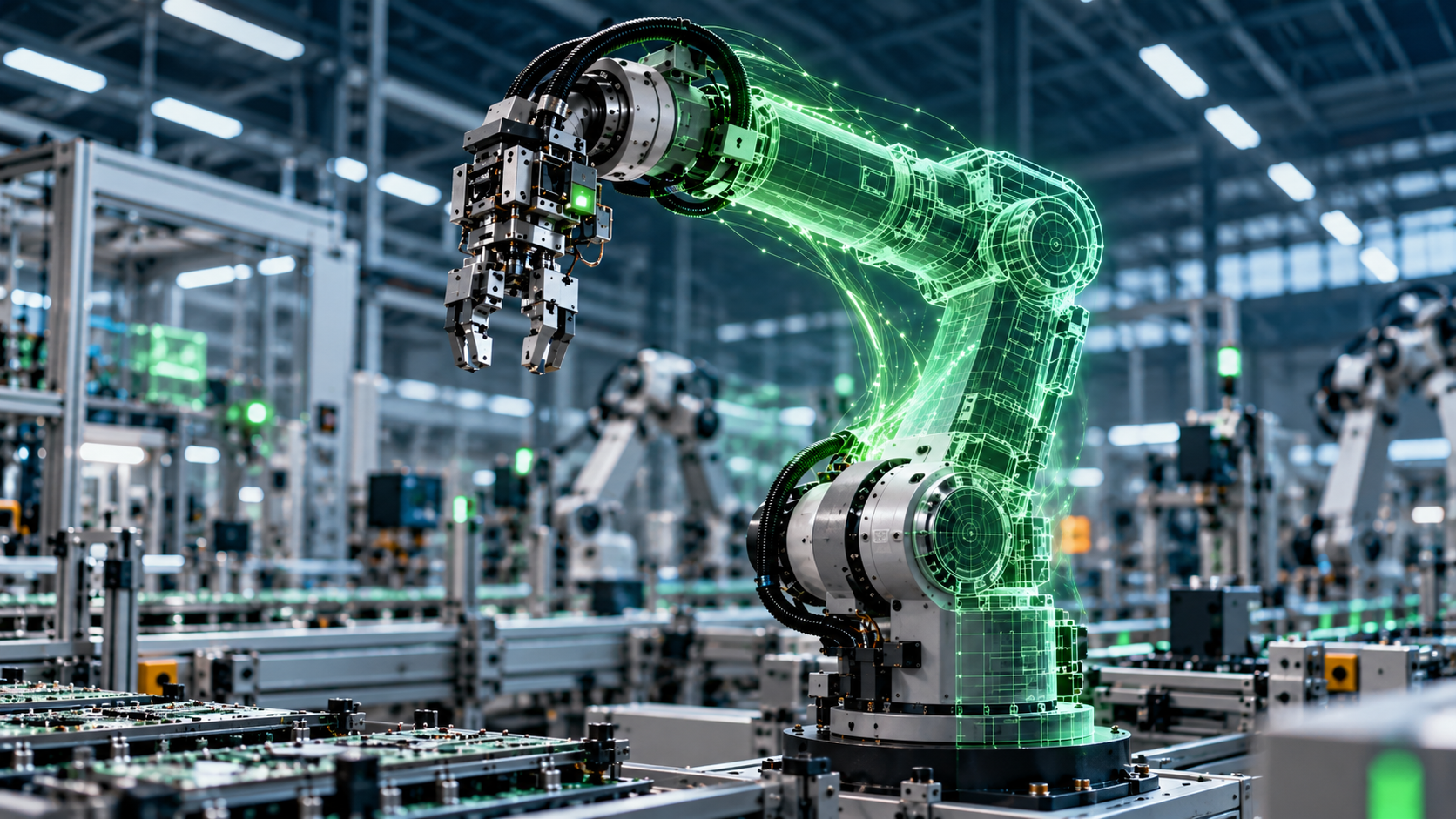
A digital twin is a digital representation of a physical object or system, presented as a 3D visual model. IoT devices and sensors generate a wealth of data; integrating this into a digital twin provides both a management platform and a dashboard for entire end-to-end IoT solutions.
Little wonder then that digital twins are growing in popularity, as shown by a survey published in 2025. It revealed that almost two-thirds (62%) of executives recognised the value of digital twin technology.
There is a huge amount of data in manufacturing. A digital twin offers a clear, intuitive way to harness that data and make it meaningful. A factory, for example, could make each of its connected systems visible to be monitored – from SCADA and production line sensors to building management systems like, temperature, air conditioning and access-controlled doors.
This gives managers and leaders visibility, insight and control to optimise IoT deployments so they support business outcomes, be those revenue generation, cost reduction, or both.
As the IoT reaches deeper into manufacturing, digital twins will play a central role in helping to optimise assets, predict failures and improve performance. They can:
- Monitor and control equipment remotely – for simple performance management
- Reduce downtime – predictive maintenance is the most popular digital twin application. It helps leaders manage when machinery is taken offline for repairs and minimise downtime from sudden equipment failures
- Simulate scenarios for improved decision-making – running test case scenarios to determine impact
- Reduce time to launch – cutting implementation time through no code/low code development
- Simplify complex systems – it is a challenge to manage the volume of IoT data that is generated as increasingly complex things are connected. A digital twin brings IoT solutions together in a single model with multiple ways to view the data
- Integrate with other business systems – a technology- and platform-agnostic digital twin can help join-up business processes
- Test fixes or upgrades – to resolve any issues before go-live
- Add value – a digital twin makes data usable and frees up skilled employees from data capture to instead capitalise on the revenue generation and cost saving potential of the solution.
Digital twins in manufacturing
Manufacturing is a prolific user of digital twins for good reason. They contribute to the digitalisation of operations, automation of repetitive tasks and the smart factory. As more data is captured from machines, sensors, robots, RFID tags and SCADA systems, digital twins collate and present it to simplify analysis and reporting.
They monitor and integrate data from IoT sensors in real-time, giving operational teams and business leaders valuable insights into where bottlenecks exist in processes and where functions could be made more efficient.
They can capture, collate and present information on equipment health, environmental conditions, production lines, energy consumption, disruptions, emissions and more. These insights inform decision making to reduce inefficiencies, cut costs, improve conditions, maximise output and extend the longevity of expensive machinery.
A 2024 Siemens survey revealed that companies adopting predictive maintenance could cut unplanned machine downtime by up to 50% and maintenance costs by 40%, improve the accuracy of downtime forecasting by 85% and increase maintenance staff productivity by 55%. Predictive maintenance is the most popular digital twin application because it ticks almost all the boxes of insights digital twins can provide.
How to make digital twins work in manufacturing
Digital twins are assets, provided they are fed with the right data. A virtual model of a factory, asset or production line is little more than a novelty application if the information feeding it is delayed, incomplete or unreliable.
As more machines, sensors and remote assets come online, the digital twin will inherit the strengths and weaknesses of the environment beneath it. If connectivity is fragmented, temperamental or hard to manage, the business will be less able to make informed decisions at the right time.
Connectivity is therefore a strategic issue for manufacturers wishing to reap the benefits of digital twins. Operations managers and CISOs must look beyond the application to think about how devices are connected, and how they will stay connected. They must invest in reliability by working with a connectivity solution provider who can advise on strong security, network changes, deployment scaling and total cost of ownership.
Digital twins are powerful assets to operationalise data, but they are not standalone systems. As manufacturers move digital twins from pilot line to plant-wide rollout, connectivity, not the sophistication of the model, will decide which projects scale and which stall.