
IN Brief:
- DNK has launched an A-PNT programme for vessels exposed to GNSS jamming and spoofing.
- The programme gives members access to subscription-based systems using Iridium’s low-Earth orbit satellite network.
- Positioning and timing resilience is becoming a core electronics issue for maritime, defence, energy, and critical infrastructure systems.
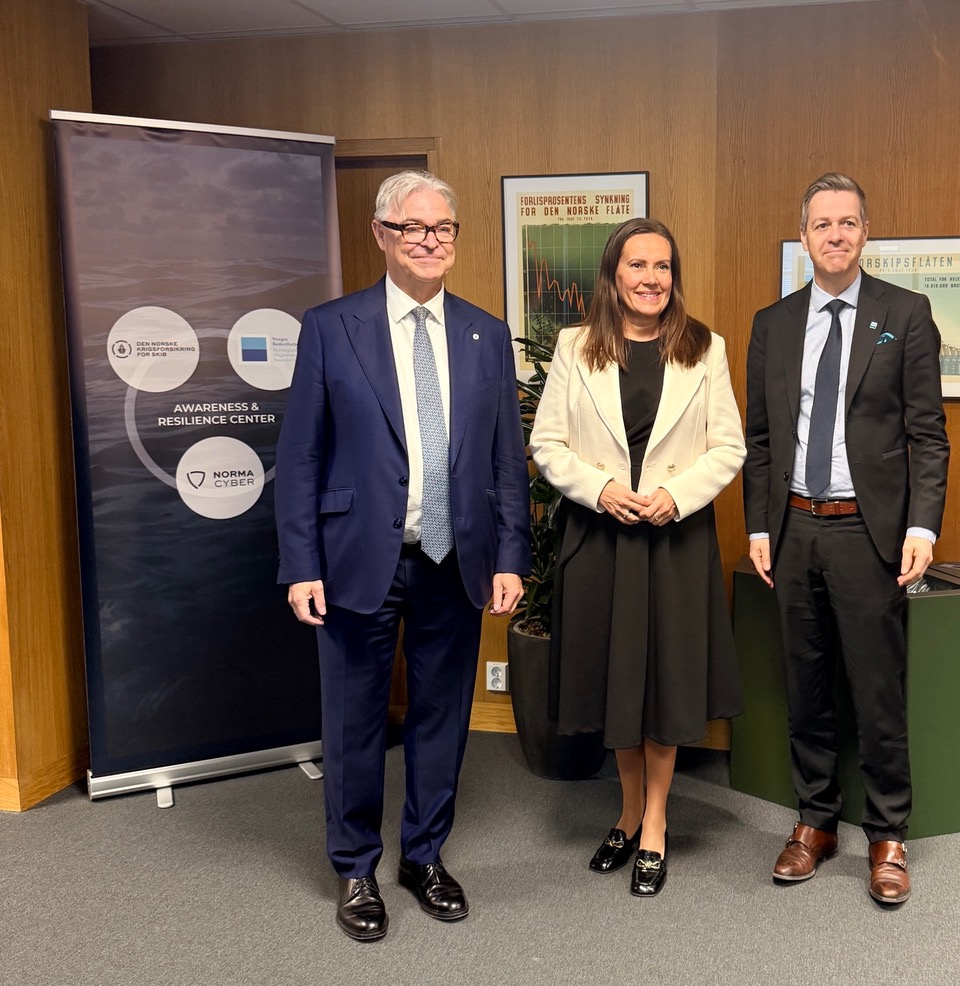
Den Norske Krigsforsikring for Skib has launched an assured positioning, navigation, and timing programme for vessels facing rising levels of GNSS signal interference.
The Norwegian war-risk mutual insurance provider, known as DNK, is giving members access to A-PNT services designed to counter jamming and spoofing. The programme allows members to select from specialist vendors offering systems that provide secure, accurate, and reliable positioning, navigation, and timing data, with premium reductions available for participating vessels.
The programme has been developed around Iridium’s low-Earth orbit satellite network, which operates 66 satellites and provides pole-to-pole communications and positioning support. DNK’s project team assessed several PNT providers before selecting Iridium’s network as the preferred basis for commercial maritime deployment.
GNSS jamming and spoofing have become a more serious operational risk for vessels moving through areas affected by geopolitical tension. DNK has highlighted increased interference over the past five years, particularly in the Black Sea, Baltic Sea, Persian Gulf, and Red Sea. Disrupted positioning data can increase collision and grounding risk, undermine situational awareness, and affect onboard systems that rely on timing signals for safe and efficient operation.
The systems available through the programme are subscription-based and designed for practical vessel deployment, with above-deck units that transmit jamming and spoofing data to DNK and optional below-deck units that provide situational awareness to crew. The structure gives shipowners a technical route to improve resilience while giving the insurer richer data on interference patterns in conflict-prone and emerging risk zones.
For electronics design, the development highlights how positioning and timing have become security-critical functions. GNSS receivers were once treated as reliable infrastructure inputs. Increasingly, they must be supported by alternative signals, interference monitoring, antenna hardening, timing holdover, sensor fusion, and resilient communications paths.
Iridium has also been extending its hardware footprint in connected systems, including the Iridium 9604 module combining satellite, LTE-M, and GNSS for global IoT deployments. The DNK programme shifts the focus from connectivity coverage to operational assurance, where satellite-based positioning and timing act as a backstop when conventional GNSS signals are degraded or deliberately manipulated.
The same pressure appears across defence, aviation, offshore energy, logistics, autonomous platforms, and critical infrastructure. Systems that depend on GNSS for navigation or synchronisation can no longer assume that the signal is benign. Maritime insurance is now recognising that shift directly, linking risk pricing to onboard electronic resilience rather than only to route, vessel type, or conflict exposure.
As jamming and spoofing equipment becomes easier to obtain, A-PNT moves from a specialist defence capability into a wider industrial requirement. The electronics challenge is to integrate those alternative timing and positioning sources without overburdening crews, adding excessive hardware complexity, or creating yet another data stream that operators cannot interpret under pressure.

