IN Brief:
- esmo's Vulcon contactors extend its semiconductor test equipment portfolio to the electrical interface between the device and tester.
- The range targets automotive and industrial power semiconductors and is designed for compatibility with different manufacturers' handlers.
- First customer shipments are planned in Europe and Asia before the end of 2026, with no quantified performance improvements published.
esmo has introduced Vulcon, a family of electrical contactors for semiconductor final testing that extends its equipment portfolio to the interface between devices under test and automated test systems. The German company is initially targeting power semiconductors used in automotive and industrial equipment, with first customer deliveries planned in Europe and Asia before the end of 2026.
The contactors are being developed in configurations matched to individual test requirements and can be used with semiconductor handling equipment from different manufacturers. The company is presenting the new range at SEMICON Europa in Munich from 10 to 13 November, complementing its established semiconductor handlers, test-head manipulators, docking systems, and interfacing equipment.
Semiconductor final testing takes place after the device has completed fabrication and packaging. The assembled component is connected to automated test equipment, which applies electrical conditions and measures its response against specified acceptance limits before the device is released for its intended application.
In a production test cell, the handler positions each packaged device against a contactor connected to the tester. The contactor must establish reliable electrical connections while accommodating the package dimensions, terminal arrangement, and repeated mechanical movement associated with automated processing.
Contact performance can influence the repeatability of electrical measurements. Each connection introduces some resistance, while mechanical alignment and surface conditions affect how consistently the device terminals make contact during successive test cycles.
When contact resistance changes unexpectedly, the resulting voltage drop may alter the conditions experienced by the device or affect the measured result. A contact problem can therefore produce an apparent semiconductor failure, even when the device itself remains within specification.
Power semiconductor testing presents particular electrical demands. Components such as MOSFETs and power diodes may need to be assessed for conduction characteristics, leakage current, blocking voltage, and other parameters relevant to the way they operate in converters or motor drives.
Some measurements involve substantial current, while others require the detection of comparatively small leakage currents. The electrical fixture must accommodate the different measurement conditions without introducing uncontrolled losses, interference, or contact instability.
Four-terminal measurement techniques can help separate the voltage measured across a device from voltage drops in current-carrying connections, where the package and test arrangement permit their use. Their effectiveness depends on the physical contact layout and the way the tester connects to the device terminals.
Mechanical durability is equally important in high-volume production. Each insertion and removal cycle loads the contact mechanism, while contamination, wear, and variations in device positioning may eventually require cleaning, adjustment, or replacement of contact elements.
Those maintenance activities affect test-cell availability. A contactor that requires frequent intervention can interrupt production, while inconsistent contacting may increase the number of devices that need to be retested or investigated.
esmo identifies contact life, test yield, and intervals between cleaning as development priorities for the Vulcon family. It has not released comparative measurements showing specific improvements in these areas, so the performance of individual configurations will need to be established through production testing.
The company is also positioning Vulcon independently of its own handling equipment. Semiconductor manufacturers frequently operate test floors assembled from systems supplied by several companies, and contactors must be matched to those installations rather than assuming a single standard mechanical arrangement.
Compatibility across handler brands gives equipment operators an additional supplier option, although the design still needs to accommodate the particular package, contact positions, tester interface, and mechanical movement of each application.
Electrical protection requirements also vary. High-voltage power devices may require greater spacing or insulation than low-voltage logic components, while high-current tests place additional demands on the conductivity and thermal behaviour of the contact interface.
The Vulcon family is consequently being configured around customer requirements rather than launched as one fixed contactor design. This approach allows the contact arrangement to be adapted to the electrical and mechanical conditions of different semiconductor packages.
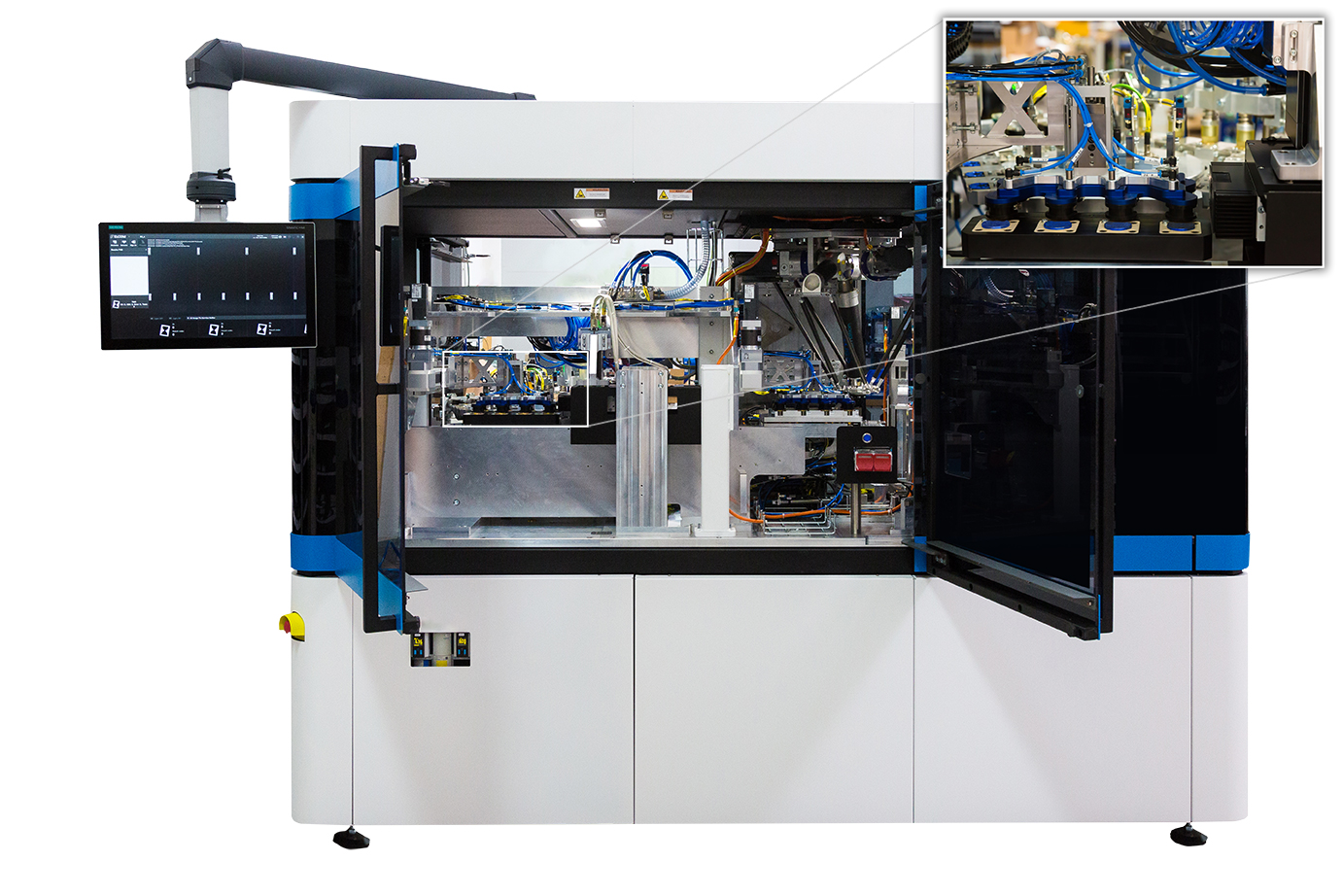
esmo has supplied semiconductor handling and test-cell equipment since 2001. Its existing portfolio includes manipulators used to position test heads, docking and interfacing systems that connect those heads to other equipment, and handlers that present packaged devices for electrical testing.
Adding the contactor extends that mechanical equipment scope to the final connection with the semiconductor. In an installation already using esmo handling and docking systems, the company can supply the principal mechanical elements between the tester and the device.
The new contactors will also be supplied separately to test facilities operating other manufacturers’ equipment. Initial deliveries are scheduled before the end of 2026, with configurations and engineering support provided according to the semiconductor and testing requirements involved.