IN Brief:
- An oversubscribed $50 million Series A will support commercial production and international deployment of Fortaegis Secure Compute.
- The architecture derives hardware identity from physical chip characteristics and avoids relying on permanently stored cryptographic keys.
- Fortaegis plans FPGA deployments alongside ASIC development as customer programmes move towards qualification and production.
Fortaegis Technologies has raised $50 million in an oversubscribed Series A to move its Secure Compute architecture towards commercial production and wider deployment. The Amsterdam-based company is targeting AI infrastructure, autonomous systems, telecommunications, defence, critical infrastructure, and other environments where identity and encrypted communications need to be established at hardware level.
The round was led by Singapore-based Serendipity Capital, with participation from TEL Venture Capital, TNO, Prodrive Technologies, NP-Hard Ventures, NovaCapital, Access Ventures, and Coalition Capital. The investment will support commercial production, FPGA deployments, and continued work on application-specific integrated circuits.
Secure Compute derives trust from physical characteristics created during semiconductor manufacture. Minute variations between chips provide the basis for device identity and cryptographic functions, allowing the architecture to reduce dependence on permanent keys stored in conventional memory. Fortaegis combines that hardware root with firmware, cryptography, software, and policy management across the wider compute stack.
The architecture has already been subjected to external technical work. TNO entered a strategic partnership with Fortaegis in 2025 covering analysis and testing of the company’s security platform and communications protocol, while TEL Venture Capital invested in the business during the same year. Fortaegis now describes its Silicon Platform as active with governments, global enterprises, and technology partners across the United States, Europe, Singapore, and Japan.
The latest funding shifts the emphasis towards industrialisation. FPGA implementations provide a route to put the architecture into deployed systems without waiting for a dedicated silicon programme, allowing customers to evaluate the technology in data-centre, edge, industrial, or ruggedised equipment. A later ASIC implementation can reduce size, power consumption, and integration overhead where product volumes justify dedicated silicon.
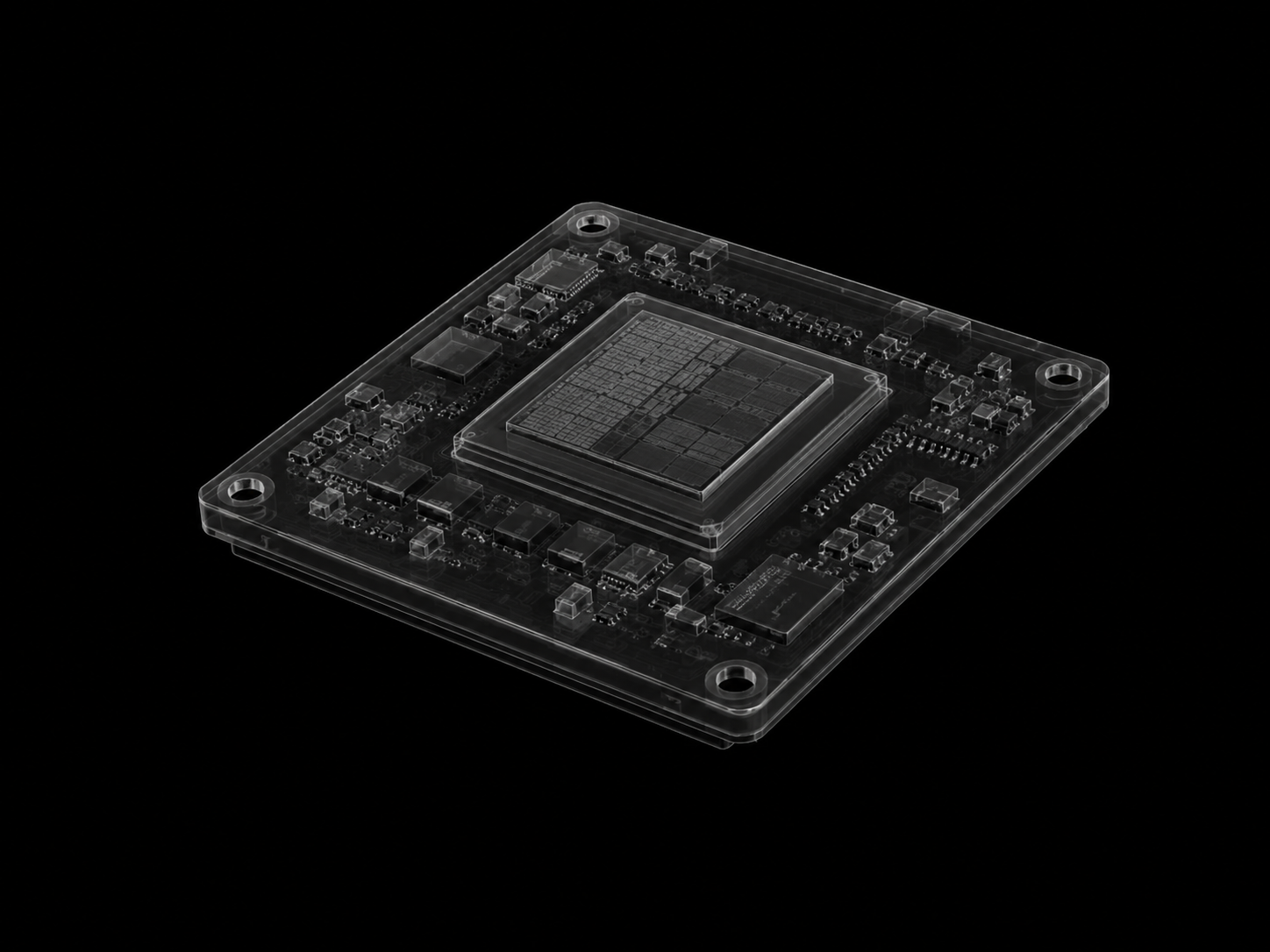
Fortaegis presents the same underlying architecture in server-rack, rugged edge, compact edge, and embedded-silicon forms. That gives equipment developers several integration routes while retaining a common security model across infrastructure that may otherwise use different processors, accelerators, operating environments, and network architectures.
The company’s quantum-safe positioning reflects the longer-term threat posed by quantum computing to established public-key cryptography, although practical security will still depend on implementation, independent evaluation, key lifecycle, interfaces, and the configuration of the complete system. Hardware-rooted identity changes where trust is established, but it does not remove the requirement to secure firmware, software, update mechanisms, and operational access.
Industrialisation also introduces the less glamorous requirements of semiconductor product development. FPGA and ASIC deployments need stable interfaces, lifecycle planning, qualification, manufacturing partners, test strategies, and a route for fixing vulnerabilities without undermining deployed hardware. Products aimed at critical infrastructure or defence add further demands around sovereignty, supply-chain assurance, and long operating lives.
Prodrive Technologies is already part of that manufacturing route. The companies announced a partnership in May covering development, industrialisation, manufacturing, and commercialisation of secure hardware and software platforms, giving Fortaegis production expertise alongside the capital now being committed to scale the architecture.
The move from demonstration hardware to repeatable production will determine how broadly Secure Compute can be adopted. Hardware security architectures compete not only on cryptographic strength but on latency, power, board space, integration effort, software compatibility, and the cost of inserting another trusted element into a system.
Fortaegis is now attempting to carry one security architecture across heterogeneous compute environments while moving from customer validation into deployable hardware. FPGA products provide the immediate route into systems, while ASIC development will test whether the same model can be integrated deeply enough to become part of future processors and infrastructure rather than an additional security layer around them.