
IN Brief:
- Hailo is using ISC West 2026 to show how more video analytics and image enhancement can move directly onto the camera.
- The new Hailo-15L targets mass-market designs with low power draw, minimal DRAM requirements, and concurrent analytics and AI image processing.
- The company’s broader portfolio points to a security market that is shifting away from cloud dependence and toward embedded edge inference.
Hailo is using ISC West 2026 to make a stronger case for on-camera AI, showing how more of the vision pipeline can now sit inside the device rather than being pushed upstream to servers or cloud platforms.
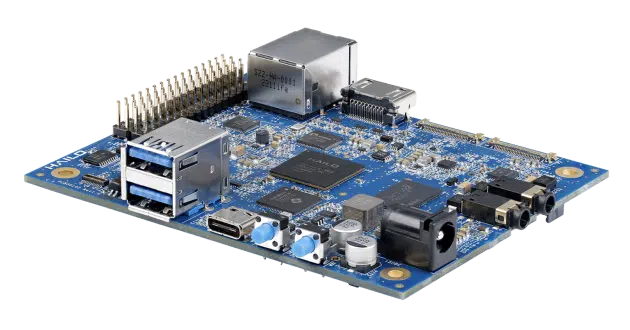
The centrepiece is the Hailo-15 family, and particularly the Hailo-15L, which is aimed at high-volume and cost-sensitive camera platforms. Hailo positions the device as a single-chip camera SoC with AI-ISP capability, advanced analytics, power consumption below 3W, and DRAM requirements as low as 1GB. The architecture is designed to support low-light denoising and video analytics in parallel, which is increasingly important in cameras expected to do more than motion detection and basic object classification.
The demonstrations go further than image cleanup. Hailo is also showing free-text search and event triggering using CLIP and vision-language models, along with dynamic privacy masking that can run in real time on the device. The wider portfolio on show includes the Hailo-10H, which is being used in a Raspberry Pi AI HAT+ 2 configuration for local generative AI workloads, and the Hailo-8, a DRAM-free edge AI accelerator aimed at broader embedded deployments.
The direction of travel is clear enough. Security cameras are being recast as local inference platforms, where latency, privacy, and bandwidth efficiency matter as much as raw model performance. Hailo is showing the technology at ISC West 2026 in Meeting Room 1007 at the Venetian Expo, Las Vegas.

