
IN Brief:
- Elmed will create a 600MW HVDC connection between Sicily and Tunisia.
- Hitachi Energy will provide converter valves, MACH controls, transformers, and switchgear.
- The 220km link will become the first direct electricity interconnection between Europe and North Africa.
Hitachi Energy has secured a contract worth approximately €770 million to build the converter stations for the Elmed high-voltage direct-current interconnector between Italy and Tunisia. The 600MW link will run for about 220km, mainly through a submarine cable crossing the Strait of Sicily at depths reaching roughly 800 metres.
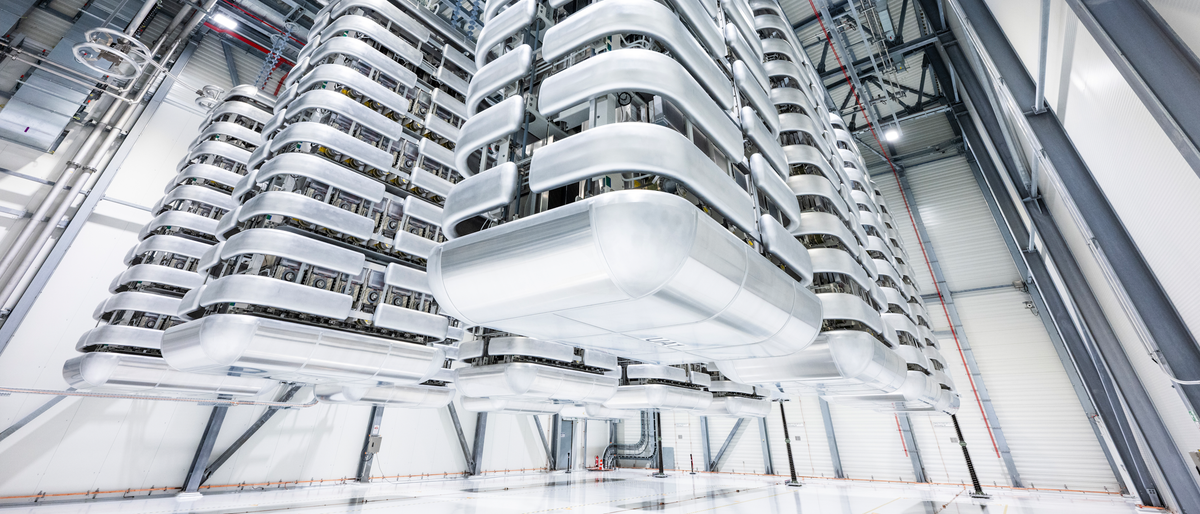
Converter stations will be constructed at Partanna in Sicily and Mlaabi on Tunisia’s Cape Bon peninsula. Hitachi Energy’s scope includes HVDC valves, power transformers, high-voltage switchgear, its MACH digital control and protection platform, system studies, engineering, equipment supply, installation supervision, and commissioning.
Terna and Tunisian utility STEG awarded the work after a procurement process launched in 2023. D’Agostino Costruzioni Generali will undertake principal civil and electromechanical work at the Italian station, while Orascom Construction will perform the corresponding activities in Tunisia.
The complete interconnector represents an investment of €1.42 billion, including €307 million from the European Connecting Europe Facility. It is the first project involving a non-EU country to receive support from that programme and will create the first direct electricity link between Europe and North Africa.
HVDC allows power to move between AC systems without requiring their frequency and phase to remain directly locked. Converter controls set the transfer electronically, enabling operators to regulate flows, exchange renewable generation, and support networks with different operating characteristics.
The valves form the electrical centre of each station, although their performance depends on the surrounding transformers, switchgear, cooling, auxiliary supplies, sensors, and controls. Every part must respond coherently through start-up, normal transfer, disturbances, shutdown, and maintenance states.
Protection presents one of the most demanding engineering tasks because a long submarine cable stores substantial electrical energy. Cable capacitance, converter behaviour, grid strength, communications delay, and fault location all influence the speed and selectivity required from the control system.
MACH will coordinate power regulation and protection across the two terminals, with redundant processing and communications expected throughout a utility-scale installation. Control software must distinguish external network events from equipment faults quickly enough to protect the link without causing unnecessary disconnection on either side.
Power networks are becoming more dependent on converters as wind, solar, batteries, and interconnectors displace or supplement large synchronous generators. With less inherent rotational inertia available, measurement quality, control algorithms, and the dynamic response of power electronics assume a greater role in frequency and voltage stability.
The same transition is visible at lower power levels, where silicon-carbide DC conversion is being developed for microgrids, storage, charging, and data centres. Elmed operates at utility scale, but both developments rely on semiconductor switching, embedded control, sensing, and protection to connect unlike electrical sources and loads.
Because an HVDC station is expected to operate for decades, long service life changes its electronics design priorities. Valve control boards, fibre links, cooling sensors, auxiliary converters, and protection hardware require redundancy, diagnostics, controlled obsolescence, and maintenance procedures capable of supporting the asset throughout its planned life.
Although converter stations dominate the electronics scope, the submarine route adds important constraints beyond their boundaries. Cable manufacture, laying, protection, and repair planning become more difficult at greater depth, while cable characteristics feed directly into transient studies, insulation coordination, and the settings used by the protection system.
Energy flows will not remain permanently in one direction, because generation, market prices, network conditions, and availability will alter the operating schedule. The controls must therefore manage import and export across a wide range of power levels without allowing weak-grid conditions or abrupt set-point changes to destabilise either terminal.
Engineering studies will now translate the contracted equipment scope into compatible designs for the Italian and Tunisian networks. Commissioning will require staged energisation, harmonic assessment, control verification, protection testing, and demonstration that the complete link can transfer power reliably through normal and abnormal conditions.
Elmed extends electronically controlled transmission into a new regional corridor, joining two systems whose future generation mixes are likely to change substantially. Its operating record will be shaped as much by valve electronics, software, sensing, and maintenance discipline as by the submarine cable beneath the Strait of Sicily.

