IN Brief:
- Spain has awarded a €51 million programme to develop the SILAEM naval point defence system.
- The architecture combines X band fire control radar, command electronics, a turret, and laser guided interceptors.
- Open interfaces and combat system integration are shaping layered defence against drones, missiles, and fast surface threats.
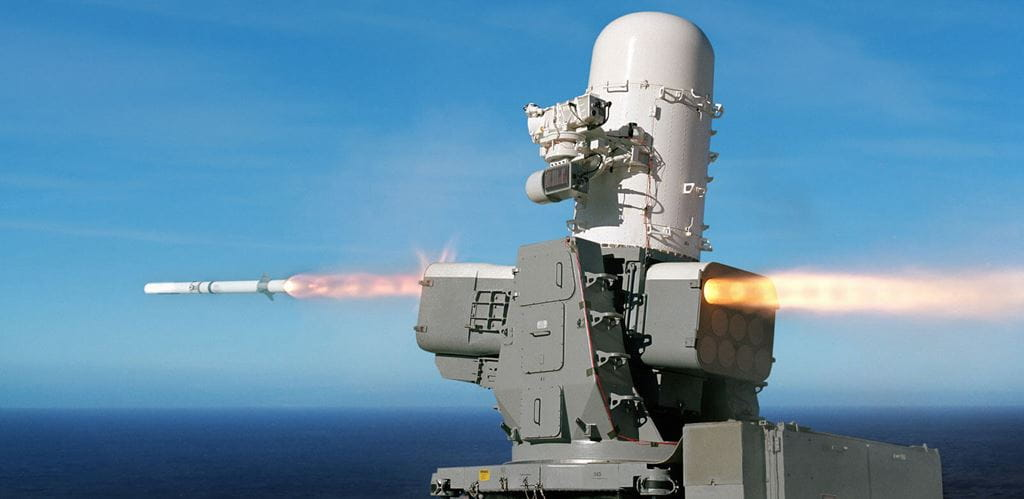
Indra is developing a naval point defence system for the Spanish Navy under the €51 million SILAEM Special Modernisation Programme, integrating radar, command electronics, a weapon turret, and laser guided interceptors.
The system will form a final defensive layer against threats that penetrate longer range ship and fleet protection. Its target set includes aerial and surface drones, hostile fast boats, helicopters, anti ship missiles, and attacks launched from coastal positions.
Standalone and fully integrated versions are planned, allowing SILAEM to operate independently or connect with Spain’s SCOMBA naval combat management system. The integrated configuration will be able to use information already available elsewhere on the ship, while the standalone version could serve platforms with less extensive combat system infrastructure.
An X band fire control radar will provide the precision tracking required for engagement. Shorter wavelengths support fine angular resolution, although practical performance will depend on antenna geometry, waveform design, processing, sea clutter, weather, target radar cross section, and the movement of both ship and threat.
Sensor data must then move through the command layer with little delay. The system has to classify the target, establish whether it lies inside the defended volume, assign an interceptor, calculate the engagement, and maintain a stable track through launch and guidance.
Laser guided interceptors add an optical element to the chain, increasing the demands placed on line of sight, stabilisation, target designation, and environmental performance. Smoke, spray, cloud, manoeuvre, and ship motion can all affect the guidance path, requiring the radar and optical elements to remain closely coordinated.
Indra is designing the architecture to accept third party sensors and systems, allowing tracks from other radars, electro optical equipment, or fleet networks to contribute to the local defence picture. The same interfaces could support later effectors, provided timing, safety, security, and data quality remain controlled.
Modern naval threats present widely different signatures and engagement profiles. A low flying anti ship missile, a small uncrewed surface vessel, and a compact aerial drone may arrive at different speeds and altitudes, yet a coordinated attack can force the combat system to track and prioritise all three simultaneously.
Point defence therefore depends as heavily on electronics and software as on the interceptor. Radar processing must separate small targets from sea clutter, track managers must avoid duplication and loss, and the command system must continue operating while sensors, communications links, or other ship systems are degraded.
Germany’s F128 frigate programme is also being shaped around deeply integrated sensors, combat electronics, and future upgrade paths. SILAEM is narrower in scope, but both programmes depend on architectures that can absorb new threats and effectors during a long naval service life.
Open interfaces do not remove the difficulty of interoperability. Third party equipment may use different data models, timing references, security classifications, and software update cycles, while naval qualification adds strict requirements around shock, vibration, salt, electromagnetic compatibility, and availability.
Interface control, deterministic networking, configuration management, and verification will therefore decide whether SILAEM operates as a coherent defensive function rather than a collection of capable subsystems. The latency budget extends from initial detection through fusion, fire control, launcher movement, guidance, and assessment of the engagement result.
European defence programmes are also examining the cost of defeating inexpensive threats presented in quantity. A layered ship may eventually combine guns, missiles, electronic warfare, decoys, and directed energy equipment, with the command system selecting an appropriate response according to range, target type, available ammunition, and risk.
SILAEM gives Spain a domestic route into that electronics and integration capability. Its performance will be judged by the ability to track small, manoeuvring, and simultaneous targets while preserving reliable guidance and command links under the environmental and electromagnetic conditions of a working warship.