IN Brief:
- Keysight has added end-to-end electrical-optical-electrical simulation to ADS 2026.
- The workflow combines high-speed digital simulation with Photonic Designer to model complete mixed-domain links.
- AI infrastructure and high-performance computing are pushing 800G, 1.6T, and future optical interconnects into more complex design territory.
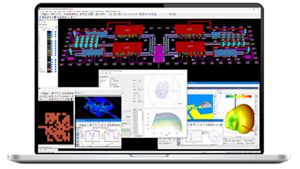
Keysight Technologies has introduced electrical-optical-electrical simulation in ADS 2026, allowing engineers to model complete high-speed signal chains across electrical transmitters, photonic circuits, optical links, and electrical receivers within a single design environment.
The new capability combines Keysight’s High Speed Digital workflow with Keysight Photonic Designer, giving design teams a mixed-domain simulation route before hardware implementation. Engineers can evaluate electrical and optical trade-offs, assess signal integrity, model full-duplex optical links, and analyse nonlinear effects across multiple wavelengths in one workflow.
AI infrastructure, high-performance computing, and next-generation Ethernet are pushing optical interconnects toward 800G, 1.6T, and future 3.2T operation. At those speeds, drivers, SerDes interfaces, modulators, waveguides, optical channels, receivers, and package effects interact in ways that are difficult to separate cleanly into electrical and optical verification tasks.
Niels Fache, senior vice president at Keysight, said: “AI infrastructure depends on 800 Gbps and 1.6 Tbps optical links to move data at scale. At these speeds, electrical and optical performance can no longer be modeled separately. With ADS 2026, engineering teams now have the ability to simulate those interactions before committing to silicon.”
End-to-end EOE simulation gives engineers a way to catch cross-domain problems earlier in the design cycle. Legacy workflows often required electrical and optical results to be transferred between separate tools, leaving room for missed interactions and manual correlation errors. At 800G and above, nonlinearities, noise, wavelength-division effects, modulator bias behaviour, receiver sensitivity, and channel impairments can combine before a design reaches the prototype stage.
ADS 2026 also supports the design flow from system-level simulation down to component optimisation, with PDK support at circuit level and RSoft integration at component level. That link between system modelling and manufacturable photonic IC behaviour is important because optical interconnect design cannot be reduced to an idealised channel model. The device, package, board, and link have to remain consistent through the design process.
The tool update fits neatly with the manufacturing direction of silicon photonics, where CEA-Leti and NcodiN are pushing silicon photonics onto 300 mm wafers. As optical interconnects move closer to mainstream semiconductor manufacturing, the verification flow has to become more tightly integrated with electronic design automation rather than remaining a separate specialist process.
AI compute is accelerating that convergence. The cost of moving data between processors, memory, accelerators, switches, and racks is becoming a defining constraint in system architecture. Optical links offer bandwidth and reach advantages, but they introduce modelling demands around photonic devices, multi-wavelength operation, thermal sensitivity, and electro-optical co-design.
For high-speed design teams, the practical shift is that optical behaviour now has to be considered at the same architectural stage as SerDes, channel, package, and board design. Waiting until separate electrical and optical models are stitched together late in development risks finding cross-domain problems after too much engineering effort has already been committed.
ADS 2026 brings those domains closer together, giving engineers a single environment in which to test signal quality, noise, nonlinear effects, wavelength behaviour, and system-level design choices before silicon and hardware decisions narrow the available options.