IN Brief:
- Kontron produces automotive 5G network access devices and industrial M.2 modules in Düsseldorf.
- NOFFZ provides parallel RF and functional testing with robotic handling and laser traceability.
- The partners plan to demonstrate the production test system at electronica in November.
Kontron is working with German test automation specialist NOFFZ Technologies to automate RF and functional testing of 5G communications modules manufactured in Düsseldorf. The companies are combining parallel test execution, robotic handling and laser marking to support series production and traceability for automotive and industrial products.
In Düsseldorf, Kontron’s automotive operation manufactures 5G network access devices (NADs) alongside M.2 communication modules for industrial equipment. Both types are developed in Germany and depend on consistent radio performance when they leave the line. NOFFZ, headquartered in Tönisvorst in North Rhine-Westphalia, supplies the automated testing expertise used to check the finished assemblies at production scale.
Before shipment, each completed module undergoes RF measurements and functional checks. The RF sequence tests performance against the production plan’s specified limits; functional measurements examine communications and control behaviour in the assembled device. Such checks catch faults at the module stage, ahead of the different vehicle and industrial system qualifications needed when the radio is installed in its final application.
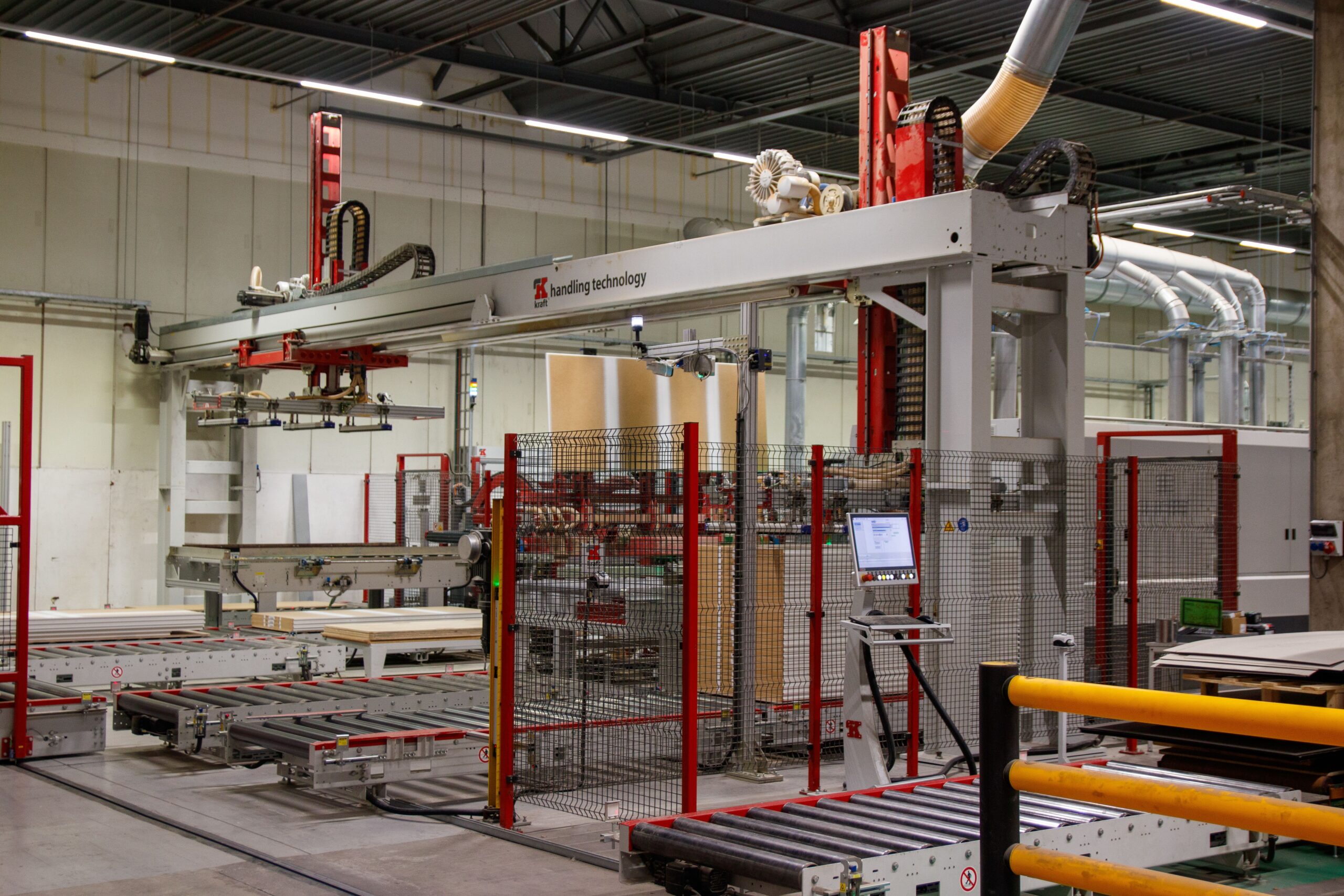
A finished module can emerge from the UTP 9090 test operation approximately every ten seconds even though its individual measurements can take several minutes. NOFFZ achieves that reported cadence by running test sequences on multiple devices in parallel, while a robot with four grippers loads and moves modules between operations. Reduced idle movement helps sustain the flow without shortening the measurements themselves.
That parallel arrangement also makes fixture contact and positioning important: repeated RF connections must be sufficiently consistent for measurements to remain comparable as successive modules pass through the station. Robotic handling controls the transfer between operations, and several modules can remain under test while the next devices are prepared. Test duration and the time between completed units are therefore different measures of the same production process.
Once tested, a module receives laser marking that allows its identifier to be associated with the measurements collected for that unit. Production teams can use those records to trace a failure to a test sequence, examine affected batches or compare a returned module with its original results. Fixture changes and revised procedures can accommodate further module variants while maintaining the same identification and recording approach.
In vehicles, NADs enable remote diagnostics, software updates over the air and emergency calling, with additional communications requirements arising as vehicle connectivity develops. The industrial M.2 format instead allows a cellular module to fit into a gateway or connected machine through the host equipment’s electrical and software interfaces. Testing both product types on a controlled line provides a shared production checkpoint before their separate integration paths.
The qualification demands then diverge. Automotive NADs enter vehicle programmes with their own integration and supply requirements; industrial modules must operate within the chosen equipment’s mechanical, power and communications design. Finding a radio fault before integration can simplify diagnosis because the module has not yet been combined with a host processor, power electronics and antennas. End-of-line checks support that work, although application validation remains necessary.
The partners will demonstrate the UTP 9090 production testing system at electronica 2026 in Munich from 10 to 13 November. The system is already associated with Kontron’s module manufacturing activity in Düsseldorf, where automated RF and functional checks form part of the series production operation. The November demonstration will present the production test arrangement rather than a new cellular radio specification.
Additional module variants can be introduced through corresponding changes to the fixtures and test procedures while preserving traceable identification. The reported cadence of one completed module approximately every ten seconds applies to the present parallel test arrangement; a different sequence of measurements or handling requirements may change that throughput. Kontron’s existing Düsseldorf operation provides the production setting for the system being shown in Munich.