IN Brief:
- MSPC01 devices provide conditioned 0.5V to 4.5V analogue output in an 8.5mm square package.
- The family includes gauge-pressure ranges from 5kPa to 100kPa.
- Integrated compensation reduces external circuitry, while system calibration remains central to low-pressure accuracy.
MEMSensing has introduced a family of conditioned gauge-pressure sensors covering measurement ranges from 5kPa to 100kPa for airflow, medical, building-control, and industrial applications.
The MSPC01-GAD series combines a MEMS sensing element with temperature compensation and signal-conditioning electronics in an 8.5mm by 8.5mm package. Devices provide a proportional analogue output from 0.5V to 4.5V, allowing connection to a microcontroller ADC or industrial acquisition circuit without a separate bridge-conditioning stage.
Forward- and reverse-port package arrangements are available, giving equipment developers greater freedom when routing pressure tubing or mounting the sensor against a manifold. Operation is specified from −40°C to 85°C, with compensation spanning the temperatures encountered in many medical, HVAC, appliance, and industrial installations.
Measurement options include 5kPa, 10kPa, 40kPa, and 100kPa ranges, allowing the sensing span to be matched more closely to the expected signal. The lower variants suit differential airflow assessment, filter monitoring, respiratory equipment, fan control, and pneumatic processes where a higher-range automotive or industrial sensor would provide inadequate resolution.
Low pressure exposes system-level errors
Reducing the full-scale pressure range increases the influence of effects that can appear secondary in higher-pressure systems. Package stress, board flexing, tubing volume, temperature gradients, condensation, port orientation, and small leaks can all alter the result, requiring the sensor, pneumatic path, mounting, and calibration method to be treated as one measurement chain.
The conditioned voltage output simplifies the electronics without removing those constraints. Analogue routing must be protected from supply noise, ground offsets, and interference generated by motors, valves, wireless transmitters, or switch-mode converters, while ADC reference stability and resolution determine how much useful information is retained from the output span.
Battery-powered or remote equipment may benefit from a straightforward analogue interface when only one or two channels are needed. It avoids protocol handling and allows rapid sampling, whereas digital devices may be preferable where diagnostics, calibration coefficients, addressing, or several sensors on one bus are required.
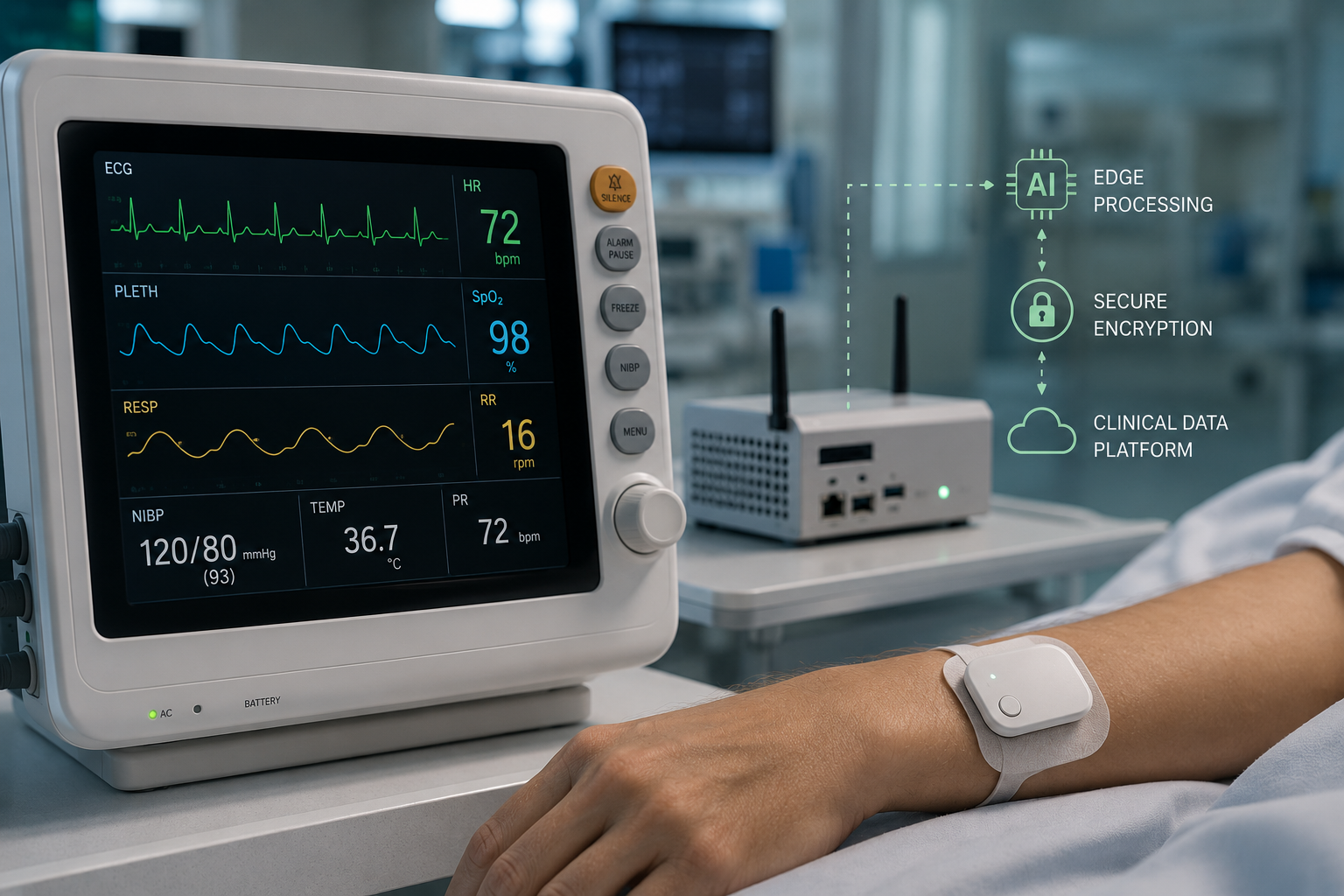
Medical systems add stricter demands around fault detection and predictable behaviour. A pressure value may be used to infer flow, obstruction, breathing activity, or pump condition, so a disconnected tube or blocked port must be distinguished from a valid but unusual reading. Plausibility checks and complementary measurements are often needed because the pressure sensor cannot identify every pneumatic fault independently.
As compact sensing and flow control develop in parallel, a recent mass-flow control platform developed for OEM equipment combined sensing, control, and communications in a smaller assembly. Such subsystems can be incorporated directly into laboratory, medical, and industrial machines without the volume and integration work associated with separate instruments.
HVAC and filter-monitoring systems present different operating conditions, with sensors expected to remain active for years in dusty environments and receive limited maintenance. Zero drift, contamination, and tubing condition become increasingly important over the service interval, and a low-cost sensing element can create an expensive field problem if moisture or debris reaches the die.
Mechanical integration therefore deserves the same attention as the interface circuit. Rigid tubing can transfer stress into the package, flexible tubing can introduce volume and delay, and poorly designed manifolds can trap condensate. Calibration performed before final assembly may not capture these effects if the production enclosure alters mounting stress or thermal gradients.
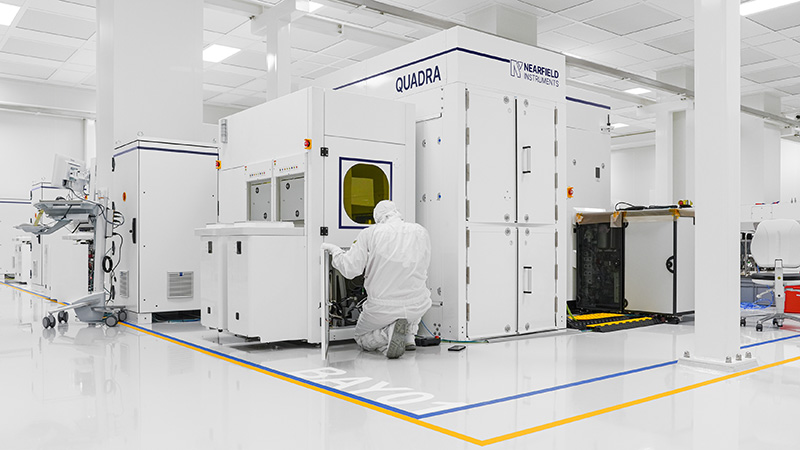
MEMSensing manufactures the devices using its SENSA process and draws on infrastructure used for high-volume MEMS production. That base supports applications where annual volumes are substantial but allowable unit cost remains tightly controlled, provided calibration and assembly methods can be automated alongside sensor manufacture.
The MSPC01 family reduces the amount of analogue circuitry needed between the sensing element and host controller, while the range of pressure options lets designers select a closer match to the expected signal. Final accuracy will still be determined by the complete pneumatic and electronic system, particularly at the 5kPa end of the portfolio.