IN Brief:
- The Military University of Technology has received a complete standalone 5G mmWave Starter Kit covering radio access, core network, software, and user equipment.
- The platform supports n257, n258, and n261 across 24.25GHz to 29.5GHz, with Microamp stating throughput above 4Gbps and latency below 5ms.
- Research will span propagation, network optimisation, specialised devices, and communications scenarios for civil and defence applications.
Microamp has supplied a complete 5G mmWave research system to the Faculty of Electronics at Warsaw’s Military University of Technology, creating a standalone laboratory platform for communications research, technical training, and civil and defence experimentation.
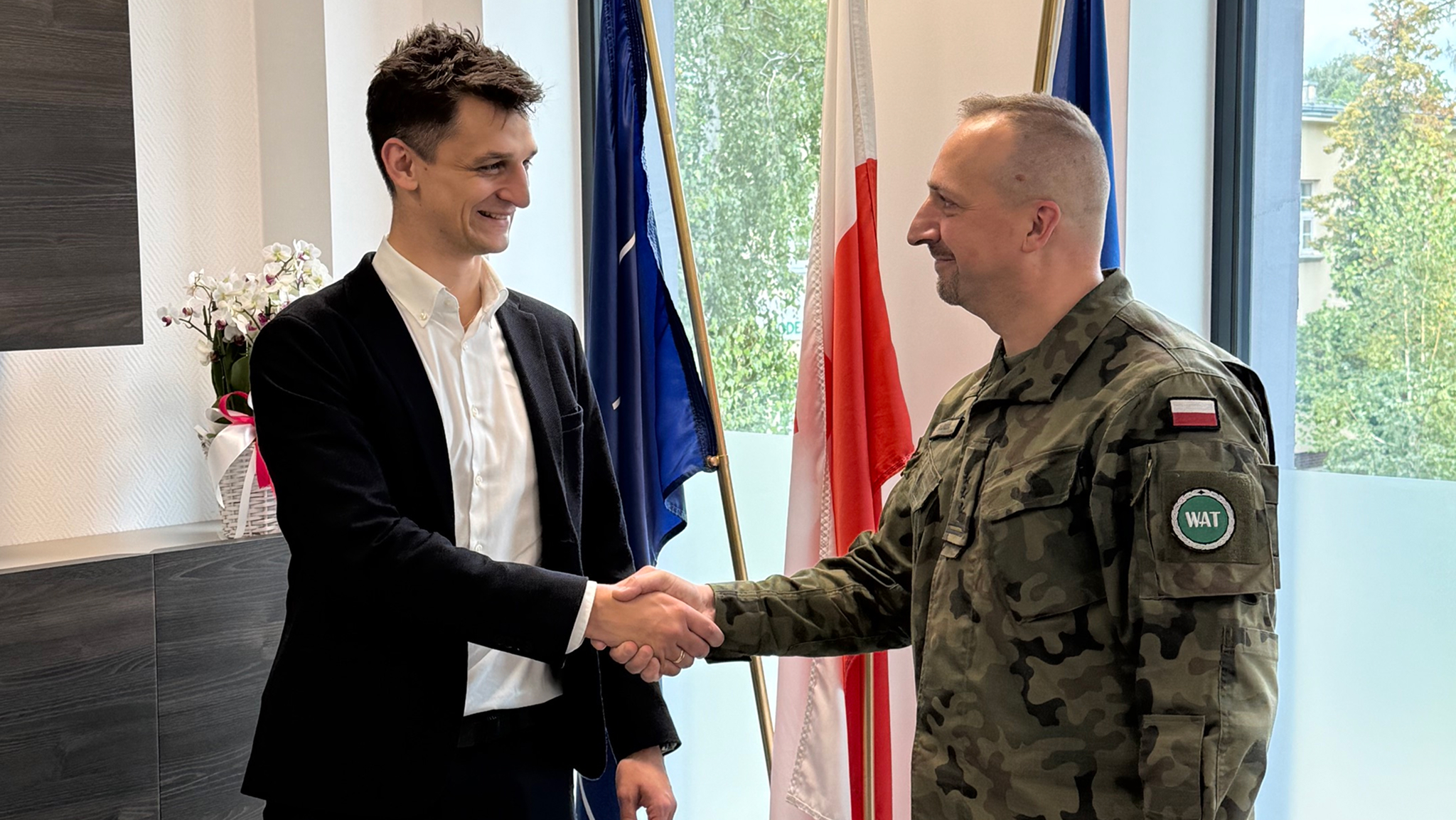
The deployment follows a cooperation agreement between Microamp and the university faculty, with the first meeting held on 4 September. The initial equipment package is a Microamp 5G mmWave Starter Kit containing radio access network elements, mmWave RAN software, a core network, and user equipment.
The platform operates in 5G standalone mode and supports the n257, n258, and n261 bands across 24.25GHz to 29.5GHz. Microamp states that the system can deliver throughput above 4Gbps with latency below 5ms, giving researchers a configurable environment independent of a public mobile network.
Access to the complete communications chain allows experiments to extend beyond individual radios or simulation. Researchers can alter network configuration, study propagation, integrate specialised terminals, and examine how changes to the radio and core affect end-to-end behaviour under controlled conditions.
The Faculty of Electronics plans to use the network for scientific work, including publications and reports supporting international NATO working groups. The system will also form part of joint research projects and commercial scientific work addressing industrial and defence communications requirements.
Millimetre-wave systems offer wide channel bandwidth but impose tighter constraints on propagation and deployment geometry than conventional lower-frequency cellular networks. Higher path loss and sensitivity to obstruction increase the importance of antenna placement, beam control, network density, and radio planning, particularly where predictable performance is required around moving users or equipment.
The supplied system gives the university a physical platform on which those effects can be measured rather than inferred entirely from models. Microamp identifies experimental work on wave propagation, network architecture optimisation, and integration of specialised end devices among the expected research areas.
The equipment will also support laboratory teaching. Students will be able to configure, deploy, and test a complete 5G mmWave architecture while using the network for diploma and engineering projects. That introduces practical work around radio configuration, synchronisation, device registration, traffic behaviour, and network management that is difficult to reproduce with isolated development hardware.
The defence element extends beyond the institution’s military status. Microamp describes the Starter Kit as suitable for work on low probability of detection and low probability of interception mobile architectures, while the faculty specialises in telecommunications, radar, electronic warfare, and communications systems. The Warsaw platform can therefore support experiments that sit between conventional mobile-network engineering and specialised tactical communications.
Those characteristics still require experimental validation in the intended operating environment. A laboratory network capable of multi-gigabit throughput does not establish the performance of the same architecture under interference, obstruction, mobility, or deliberate disruption. The value of the deployment is that those conditions can now be investigated using a complete configurable system rather than a partial radio testbed.
The n257, n258, and n261 coverage also gives the laboratory access to several established mmWave allocations. Research intended for international programmes can therefore examine configurations across more than one frequency profile, helping separate conclusions tied to a particular band from those arising from the wider network architecture.
Microamp has been developing private and resilient mmWave systems for industrial and government applications, including tactical communications. The university installation moves the same technology into a research environment where performance claims, network configurations, and specialised use cases can be tested independently across repeated experiments.
The cooperation now depends on the research produced around the equipment. Propagation measurements, repeatable network tests, and integration work with specialist devices will provide a clearer indication of where high-capacity mmWave links can move beyond controlled demonstrations into practical civil and military systems.