IN Brief:
- Renesas opened its Physical AI & Robotics Lab in Beijing on 27 August.
- The facility combines hardware, software, AI modelling, control, power, sensing, and system-level verification.
- Renesas estimates its portfolio can currently address about 30% of a humanoid robot BOM, with scope to reach 70%.
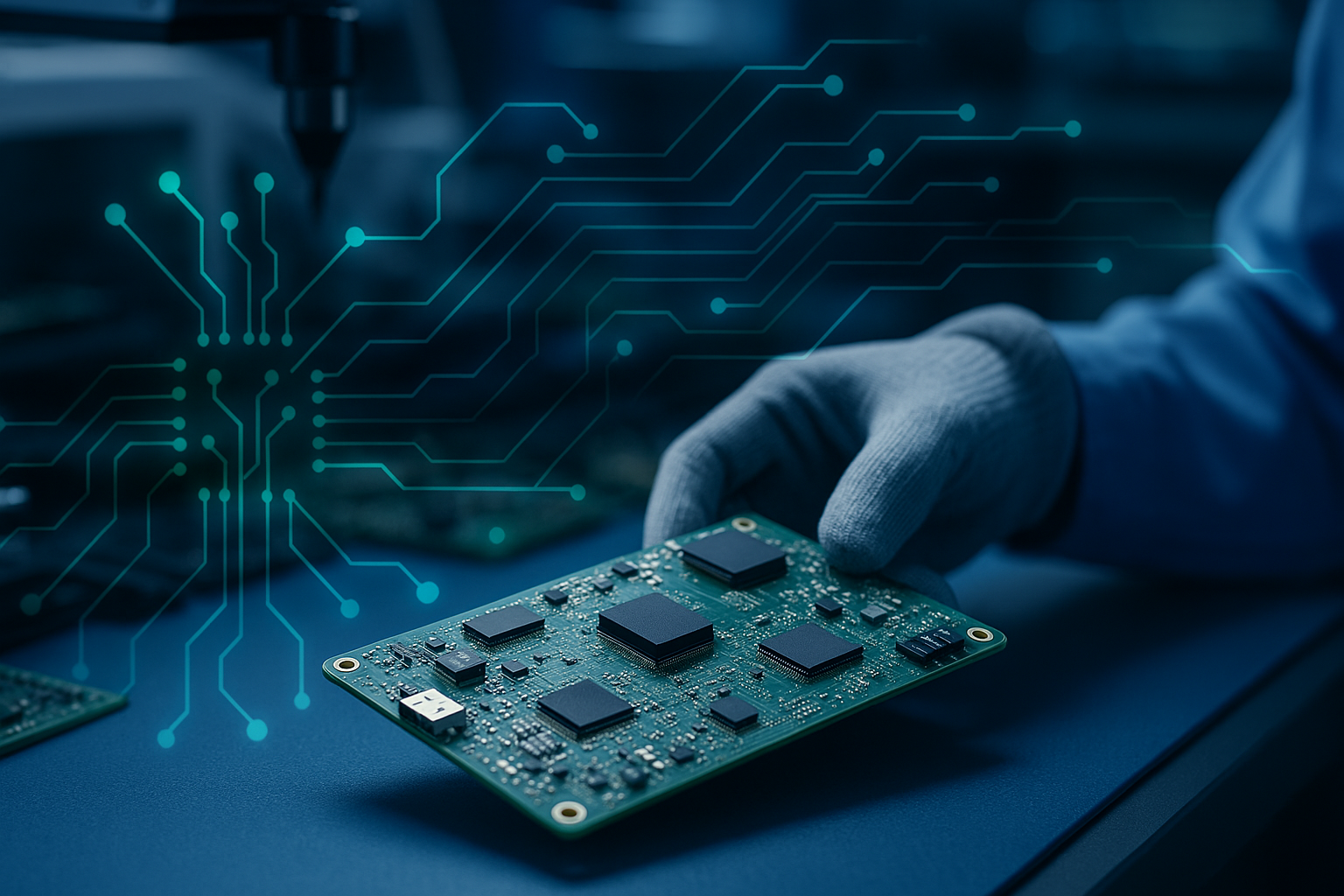
Renesas Electronics has opened a Physical AI & Robotics Lab in Beijing for system-level development and validation of robotic hardware. The facility brings processing, sensing, actuation, power management, control, software, AI modelling, and verification into one engineering environment.
The lab follows the creation of Renesas’s dedicated Physical AI Division on 1 July 2026 and will work with customers, universities, start-ups, and technology partners. Renesas intends it to support projects from proof of concept through system validation and deployment rather than operate solely as a component demonstration centre.
That approach reflects the integration burden inside increasingly capable robots. Processing devices, motor controls, sensors, power converters, batteries, communications, real-time software, and AI functions may each meet their individual specifications, yet the finished machine is governed by how those functions behave together under changing loads and physical conditions.
Latency is one example. A perception system can classify an object correctly while still being unsuitable for a control loop if sensing, processing, communications, and actuator response introduce too much delay. The same interaction applies to power: a processor and motor drive may both fit their nominal budgets but create transient or thermal problems when several axes and compute workloads peak simultaneously.
Renesas says it can currently address roughly 30% of the bill of materials in a humanoid robot through its control, power, sensing, AI, software, and ecosystem products, with an opportunity to increase that share to 70%. Those percentages are the company’s own estimate rather than an industry-standard measure, and robot architectures vary substantially, but the target shows how far Renesas wants to move beyond supplying isolated devices.
A broader component footprint can reduce integration work only when the parts have been validated as a system. Microcontrollers and processors still have to exchange deterministic control data with motor drives and sensors, power rails must remain stable across load steps, and software has to deal predictably with faults, communications delays, and sensor disagreement.
The Beijing lab is intended to provide that system-level environment. Renesas says it will combine hardware, software, AI modelling, control, power supply, sensing, and verification so that complete robotic solutions can be tested before customers commit to production architectures.
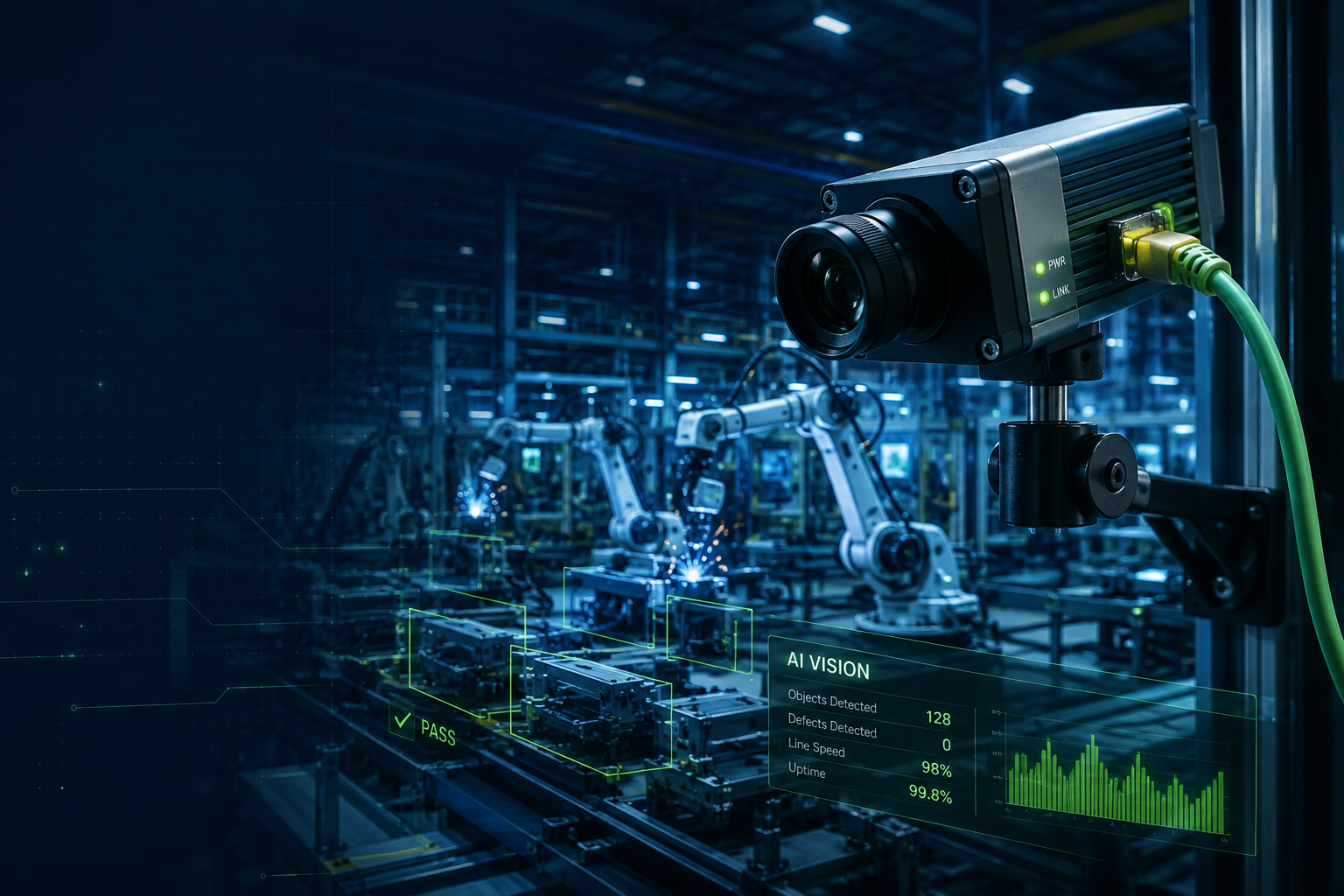
The company has also been adding software to its embedded portfolio. Its acquisition of Irida Labs brought embedded vision AI capability into the Renesas development stack, giving camera and sensor systems a local perception layer alongside the microcontroller, microprocessor, analogue, power, and connectivity products already sold by the company.
Vision software illustrates the difference between component and system development. A neural network may perform accurately on a workstation, but deployment onto a robot changes available compute, memory, thermal headroom, power consumption, sensor bandwidth, and response time. Camera data then has to influence a physical action whose safety and timing requirements are rather less forgiving than those of a conventional screen-based AI application.
China provides Renesas with a large robotics manufacturing and development ecosystem in which to test that approach. The laboratory’s value will depend on whether customer and partner projects expose realistic interactions between electronics, mechanics, firmware, and AI instead of producing reference demonstrations optimised around a single vendor’s development boards.
The wider semiconductor market is already shifting towards more complete development platforms. Processor suppliers increasingly provide reference hardware, middleware, model-conversion tools, software libraries, motor-control stacks, safety functions, and cloud-linked development services because customers cannot judge project cost from processor performance alone. Integration effort and time to qualification can outweigh relatively small differences in individual device specifications.
Renesas’s 70% ambition should therefore be treated as a direction rather than a likely single-vendor robot architecture. Motors, batteries, mechanical components, specialist sensors, accelerators, communications modules, and safety devices will continue to come from broad supplier ecosystems. The more credible test is whether Renesas can validate useful combinations of its products closely enough to remove engineering iterations for customers.
The Beijing facility gives the company somewhere to measure that proposition against complete machines. If it succeeds, the evidence will appear in faster subsystem qualification, fewer interface failures, reusable hardware and software combinations, and more customers carrying those designs into production. A percentage of the bill of materials makes a neat target; shortening the integration cycle would be a rather more useful result.