IN Brief:
- An unnamed LiDAR customer has placed initial production orders for Sivers' continuous-wave distributed-feedback lasers and optical amplifiers.
- Shipments are expected to begin during Q4 2026, ahead of the customer's automotive and industrial production programmes planned for 2027.
- The previously announced $53 million–$138 million potential lifecycle revenue range remains a forecast, not the value of confirmed orders.
Sivers Semiconductors has received initial production orders from a strategic LiDAR customer for continuous-wave distributed-feedback lasers and optical amplifiers. Shipments are scheduled to begin during the fourth quarter of 2026, supporting automotive and industrial sensing platforms that the customer expects to move into production during 2027.
The orders, announced on 20 October, establish a new commercial milestone in a programme previously described by Sivers in March. At that point, the company had disclosed that its photonics technology had been incorporated into the customer’s LiDAR platforms, with production expected to increase towards the end of the year. The latest announcement confirms that the customer has begun placing orders rather than merely planning future integration.
Neither the customer’s identity nor the initial purchase value has been disclosed. Sivers expects additional orders to follow production lead times and the customer’s manufacturing forecasts, but has not identified a binding minimum quantity, committed annual volume or complete delivery schedule. Actual shipments will therefore be determined by subsequent purchasing activity and the production requirements of the equipment manufacturer.
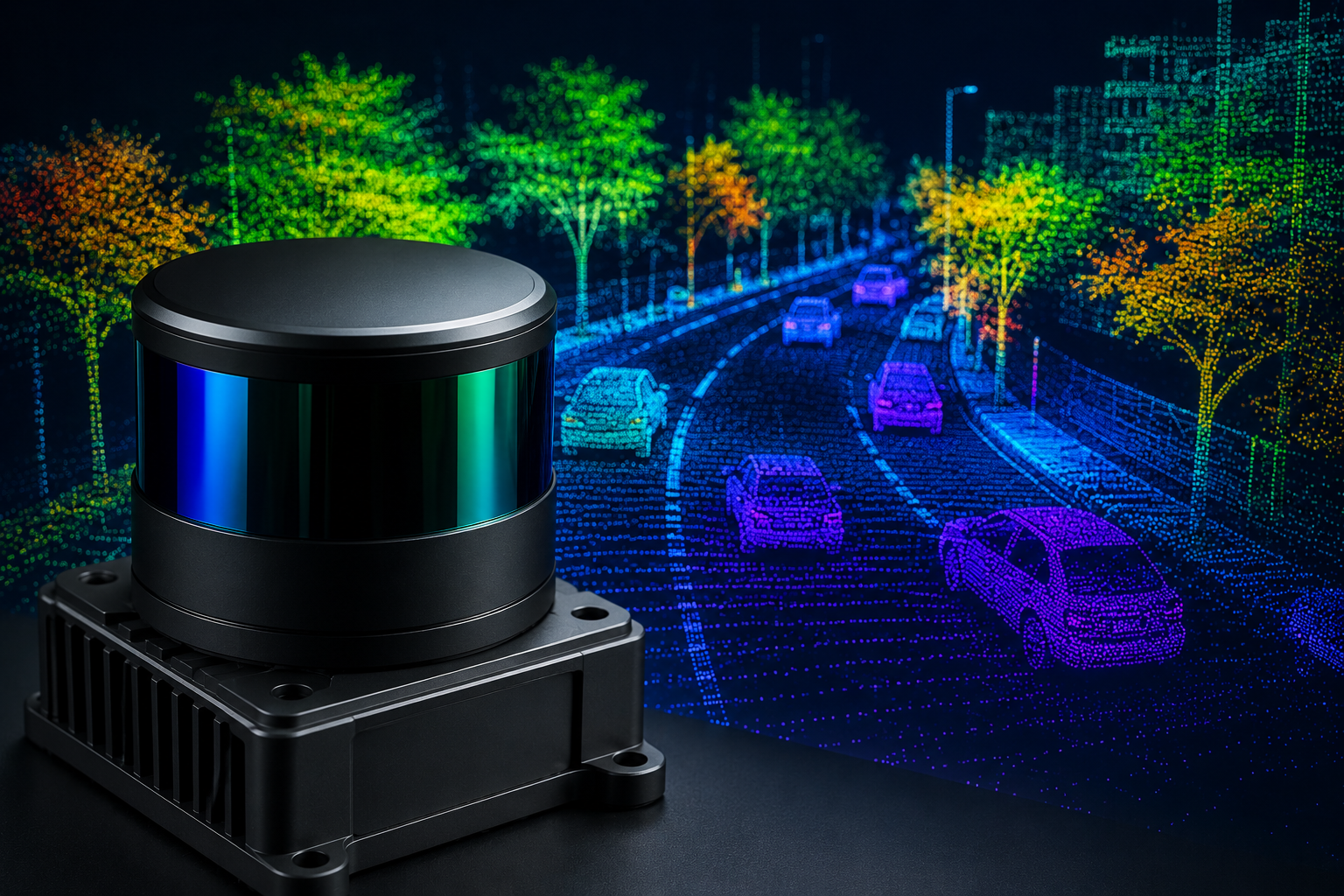
The ordered components form part of the optical source assembly used to generate and condition light within a LiDAR system. LiDAR measures aspects of the surrounding environment by transmitting optical signals and analysing the light returned from objects. Depending on the instrument architecture, those measurements can be used to establish distance, relative movement or the position of surrounding features.
Distributed-feedback lasers provide wavelength-selective optical emission through a feedback structure integrated into the laser device. The distributed optical grating favours operation around a defined wavelength rather than allowing unrestricted competition between numerous longitudinal modes. Laser performance is influenced by the grating structure, semiconductor material, operating current and temperature, together with the design of the surrounding optical circuit.
Continuous-wave operation provides an optical signal that can be modulated or processed according to the requirements of the sensor. Frequency-modulated continuous-wave LiDAR, for example, uses a controlled variation in optical frequency and analyses the difference between transmitted and returned signals to determine range and, under suitable conditions, velocity. Sivers has not identified the precise modulation architecture used by the unnamed customer, so the production orders cannot independently establish that the customer has adopted any particular LiDAR method.
The optical amplifiers serve a different function from the laser sources. They increase optical power within the applicable operating range, allowing the system designer to manage signal levels before the light enters the subsequent optical path. Amplifier gain, saturation, noise and thermal behaviour can influence the resulting performance, and a higher optical output does not automatically translate into a proportional increase in usable sensing distance.
Received signal strength depends on several factors outside the laser package, including transmitted power, optical losses, target reflectivity, propagation conditions and receiver sensitivity. The performance of the complete sensor also depends on the detector, signal processing and methods used to distinguish useful returns from background signals or interference.
Automotive applications impose additional constraints because the equipment may experience substantial temperature changes, vibration, moisture and contamination during operation. Industrial sensing environments can introduce further exposure to dust, mechanical shock and different operating cycles. Component selection must therefore consider the intended conditions alongside the optical and electrical specifications.
Maintaining a suitable optical wavelength and output power across changing temperatures is a particular consideration for semiconductor laser integration. Changes in junction temperature can affect emission characteristics, while the associated drive electronics must regulate operating current and respond appropriately to electrical faults. Packaging and heat removal consequently influence the stability of the optical source during service.
Production qualification also extends beyond achieving the desired optical performance on an individual sample. Manufacturers must establish that successive devices meet appropriate requirements for wavelength, power, electrical behaviour and mechanical integrity. Packaging processes and inspection procedures need to produce consistent results across manufacturing batches, while reliability testing must reflect the conditions required by the customer.
Sivers says the new orders demonstrate progression from its earlier design selection towards volume manufacturing. However, the announcement does not disclose the customer’s detailed component qualification results, final LiDAR performance figures or individual semiconductor device specifications. Those omissions prevent independent assessment of the optical performance or durability of the particular systems entering production.
In March, Sivers estimated that the customer programme could generate cumulative revenue of between $53 million and $138 million over its product lifecycle. The range described a potential commercial opportunity based on anticipated production activity, not a confirmed order book. The October announcement does not revise the forecast or establish that the customer has committed to purchasing the full projected quantity.
Long-term component programmes normally move from development and design selection through qualification, initial production orders and successive manufacturing releases. Although an initial order establishes an intention to obtain components for production, later purchasing may vary with the customer’s inventory, manufacturing yields, end-market demand and product schedule. A supplier can therefore secure a place in a production architecture without receiving a guaranteed commitment for every unit that might ultimately be manufactured.
The customer’s automotive and industrial programmes are expected to progress during 2027, following the initial deliveries planned for Q4 2026. Sivers will supply the specified lasers and optical amplifiers against rolling orders, with future production quantities and revenue determined by the customer’s actual manufacturing requirements.