IN Brief:
- STMicroelectronics is building its imaging strategy around FlightSense depth sensing and BrightSense machine-vision sensors.
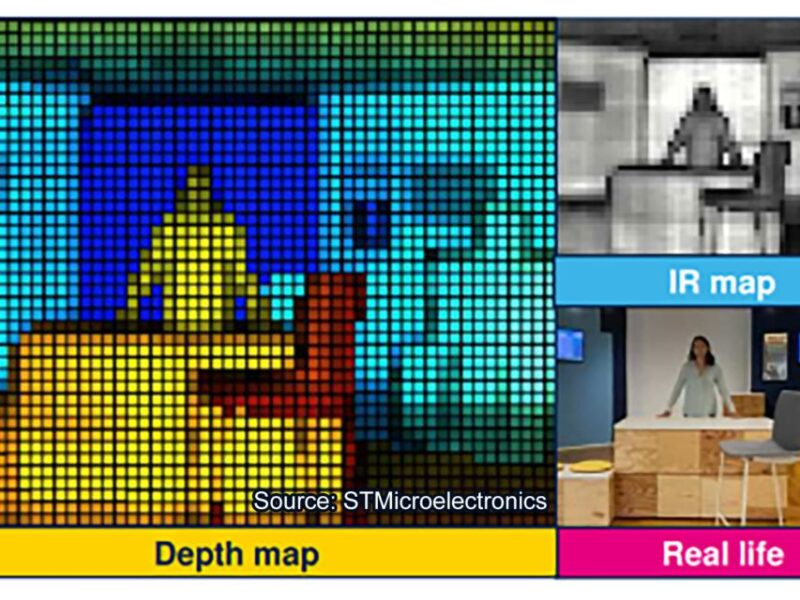
- The VL53L9 direct Time-of-Flight module combines 2,268 sensing zones, a 54 x 42 degree field of view, and operation up to 100fps.
- Compact perception hardware is becoming more important as robotics, healthcare, industrial automation, and smart buildings move AI closer to the sensor.
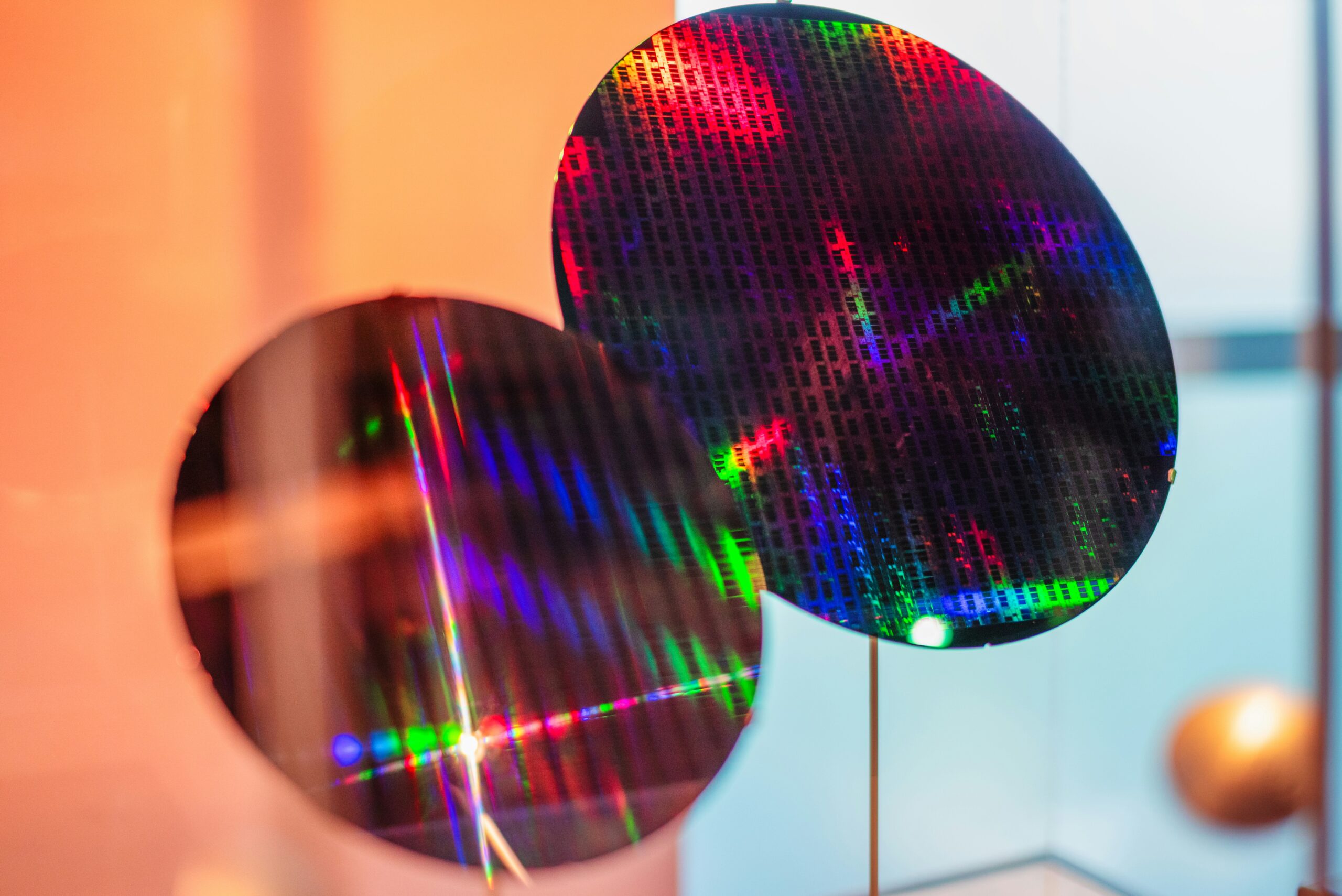
STMicroelectronics is developing its edge AI imaging portfolio around sensing platforms that turn optical input into machine-readable spatial and visual data inside compact electronic systems.
The company’s imaging work is centred on FlightSense for depth and spatial awareness, and BrightSense for machine vision. Rather than treating the sensor as a source of raw image data, the approach brings optics, image capture, processing, software, algorithms, power management, and interface support into a more tightly integrated design chain.
The clearest product example is the VL53L9 direct Time-of-Flight 3D LiDAR module. The device provides 2,268 sensing zones in a 54 x 42 array, a 54 x 42 degree field of view, sensing from below 5cm to 9m, and operation at up to 100 frames per second. It integrates the emitter, receiver, processing, and power management in a 12.8 x 6.1 x 4.6mm package, with MIPI and I3C interfaces.
That specification gives compact systems a route to depth information without forcing the main processor to handle the whole imaging burden. Robotics, access control, medical monitoring, smart-building equipment, wearables, and industrial automation systems all need spatial awareness under tight limits on power, space, latency, and thermal headroom.
BrightSense extends the same design logic into machine vision. The latest 5MP devices use 2.25µm pixels, 3D stacking, and a hybrid global and rolling shutter architecture. The VD55G4 and VD65G4 add an ultralow-power always-on mode, with operation at around 800 x 700 resolution and 10fps at substantially reduced power compared with conventional capture modes.
Sensor interfaces are becoming a larger part of the design calculation as vision data moves between imagers, processors, and embedded AI devices. Sony’s move onto the MIPI Alliance board underlined the same pressure from the standards side, where camera, display, sensor, IoT, automotive, and physical AI systems increasingly depend on high-speed, predictable links.
More perception is now being pushed into the front end of the system. A depth sensor that can deliver usable distance and spatial data reduces processor load, cuts bandwidth, and supports faster decisions. A low-power always-on image sensor allows a device to remain aware of people, motion, or objects without waking a larger processing chain every time the scene changes.
That does not remove integration work. Optical alignment, calibration, ambient-light tolerance, electromagnetic compatibility, firmware behaviour, interface bandwidth, and long-term supply remain decisive. A sensing subsystem can simplify some parts of the architecture, but it also concentrates more value and more risk into the sensor module itself.
System designers still have to account for field calibration, software update paths, privacy constraints, and functional safety expectations where perception data feeds automated decisions. Depth and image sensors may reduce the load on the host processor, but they also become part of the trust boundary for the final product.
The shift also changes the balance between pixels and interpretation. Industrial and embedded systems do not always need a human-viewable image; they need enough reliable data to identify motion, distance, occupancy, gesture, object presence, or safety-zone intrusion. In those cases, accuracy, latency, and power can count for more than headline resolution.
ST’s combination of FlightSense and BrightSense reflects a wider move from component-level imaging toward validated perception building blocks. Machines that see locally need front-end hardware able to measure and interpret the physical world before data reaches the cloud, and the sensor is increasingly where that intelligence begins.